The showdown between the Pentagon and Anthropic is a window into how unprepared we are for the questions we are facing. Klein argues that the confrontation reveals a deeper crisis: the institutions that should be governing AI's most consequential applications have no framework for doing so.
As the Defense Department pushes for unrestricted AI deployment and Anthropic draws lines around autonomous weapons and mass surveillance, the dispute has become a proxy war for the central question of the AI era — who decides what these systems should and shouldn't do?
Another senior OpenAI employee exits over the company's defense ambitions, signaling that internal tensions over military AI contracts are intensifying rather than subsiding.
Moyo argues that business leaders can't simply automate away their customer base — they need proactive strategies to sustain demand in an AI-disrupted economy.
OpenAI's 2018 charter commits it to cease competition if a safety-conscious project approaches AGI first. Given current model rankings, this triggering condition may already be met.
When it comes down to it, Dario Amodei isn't all that much different from Sam Altman. Marcus argues that the commercial incentives of the AI industry make genuine safety leadership structurally impossible.
A prescient 1976 quote from the creator of ELIZA — the first chatbot — on how quickly humans form delusional attachments to conversational AI. More relevant than ever.
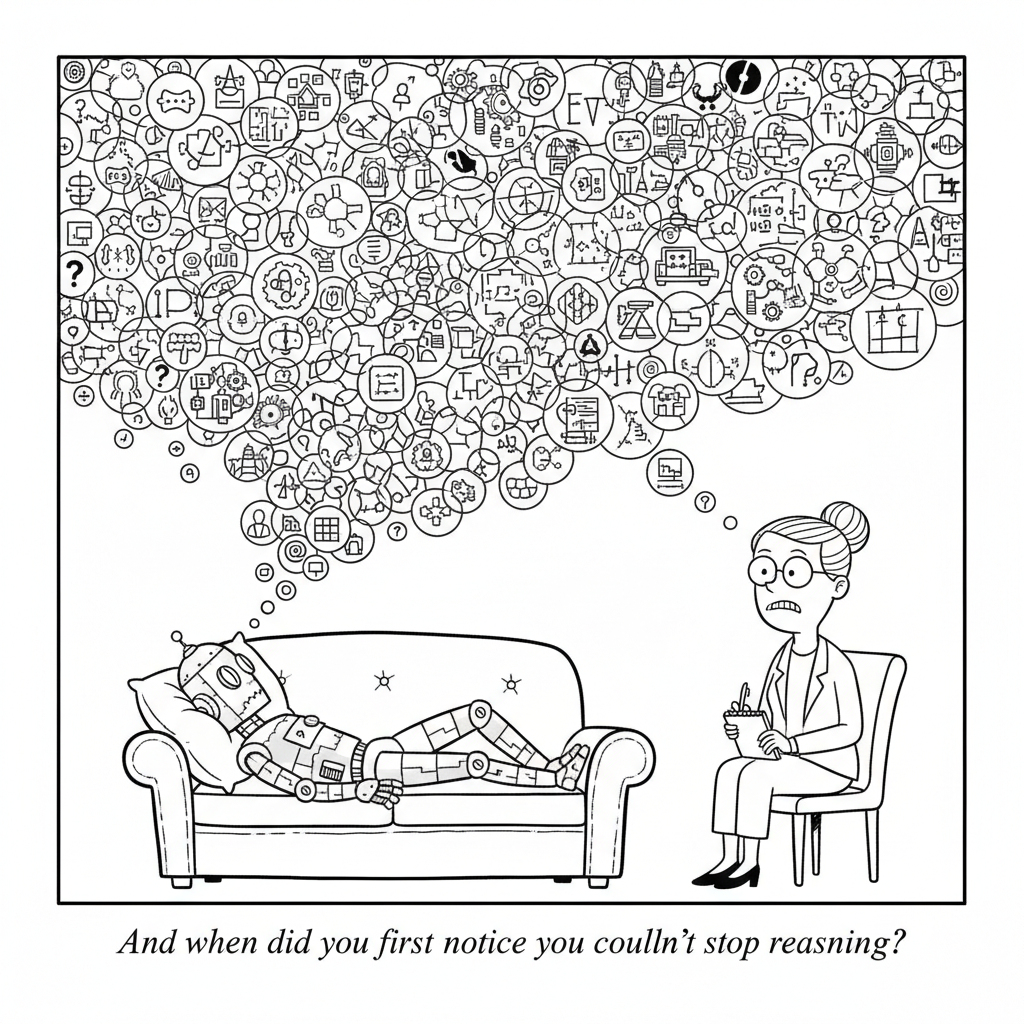
New research finds that reasoning models possess significantly lower chain-of-thought controllability than output controllability — Claude Sonnet 4.5 can control its CoT only 2.7% of the time versus 61.9% for final outputs. Good news for safety monitoring.
A new benchmark that shifts evaluation from short-term functional correctness to long-term maintainability, comprising 100 tasks averaging 233 days of evolution history and 71 consecutive commits.
Explosive AI investment is driving a nationwide data center construction boom — but retirements, demographic shifts, and decades of stagnant construction productivity strain the labor pipeline.
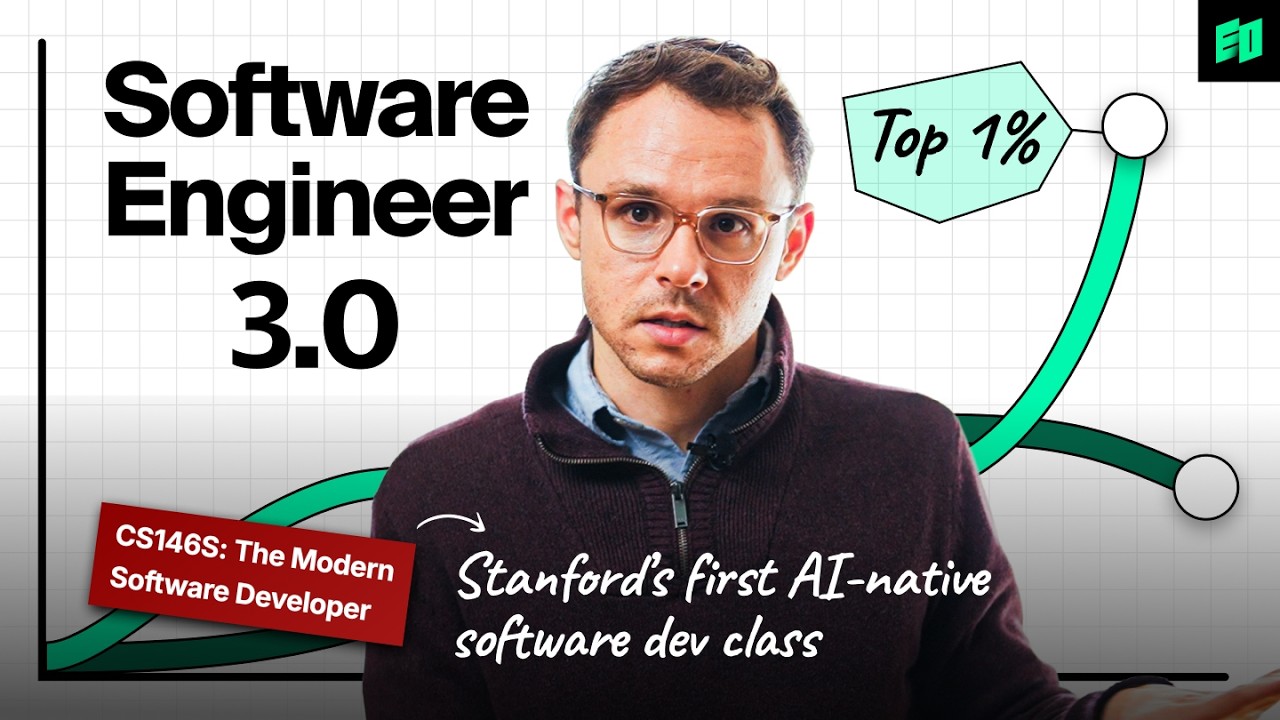
The rise of AI-native engineers, multi-agent orchestration, and why junior developers may be best positioned for the AI era.
✦ The Big Picture
Caitlin Kalinowski — the hardware engineer who led Meta's AR glasses before joining OpenAI — resigned this week with a LinkedIn post that cut straight to the bone: "Surveillance of Americans without judicial oversight and lethal autonomy without human authorization are lines that deserved more deliberation than they got." She's the latest departure in what Fortune calls a storm that isn't blowing over. Meanwhile, the Pentagon's Emil Michael went on the All-In podcast to explain what he actually needs: a "reliable, steady partner that'll work with me on autonomous" — referring to Golden Dome, the missile defense program putting AI weapons in space. Everyone in today's issue is arguing about who controls AI. Nobody agrees on the answer.
▶Listen to the Digest~9 min
Today's Headlines
The Pentagon Standoff Deepens
Ezra Klein: "The Future We Feared Is Already Here" — Klein frames the Anthropic-Pentagon confrontation not as corporate drama but as the first real test of whether any institution can govern AI's most consequential applications. The showdown reveals a structural vacuum: the Pentagon wants unrestricted deployment for autonomous drone swarms and the Golden Dome program, while Anthropic insists on human-in-the-loop safeguards. Neither side has a framework to resolve the disagreement — and Congress hasn't provided one.
OpenAI's Kalinowski Resigns Over Pentagon Deal — Kalinowski joins a growing list of departures driven by defense contracts. Fortune reports that Big Tech is simultaneously issuing $121 billion in new bonds for AI data center infrastructure (up from $40 billion in 2020), creating financial commitments that make military revenue streams increasingly difficult to refuse.
NYT's "The Daily": Inside the Anthropic-Pentagon Breakdown — Pentagon Undersecretary Emil Michael — the former Uber executive — revealed that months-long negotiations collapsed when Anthropic refused to allow "all lawful use" of Claude by the military. Google, OpenAI, and xAI all accepted those terms. Anthropic's planned lawsuit calls the supply chain risk designation "legally unsound" and a "dangerous precedent for any American company that negotiates with the government."
Gary Marcus: No Heroes in Commercial AI — Marcus documents that Claude was already integrated into Maven, Palantir's targeting software, and argues that "humans in the loop" fails when AI generates 80 targets an hour that humans can't adequately verify. An Iranian elementary school was struck on day one, killing over 100 girls. He catalogs Amodei's pattern of overpromising — AGI in "2-3 years," doubling human lifespan in a decade — and offered $1 million to bet against the Nobel Prize claim. Amodei ignored him.
The Economics of AI Disruption
Dambisa Moyo: CEOs Must Sustain the Consumer Class — Moyo invokes Henry Ford's model of paying workers enough to buy what they build, warning that "a world where people are doing nothing is not a world that people will feel satiated." She cites patterns from nations with surplus unemployed young males: increased unrest, violence, addiction. February 2026 job losses hit 92,000 — against expectations of 60,000 gains. The Anthropic research buried in the Fortune newsletter confirms that the most vulnerable workers are "predominantly female, highly educated, well-compensated professionals including lawyers, financial analysts, and software developers."
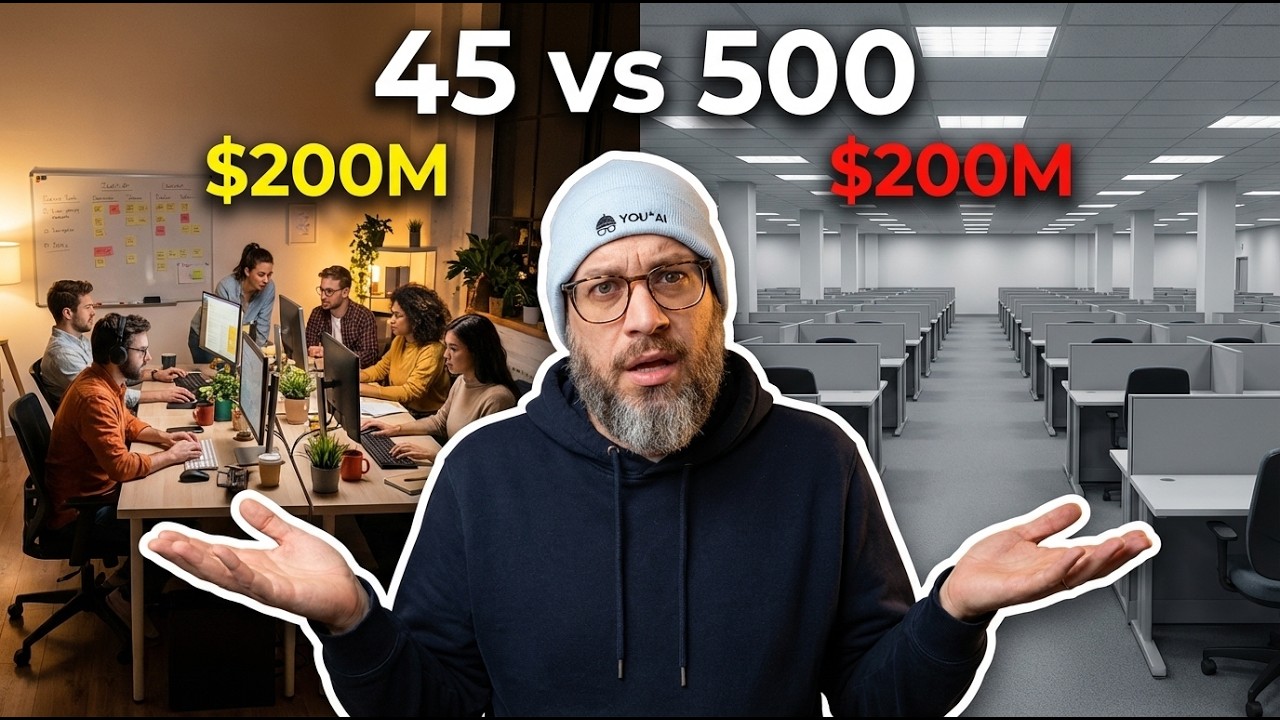
45 People, $200M Revenue — Jones's study guide makes the mathematical case: 5 people create 10 communication pathways, 20 people create 190. AI amplifies individual output 5-10x, making oversized teams economically catastrophic. Lovable hit unicorn status with 45 employees. A Harvard study of 776 P&G professionals found AI-augmented teams were 3x more likely to produce top-10% quality ideas. The reframe: don't cut headcount, restructure into strike teams and expand ambition.
OpenClaw AI Mania in China — Chinese tech stocks surge on policy support and enterprise adoption of the open-source AI framework, while Bloomberg asks who will physically build AI's future — data center construction demands electricians, HVAC specialists, and welders that retiring demographics can't supply.
Developer Tools and Practice
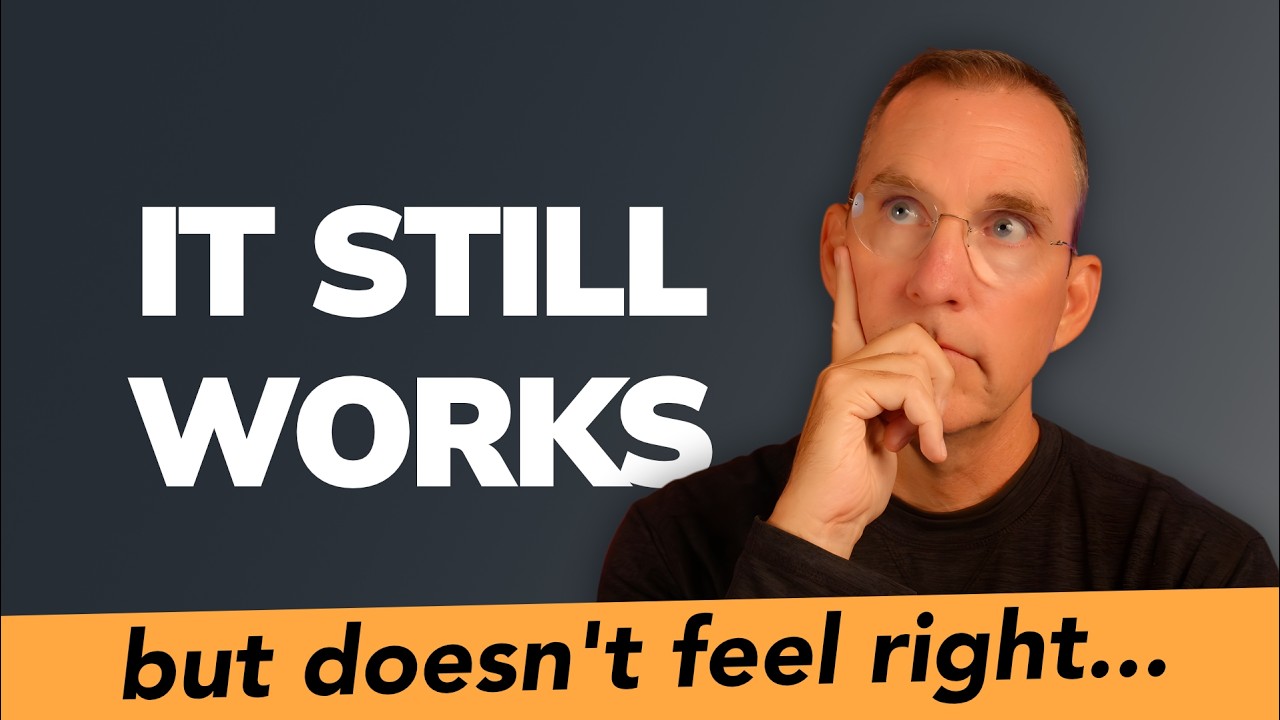
Why Your AI-Improved Code Feels Wrong — Matt Maher introduces "intent erosion": AI optimizations that sand off human purpose one improvement at a time. His cowboy boot company example — where "make it more professional" caused AI to strip a southern accent that was intentional brand voice — illustrates how thousands of such micro-decisions compound. The fix: encode the why behind decisions inside the codebase itself, not in wikis or chat threads.
From Writing Code to Managing Agents — Stanford's Mihail Eric describes the perfect storm hitting new developers: post-COVID hiring collapse, exploded CS graduate supply, and AI productivity displacement. A Berkeley graduate applied to 1,000 positions and got two responses. His counterintuitive argument: junior engineers have advantages because they have no ingrained habits and possess "sponge mentality." Even Anthropic's Claude Code team rewrites their own software every week or two.
Agent Safehouse — Kernel-level macOS sandboxing for coding agents. The philosophy: "1% chance of disaster makes it a matter of when, not if." Uses `sandbox-exec` to block syscalls before any file is touched — `rm -rf ~` returns "Operation not permitted" at the kernel level.
mcp2cli — Turns any MCP server or OpenAPI spec into a CLI at runtime. Six MCP servers with 84 tools consume ~15,540 tokens at session start; mcp2cli claims 96-99% savings. Includes a "TOON" output mode that reduces tokens by another 40-60%.
Literate Programming in the Agent Era — Ian Whitlock argues AI agents change the calculus on literate programming by handling the tedious tangling and synchronization that killed it previously. Tested only at small scale, but the vision of "large codebases that can be read like a narrative, whose prose is kept in sync by tireless machines" is compelling.
Research and Safety
Reasoning Models Can't Control Their Chains of Thought — An OpenAI paper finds Claude Sonnet 4.5 can control its chain-of-thought only 2.7% of the time versus 61.9% for final output — a 23x difference. CoT controllability decreases with more RL training, more test-time compute, and harder problems. The authors are "cautiously optimistic" this means CoT monitoring remains reliable as a safety tool.
SWE-CI: Long-Term Codebase Maintenance Benchmark — A new evaluation shifting from short-term bug fixing to sustained maintainability: 100 tasks averaging 233 days of evolution and 71 consecutive commits. Real software development, not isolated patches.
Weizenbaum's Warning, 50 Years Later — Simon Willison resurfaces ELIZA creator Joseph Weizenbaum's 1976 observation: "Extremely short exposures to a relatively simple computer program could induce powerful delusional thinking in quite normal people." Tagged: ai-ethics.
OpenAI Charter vs. Reality — Martin Lumiste points out that OpenAI's charter commits it to stop competing if a "value-aligned, safety-conscious project" approaches AGI first. Arena.ai rankings show Claude-Opus-4-6 and Gemini-3.1 outperforming GPT-5.4. The clause says "better-than-even chance of success in the next two years." By Altman's own shifting AGI predictions, this condition may already be triggered.
Also on the Wire
MiniMax Music 2.5 promises studio-quality AI songs with paragraph-level precision control and lifelike human vocals
AI in Business podcast explores outcome-driven agentic AI for customer service with Dialpad's Craig Walker
The Throughline
The word that keeps surfacing across today's stories is control — who has it, who wants it, and who's losing it. The Pentagon wants unrestricted control over AI deployment. Anthropic wants control over how Claude is used. Kalinowski decided she couldn't control her employer's direction and walked. Marcus argues nobody in commercial AI can control the incentives that make genuine safety impossible. Even at the model level, OpenAI's own researchers find that reasoning models can't control their chains of thought — Claude Sonnet 4.5 manages it only 2.7% of the time.
But the most unsettling control story is buried in the economics. Dambisa Moyo's Ford analogy has a dark edge: Ford chose to pay workers enough to buy cars. Today's AI companies aren't making that choice. Anthropic's own data shows 94% of computer and math tasks are theoretically automatable, yet only 33% are currently automated. That gap is a buffer, not a feature. The 92,000 February job losses against expected 60,000 gains, the Berkeley graduate with 1,000 applications and two responses, Moyo's citation of "unrest, violence, addiction" in nations with surplus unemployed young men — these aren't separate data points. They're a single trend line. Jones's study guide offers the optimistic counterframe: restructure into five-person strike teams and expand ambition rather than cut headcount. But that requires corporate leadership to choose expansion over efficiency. Moyo doesn't sound confident they will.
The developer stories form their own throughline about what happens when humans cede control incrementally. Maher's "intent erosion" concept — AI optimizations that strip human purpose one improvement at a time — is the code-level version of what's happening at the institutional level. No single change breaks anything. But across hundreds of iterations, the original intent disappears. The cowboy boot company's southern accent, stripped by an AI told to "make it more professional," is a microcosm of the Pentagon story: someone asked for efficiency, and a machine optimized away the thing that mattered most. Weizenbaum saw this in 1976 with ELIZA, a program so crude it would embarrass a modern chatbot. Fifty years later, the delusional thinking he warned about is happening at the scale of nations and militaries, not just psychology experiments.
What to Watch
Anthropic's lawsuit against the supply chain risk designation will set precedent. If a company can be punished for negotiating terms with the government, every defense contractor's risk calculus changes. Google, OpenAI, and xAI accepted the Pentagon's terms. If Anthropic loses in court, there may never be another company willing to push back.
The 94%-vs-33% automation gap is closing. Anthropic's own research measures the distance between what AI could automate and what it currently does. Microsoft's Suleyman says most computer-based work becomes "largely automatable within one to two years." The 22-25 age cohort is already showing a 14% drop in job-finding rates. When the gap narrows, the policy response will determine whether this looks like Ford's America or Moyo's worst case.
Chain-of-thought monitoring is working — for now. The 2.7% controllability finding is good news for AI safety, but the paper notes the mechanism isn't understood. If future training methods inadvertently increase CoT controllability, the safety community's primary monitoring tool could degrade without warning.
Go Deeper
45 People, $200M Revenue — The mathematical case for strike teams over headcount cuts: communication pathway scaling, the Harvard P&G study showing 3x quality improvement, and why Shopify's CEO mandated AI prototyping before all real builds
Why Your AI-Improved Code Feels Wrong — The Ship of Theseus problem for software: how AI optimizations erase intent through "death by a thousand improvements," and three habits to encode the why behind decisions before it's lost
From Writing Code to Managing Agents — Stanford's Mihail Eric on the three converging forces crushing new developers, why multi-agent orchestration is a "top 0.1% skill," and his counterintuitive argument that juniors are better positioned than seniors