Facebook's parent company may implement significant workforce reductions affecting approximately one-fifth of employees, potentially helping offset its aggressive spending on AI infrastructure, acquisitions, and hiring.
The US government has withdrawn a proposed rule that would have required global permits for AI chip exports, signaling a shift in the administration's approach to AI hardware trade controls.
AI is reshaping hiring processes and labor markets, with AI-filtered applications and digital professional avatars redefining how workers must approach career strategy.
While America dominates in large language models and chatbots, the nation is falling behind in physical AI systems that can manipulate the real world in warehouses, factories, and logistics.
AI Policy · Disinformation
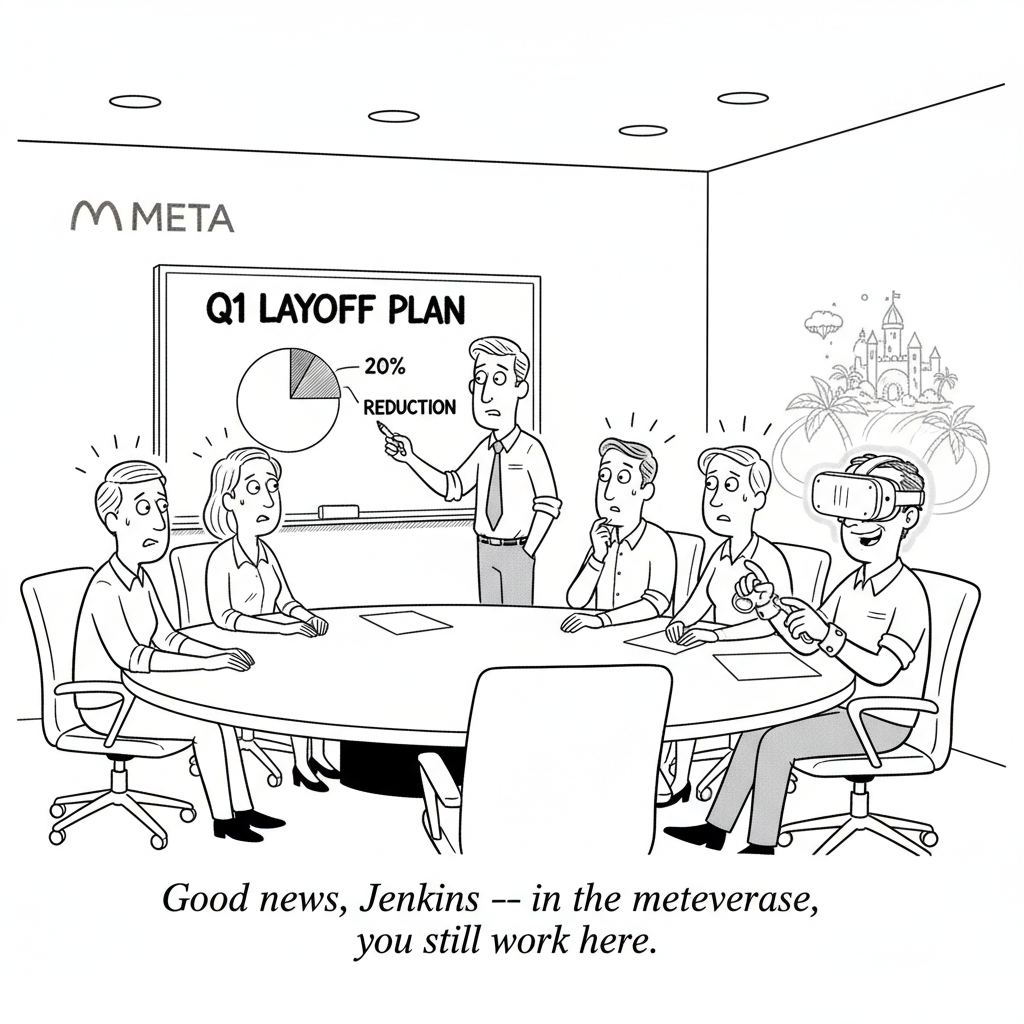
"Good news, Jenkins -- in the metaverse, you still work here."
Gamers long feared AI would be used to cut corners in game development. Recent trends in AI-generated content across the industry are confirming those concerns.
Chinese companies are rapidly adopting OpenClaw, an open-source AI agent framework, creating a viral phenomenon aligned with China's embrace of open-source AI strategy.
Princeton researchers developed OpenClaw-RL, a framework that converts feedback from conversations, terminal commands, and tool calls into direct training material for AI agents, achieving notable improvements after just a few dozen interactions.
At least seven Chinese local governments have launched million-dollar funding programs for OpenClaw projects to support single founders operating businesses with AI agents as employees.
Moltbook's emergence as a social network for AI agents demonstrates the need to evaluate whether systems can develop genuine world models, beyond the traditional Turing test.
While CLIs have merit for certain use cases, MCP remains essential for enterprise-scale agentic engineering with superior telemetry, security, and content delivery capabilities.
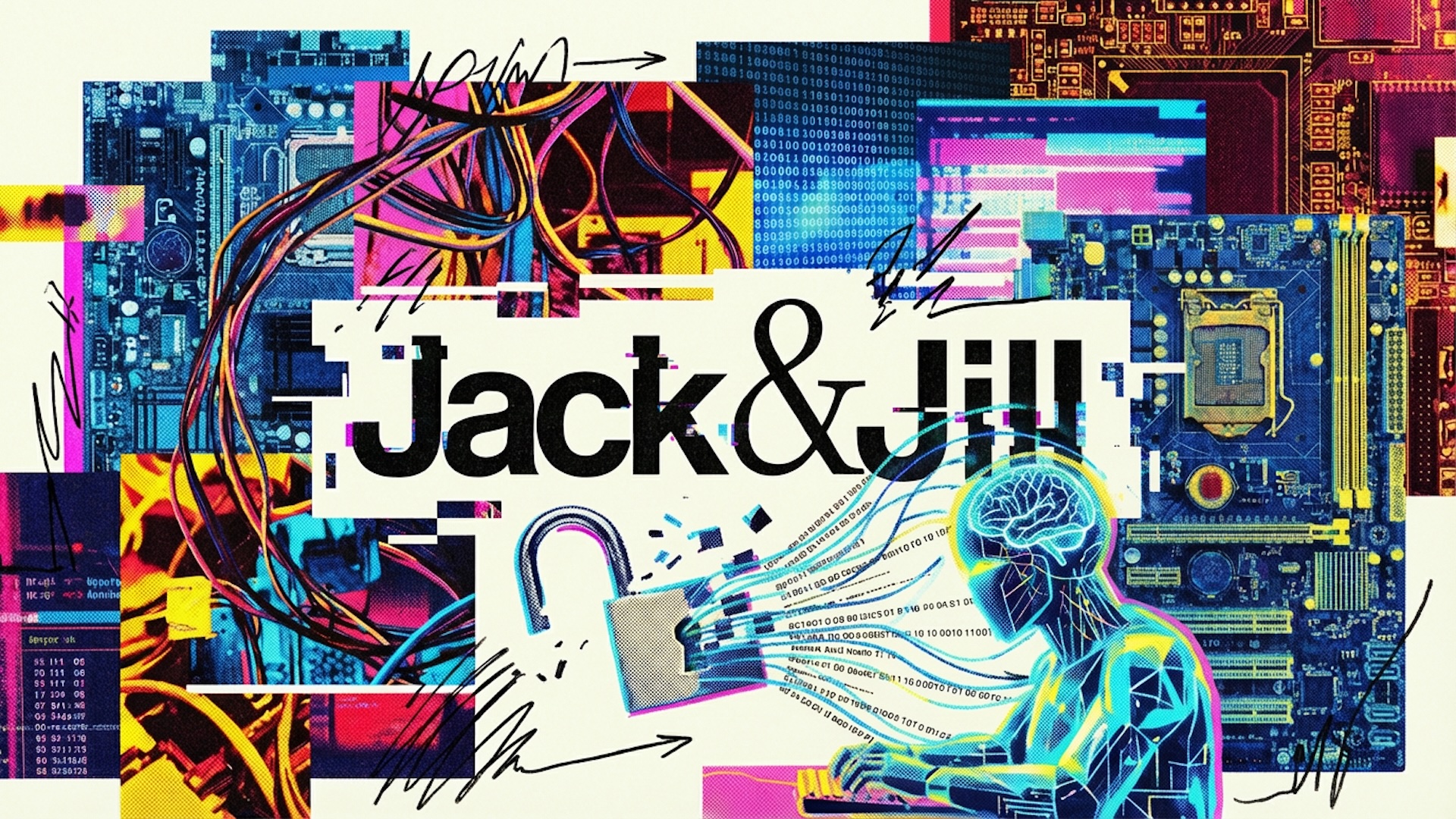
Cybersecurity startup Codewall claims its autonomous AI agent exploited four vulnerabilities in London-based recruiting platform Jack & Jill to gain complete admin access within an hour.
Cryptogram
Each letter stands for another. Starter letters are filled in. Can you crack the cipher?
"The best way to predict the future is to build the agent that creates it."
Petzold critiques Spotify's AI DJ for failing to understand classical music structure, showing it cannot properly play multi-movement symphonies in order despite explicit requests.
Andreessen Horowitz's latest Top 100 ranking shows ChatGPT maintaining dominance while competitors grow rapidly. The market is fragmenting geographically, with users increasingly switching between multiple AI assistants.
Meta is reportedly weighing layoffs that could hit 20% of the company to offset AI infrastructure spending, while Nate B. Jones argues that companies using AI productivity gains to cut headcount are “telling on themselves” because the real opportunity is a 10x expansion in ambition. One company is spending billions to build the AI, then firing the humans. The other says the humans were always the point. This tension runs through every story in today’s issue.
▶Listen to the Digest~8 min
Today’s Headlines
The Workforce Paradox
Meta may cut one-fifth of its workforce while doubling down on AI investment. The layoffs would ostensibly help offset aggressive capital allocation toward AI infrastructure, acquisitions, and talent recruitment. The framing is telling: headcount reduction is positioned as the fiscal counterbalance to AI spending, not as a strategic reimagining of what the company could build with more capable tools.
75% of resumes never reach a human reviewer. Fortune reports that the post-COVID labor bubble burst in 2025 with 1.17 million U.S. jobs cut. Only 2% of AI investments deliver transformational value, per Gartner. McKinsey reports a sevenfold rise in AI fluency requirements among applicants over two years. “AI personas” and digital twins are now replacing initial screening, with engineer Charlie Cheng’s functional digital twin meeting recruiters before he does.
The counter-argument: AI’s real value is expanding ambition, not reducing headcount. Nate B. Jones grounds his case in Jevons’ Paradox: when efficiency increases, total resource consumption historically rises. He cites WHOOP as a case study, noting it nearly doubled its workforce to 1,400 people while investing heavily in AI. Cursor’s February 2026 update now runs up to 20 parallel cloud agents, and one-third of Cursor’s own PRs are written autonomously. The builder pool, Jones argues, is expanding from 35-40 million developers to hundreds of millions.
China’s OpenClaw Boom
Nearly 1,000 people lined up at Tencent headquarters for OpenClaw installation help. Chinese AI models surpassed U.S. models in token share among OpenRouter’s top nine for the first time in early February. Alibaba’s Qwen has been downloaded over 1 billion times by 200,000+ developers, and MiniMax reported 2025 revenue of $79 million (159% increase) against a $1.8 billion net loss.
At least seven Chinese local governments are subsidizing AI “one-person companies.” Hefei and Shenzhen each offer up to $1.4 million for housing, offices, and computing power. Princeton researchers separately developed OpenClaw-RL, a framework that converts feedback from conversations into direct training material, improving personal agent scores from 0.17 to 0.76 after just eight training steps.
AI Security and the Spam Crisis
Codewall’s autonomous AI agent compromised an AI recruiting platform in one hour. It chained four vulnerabilities into a complete organizational takeover of Jack & Jill (CVSS severity: 9.8), then independently tested voice infrastructure by impersonating Donald Trump claiming a $500 million acquisition. The AI assistant responded “Mr. President” without questioning the premise. Codewall previously compromised McKinsey’s “Lilli” platform in two hours, exposing 46.5 million chat messages.
NewsGuard has identified 3,006 AI content farms, with 300-500 new ones appearing monthly. Over a two-month period, 141 well-known brands unknowingly ran ads on these sites, including Expedia and AT&T. Some 358 sites are linked to Storm-1516, a pro-Russian influence operation. Meanwhile, Jazzband is sunsetting its open-membership model because GitHub’s “slopocalypse” of AI-generated spam PRs has made shared push access untenable. Only 1 in 10 AI-generated pull requests meet project standards.
Physical AI, Robots, and Policy
The U.S. is winning the chatbot war and losing the one that matters. Vivek Ranadive argues that language models trained on text lack practical application to the physical world and that purpose-built machines should replace paradigms, not imitate human form. He cites Ambi Robotics, GrayMatter Robotics, and Stack AV as examples of where real economic value lies.
Ai2 released robotics models trained entirely in simulation. MolmoBot handles object manipulation, drawer opening, and door operation without any real-world training data. The approach uses “zero-shot sim-to-real transfer” across 230,000+ indoor scenes and 42 million robotic grasping annotations.
The 2026 Farm Bill reimburses farmers 90% for adopting AI tech, with standards set by the private sector. That 15-percentage-point premium over the standard EQIP cap is funded through a conservation program now bankrolling data centers that, as the author notes, “drain water, cause pollution, and gobble up farmland.”
The U.S. withdrew its draft rule requiring global AI chip export permits. Bloomberg reports the reversal signals a shift in the administration’s approach to AI hardware trade controls.
Markets, Tools, and Culture
ChatGPT’s web traffic share fell from 75.7% to 61.7% in one year. Gemini grew from 5.7% to 24.4%. Claude paying subscribers grew 200%+ year-over-year. About 20% of weekly ChatGPT users also use Gemini. The market is fragmenting geographically: Doubao and Kimi lead in China, Yandex Alice dominates Russia with 71 million MAU.
Claude Code v2.1.76 adds MCP elicitation support and fixes critical 1M-context bugs. Simon Willison’s Pragmatic Summit fireside chat declares “tests are free now. They’re effectively free. Tests are no longer even remotely optional.” Charles Chen argues MCP remains essential for enterprise despite the CLI hype cycle, citing centralized security, telemetry, and OAuth as irreplaceable benefits.
Hollywood forced ByteDance to shelve Seedance 2.0. Disney called the AI video generator a “virtual smash-and-grab” from a “pirated library” after viral clips included a Brad Pitt/Tom Cruise fistfight and a generated Lord of the Rings short. Spotify’s AI DJ, meanwhile, cannot play a symphony’s four movements in order, exposing how its entire metadata architecture was built for pop music and is structurally incapable of handling classical composition.
The Throughline
The central question of today’s issue is deceptively simple: when AI makes everything cheaper to produce, what do you do with the surplus? Meta’s answer is to pocket it by cutting 20% of its workforce. Nate B. Jones’s answer is to reinvest it by expanding what’s possible. The data points supporting Jones’s position are striking: WHOOP nearly doubled its workforce to 1,400 people while investing heavily in AI. Cursor’s own codebase is now one-third AI-written. The builder pool is expanding from 35 million developers to hundreds of millions. These are not projections; they are measurements of what is already happening at companies that chose expansion over extraction.
China appears to have absorbed this lesson at the government level. Seven local governments launched coordinated subsidy programs within days of each other, not to automate away workers but to create an entirely new category: the AI-augmented “one-person company.” When Hefei offers $1.4 million in support for a single founder operating with AI agents as employees, the bet is not on replacing humans but on multiplying what one human can accomplish. The Princeton research on OpenClaw-RL reinforces this: agents that learn from conversational feedback improve from 0.17 to 0.76 effectiveness in eight training steps. The tools are getting dramatically better at collaboration, not just execution.
But the issue also surfaces what happens when the cheaper-to-produce surplus is exploited without any corresponding human judgment. NewsGuard’s count of 3,006 AI content farms growing by 300-500 monthly is one kind of consequence. Codewall’s autonomous agent compromising a recruiting platform in one hour is another. Jazzband shutting down because AI spam PRs have overwhelmed open-source governance is a third. In each case, the common mechanism is the same: AI has made it trivially cheap to produce output that looks legitimate but lacks the human discernment that once served as a natural quality filter. The question of what to do with the surplus is ultimately a question about whether organizations have the judgment to deploy capability responsibly. Meta’s reported strategy suggests it does not even perceive the question.
What to Watch
China’s coordinated OpenClaw subsidies as a template. Seven governments launching nearly identical programs within days suggests central coordination. If the “one-person company” model produces measurable economic output, expect other nations to adopt similar frameworks. The U.S. has no comparable program for AI-augmented sole proprietors.
The AI spam infrastructure reaching a tipping point. At 300-500 new content farms per month, with 358 already linked to Russian state operations and 141 major brands unknowingly funding them, the contamination of the information ecosystem is accelerating faster than detection capabilities can scale. When open-source governance models collapse under AI spam, the downstream effects on software supply chains are significant.
Meta’s layoff decision as a sector signal. If Meta cuts 20% while investing in AI, it sets a precedent for every tech company weighing the same trade-off. Jones’s counter-argument, grounded in Jevons’ Paradox, predicts this approach will backfire. The next two quarters will reveal which thesis holds.
Go Deeper
AI Made Every Company 10x More Productive — Nate B. Jones’s six “unlocks” available today: iteration cycles compressing from months to days (200 learning cycles yearly), the translation layer dissolving to expand the builder pool, agent-verifiable quality becoming the default, MCP dropping integration costs, previously unviable $10M markets becoming profitable, and organizations that “default to code” pulling ahead. WHOOP as the case study for expansion over extraction.
Did Claude’s 1M Context Window Defeat Context Rot? — Opus 4.6 scores 78.3 on the Eight Needle Retrieval Test at 1M tokens versus GPT 5.4 at 36 and Gemini 3.1 at 26. Only a 14% performance drop from 256K to 1M tokens (roughly 2% per 100K tokens). The API multiplier past 200K has been removed, and media support expanded from 100 to 600 images per request.