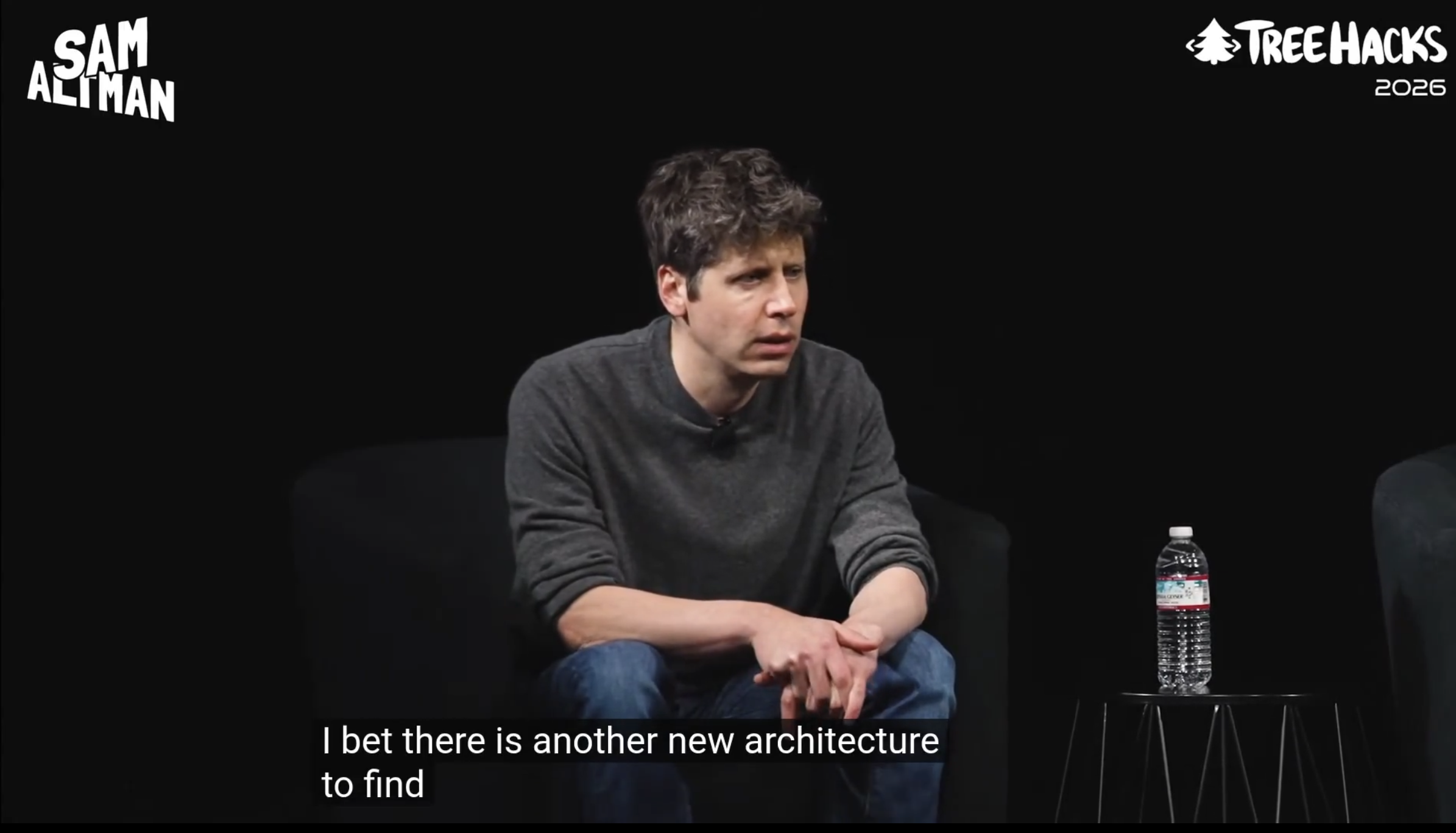
OpenAI's CEO reverses his previous stance, now acknowledging the necessity of novel AI architectures rather than relying solely on scaling. The shift marks a broader retreat among tech leaders from confidence in pure scaling approaches, even as massive data center investments continue.
OpenAI cofounder Andrej Karpathy used Bureau of Labor Statistics data to rank occupations by AI vulnerability. Professions earning over $100K scored 6.7 on exposure risk; those under $35K scored just 3.4.
Sydney entrepreneur Paul Conyngham leveraged ChatGPT and Google DeepMind's AlphaFold to develop a personalized mRNA cancer vaccine for his dog Rosie. Working with UNSW researchers, the vaccine dramatically reduced most of Rosie's tumors.
Willison defines agentic engineering as developing software with coding agents that can write and execute code, emphasizing that human engineers must still determine what to build and how to guide these tools.
Andrej Karpathy “vibe coded” a labor market analysis over a weekend and found that professionals earning over $100,000 a year scored 6.7 on AI exposure risk, while those earning under $35,000 scored just 3.4. Hours later, Sam Altman quietly conceded that scaling alone won’t reach AGI, reversing a position he’d held for over a year. One data point says the jobs at risk are the expensive ones. The other says the technology threatening them isn’t even on the right track yet. That tension runs through every story today.
▶Listen to the Digest~7 min
Today’s Headlines
The Scaling Wall
Sam Altman now says a new architecture “as big of a gain as transformers” is needed to reach AGI. This directly contradicts his claim from fourteen months earlier that “we now know how to build AGI as it’s usually understood.” Gary Marcus contextualizes the reversal alongside similar retreats by Musk (xAI “not built right”), Zuckerberg (delayed Meta model), Hassabis, Sutskever, LeCun, Nadella, and Pichai. Despite this crumbling confidence, the industry is still contemplating trillion-dollar data center investments.
ByteDance has paused the global launch of Seedance 2.0, its video generation tool, as legal and engineering teams work to mitigate compliance challenges before proceeding with international expansion.
The Labor Market Reckoning
Karpathy’s weekend analysis scored 800+ occupations on a 0-10 AI exposure scale. Software developers, financial analysts, paralegals, writers, and graphic designers all scored 9. Construction workers and plumbers scored 1. Healthcare aides and bartenders scored 2. He later pulled the project, calling it “wildly misinterpreted,” but the underlying BLS data tells its own story.
Daniel Priestley predicts plumbers will earn more than lawyers by 2029. His argument: AI commoditizes information processing (what white-collar workers do), while physical trades require embodied skills AI can’t replicate. The $650 billion being spent on AI infrastructure this year only accelerates the inversion. The scarce resource is no longer knowledge; it’s physical presence.
Nate B Jones profiles solo founders shipping in 30 days what teams planned for Q3. Ben Sira hit $2.5M ARR with zero employees, growing $1.5M in four days. The differentiator isn’t tool skills; it’s soft skills: intent clarity, taste, and a bias toward shipping. Most extraordinary people operate at 25% capacity because coordination overhead consumes the rest.
AI in Practice
An Australian entrepreneur used ChatGPT and AlphaFold to design a personalized cancer vaccine for his dog. Paul Conyngham paid UNSW to sequence his dog Rosie’s genome, then used AI to identify mutated protein targets. Nanomedicine pioneer Pall Thordarson designed a bespoke mRNA vaccine in under two months. Six weeks post-treatment, most tumors had shrunk dramatically. Thordarson sees this as proof that mRNA technology can “democratize” cancer vaccine design.
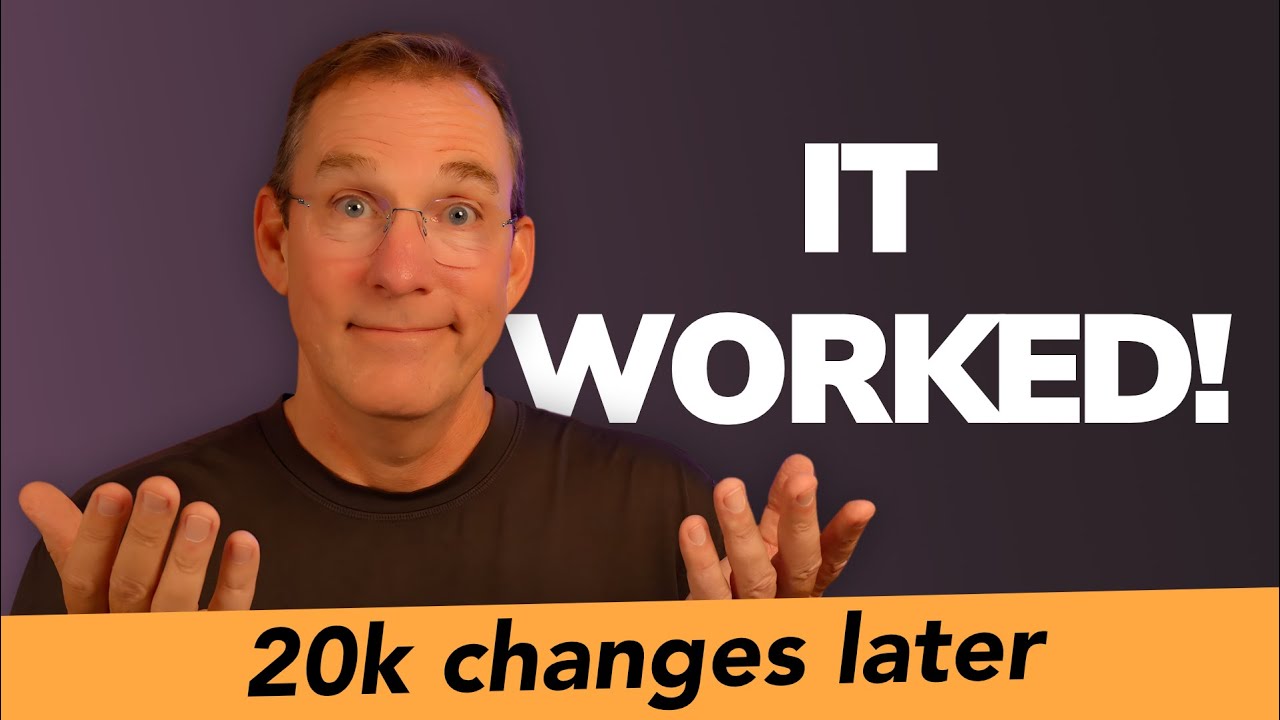
Matt Maher gave GPT-5 a 100,000-line application and asked it to rebuild. The model worked autonomously for six hours, returned 20,000 lines of changes across 150 files, and it worked perfectly on first run. The most surprising part: its first move was an architectural decision that reframed the entire approach, demonstrating system-level thinking rather than line-by-line translation.
Simon Willison defines agentic engineering as developing software with coding agents that write and execute code. The key distinction from “vibe coding”: agentic engineering emphasizes deliberate iteration and verification. “Writing code is cheap now” shifts the value to architectural thinking and problem specification.
Developer Productivity and AI Fatigue
Claude Code now supports scheduled tasks that run autonomously. Julian Goldie demonstrates how his 40,000-member community uses them for daily briefings, content research, and tool monitoring. The shift from reactive to proactive AI: you set it up once, and results appear without prompting.
Nick Saraev shows how to use autoresearch to make Claude skills improve themselves overnight. The pattern, derived from Karpathy’s autoresearch repo, combines a skill, an eval, and an optimization agent into a loop that iteratively improves reliability from ~70% to much higher.
Tom Johnell argues LLM exhaustion is a user problem, not a model problem. “As I get more tired, the quality of my prompts degrade,” creating a doom loop. His fix: metacognitive awareness of your own state, test-driven development practices, and sub-5-minute feedback loops.
Sebastian Raschka published an LLM Architecture Gallery cataloging dense, sparse MoE, MLA, and hybrid decoder designs across models from 3B to 1T parameters.
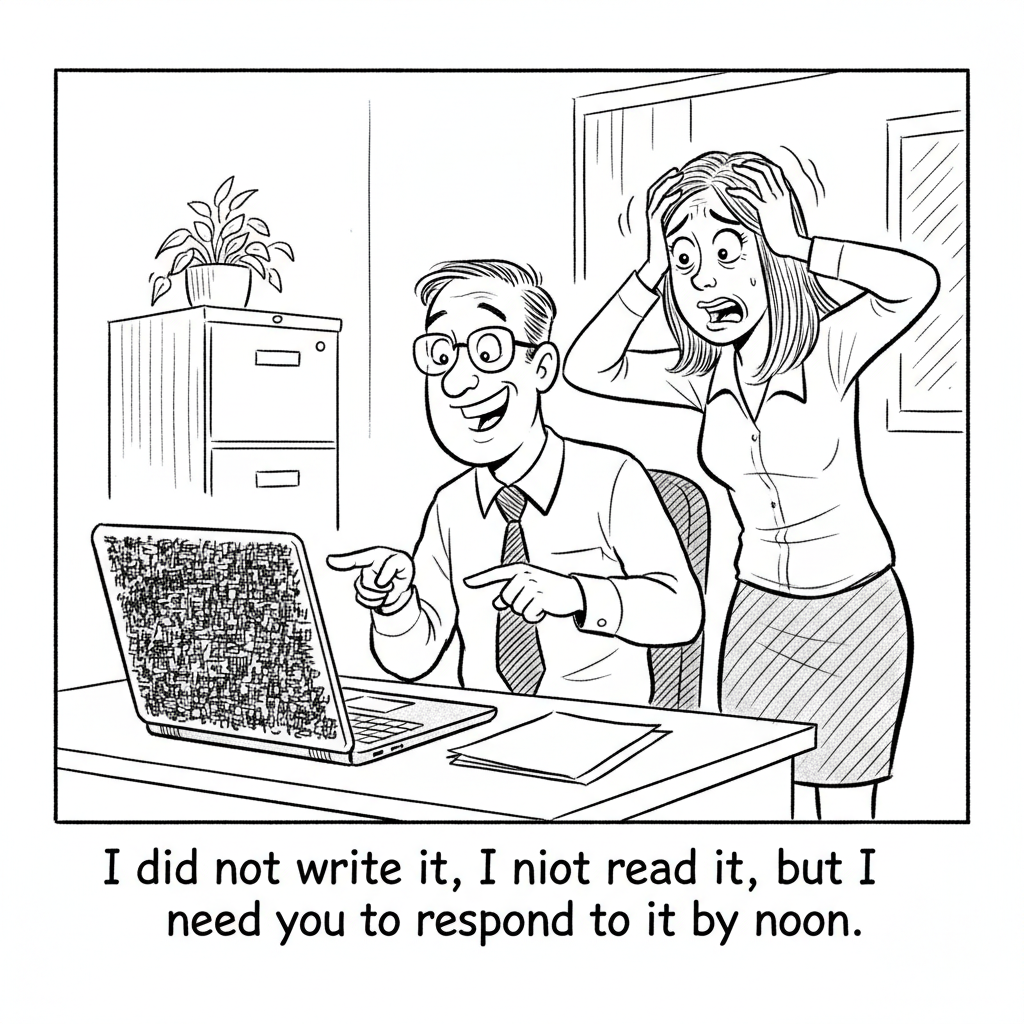
Stop Sloppypasta addresses the etiquette crisis of forwarding raw AI output. HTMLPub lets you paste AI-generated HTML and publish it as a live website in seconds.
The Throughline
The most revealing number in today’s issue isn’t Karpathy’s exposure scores or Altman’s reversal. It’s the gap between the two. If the highest-paid knowledge workers face the greatest AI exposure, and the technology threatening them doesn’t even have the right architecture yet, we’re in a strange middle period where the fear of AI disruption may be doing more economic damage than the disruption itself.
Consider: Priestley’s labor inversion argument depends on AI commoditizing knowledge work. But Altman just admitted the current approach won’t get there. Karpathy scored software developers at 9 out of 10 exposure, then pulled his analysis because it was “wildly misinterpreted.” Meanwhile, GPT-5 actually rebuilt a 100K-line app in six hours. The capability is real and growing, but it’s uneven in ways that resist simple narratives.
What the solo founder stories reveal is that the winners aren’t waiting for the scaling debate to resolve. Ben Sira, the woman who shipped in 30 days, the developers using Claude’s scheduled tasks and autoresearch loops: they’re building with what exists right now, flaws and all. The Rosie cancer vaccine story is the purest example: Conyngham didn’t need AGI. He needed ChatGPT, AlphaFold, and a willingness to try. The gap between “AI can’t do everything” and “AI can’t do anything useful” is where all the value is being created.
The Bigger Picture
Today’s stories collectively document a technology in its awkward adolescence. The trillion-dollar infrastructure is being built for capabilities that the architects themselves now admit require breakthroughs they haven’t made. And yet the current technology, the not-yet-AGI version, is already inverting labor markets, designing cancer vaccines, and enabling solo founders to outship teams of dozens.
This is the pattern that rarely gets discussed: the most economically significant AI isn’t the frontier research everyone is debating. It’s the mid-tier tooling that practitioners are quietly integrating into workflows. Scheduled tasks, autoresearch loops, vibe-coded analyses, AI-assisted genomics: none of these required a new architecture. They required people who understood the tools well enough to use them despite their limitations.
The real question for the next few years isn’t whether scaling will produce AGI. It’s whether the current generation of AI tools, operating well below the AGI threshold, will restructure enough of the economy that the AGI question becomes secondary. Priestley may be right that plumbers will earn more than lawyers. But it won’t be because AI replaced the lawyers. It will be because AI made legal research so cheap that the market couldn’t justify the old billing model anymore.
What to Watch
Karpathy’s retraction matters more than his analysis. When the person who coined “vibe coding” pulls his own vibe-coded labor analysis because it was “wildly misinterpreted,” it tells you something about how even AI insiders struggle with the gap between what AI could do and what it will do. Watch for more prominent researchers distancing themselves from their own weekend experiments.
The scheduled tasks / autoresearch stack is the real story. Claude Code running autonomously on schedules, combined with self-improving skills via autoresearch, creates a compound automation loop. If this pattern spreads beyond early adopters, it represents a qualitative shift in how knowledge workers interact with AI, from reactive prompting to proactive delegation.
Watch the mRNA-AI intersection. Rosie the dog is a proof of concept. The combination of AI-powered protein structure prediction and rapid mRNA vaccine design could move much faster in veterinary contexts (fewer regulatory barriers) before hitting human medicine. If more cases like this emerge, it becomes a powerful counter-narrative to the “AI is just chatbots” framing.
She Quit, Picked Up AI, and Shipped in 30 Days — Nate B Jones profiles solo founders hitting $2.5M ARR with zero employees and argues the differentiator is soft skills (intent clarity, taste, velocity), not tool mastery.
GPT-5 Rebuilds a 100K Line App — Matt Maher documents GPT-5 working autonomously for six hours on a massive codebase, with an architectural first move that surprised even him.
Autoresearch: Stop Fixing Your Claude Skills — Nick Saraev demonstrates Karpathy’s autoresearch pattern adapted for Claude Code skills, achieving automated overnight improvement through eval-driven optimization loops.
Claude Code Scheduled Tasks — Julian Goldie shows how scheduled tasks shift AI from reactive tool to proactive worker, with real examples running daily community briefings and automated code reviews.