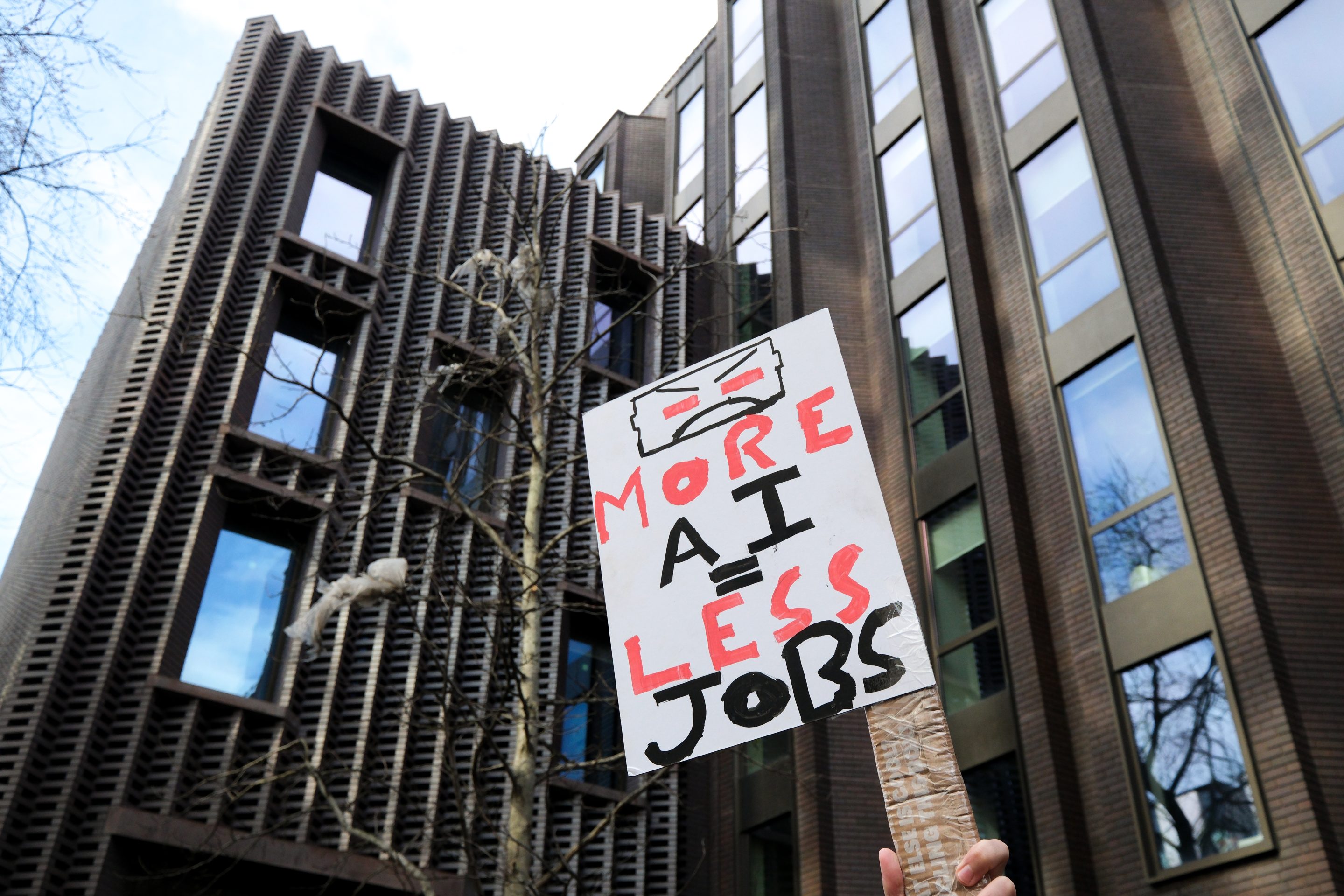
The explosive growth of OpenClaw, the open-source AI agent platform, has fueled widespread anxiety about job displacement as workers rush to learn new tools amid fears that AI agents could replace them. The Times reports on the human side of the agent revolution: the retraining scrambles, the career pivots, and the growing unease in industries where autonomous AI is no longer theoretical.
Jensen Huang's vision of 100 AI agents for every human worker, unveiled at GTC this week, has made the stakes concrete. Cognizant now estimates 93% of jobs face some disruption, with 30% facing existential threats, a $4.5 trillion economic shift.
Thompson analyzes the AI agents landscape and argues it represents something more substantial than a speculative bubble, making the case for structural economic transformation.
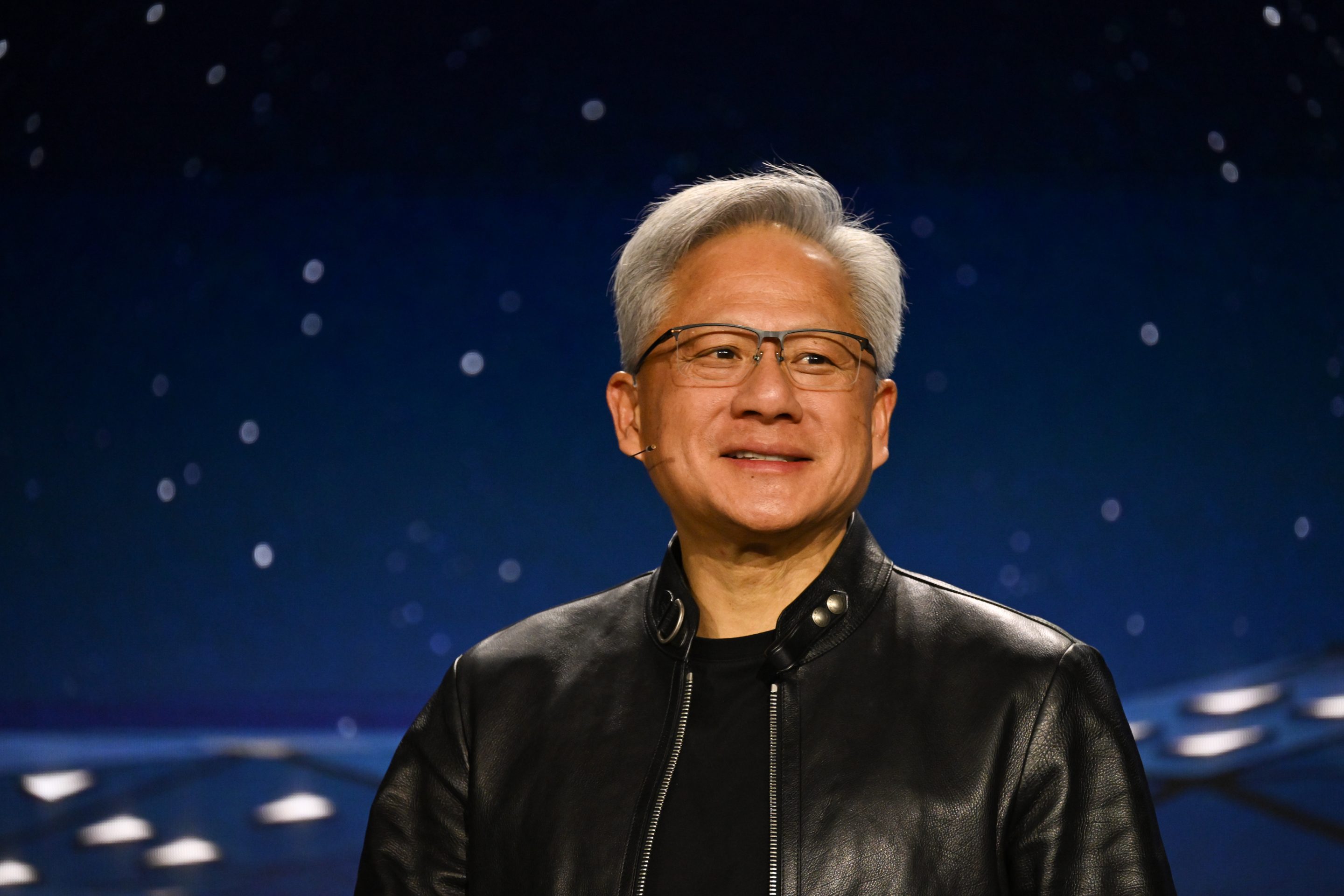
The NVIDIA CEO painted the boldest vision yet for AI's future at GTC, describing a world where AI agents work around the clock so human workers don't have to keep up, with 100 AI workers assigned to every person.
Cognizant doubled its 2023 projections: 93% of jobs face some disruption from AI, with 30% facing existential threats. The $4.5 trillion figure covers productivity gains and displacement costs alike.
OpenAI's GPT 5.4 Mini and Nano as subagent-optimized models, how subagents function as secondary AI agents, and practical workflows across Claude Code, Codex, and other tools.
Anthropic analyzed interviews with 80,508 Claude users across 159 countries in 70 languages about their hopes, concerns, and actual experiences with AI. The study reveals what real users want from AI technology, beyond the industry narrative.
The $3 billion safety science company issued UL 3115, evaluating whether AI products are safe and well-governed with human oversight throughout their lifecycle.
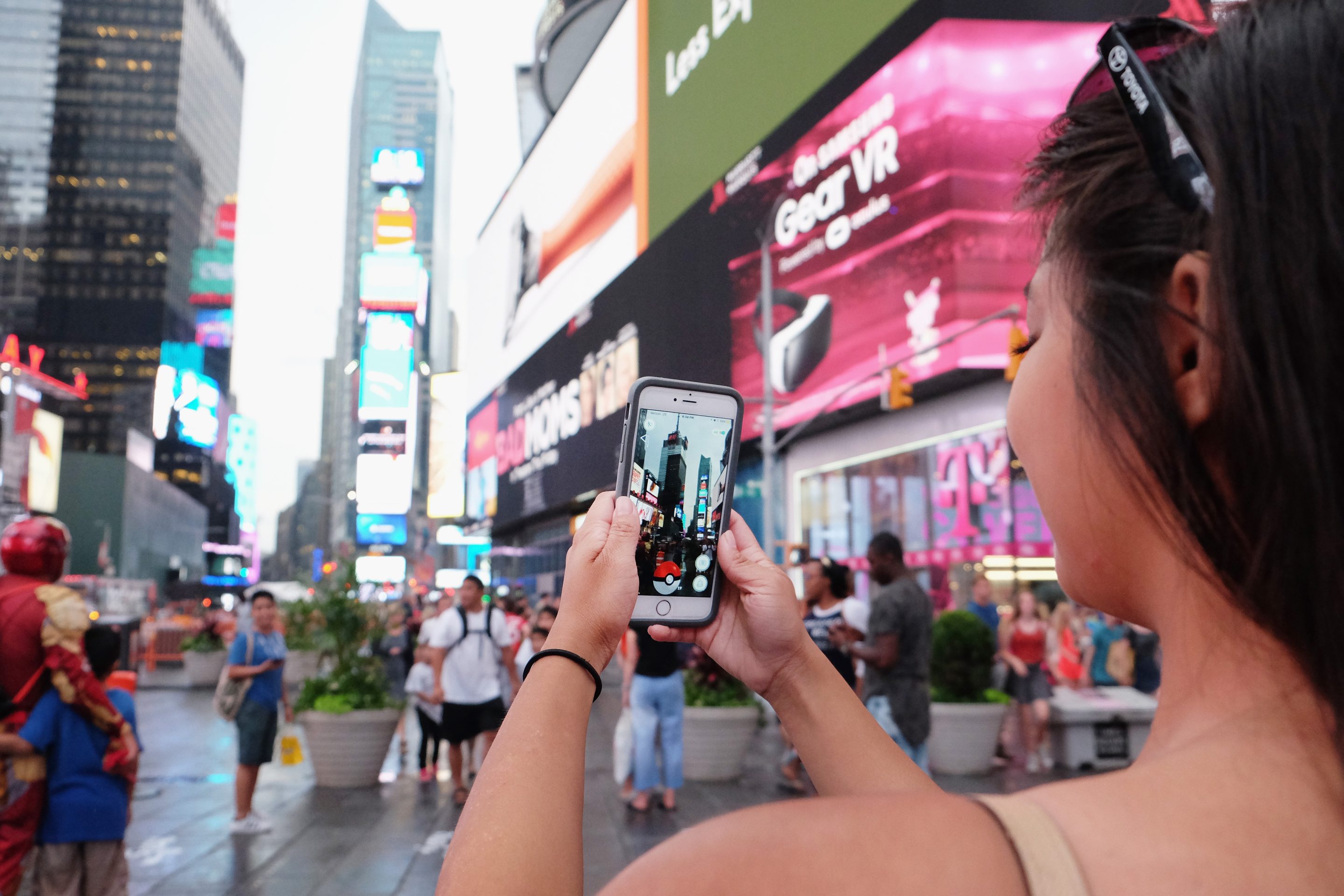
Niantic Spatial is turning a decade of 30 billion crowdsourced photos from Pokemon Go into the most precise urban navigation system delivery robots have ever had.
Microsoft launched Copilot Health, a portal that lets users upload medical records and wearable data for AI-powered analysis. Privacy experts urge caution.
Jensen Huang stood on stage at GTC and projected a future where NVIDIA employs 75,000 humans alongside 7.5 million AI agents, a 100-to-1 ratio. The same morning, Ben Thompson published his argument that AI agents are not a bubble but a structural economic transformation. Hours later, the New York Times reported on the anxiety flooding workplaces as that transformation arrives. Today's 21 stories trace a single arc: the agent era is no longer coming. It landed this week, and nobody agrees on what to do about it.
▶Listen to the Digest~7 min
Today's Headlines
The Agent Inflection Point
NYT: AI agents are here, and so is the anxiety. The Times reports on workers scrambling to learn OpenClaw and other agent platforms, career pivots accelerating, and a mood of unease across industries that assumed autonomy was still years away. The piece captures the human cost of a technological transition that outpaced even optimistic timelines.
Thompson declares "Agents Over Bubbles." His framework identifies three LLM inflection points: ChatGPT's launch (capability with hallucinations), OpenAI's o1 (reasoning and self-correction), and Anthropic's Opus 4.5 (autonomous task execution). The implication: each inflection reduced the number of humans needed to direct AI, and agents complete that arc. Companies will first cut employees, then rebuild at scale with agents. Thompson acknowledges the paradox that declaring "no bubble" may itself be evidence of one.
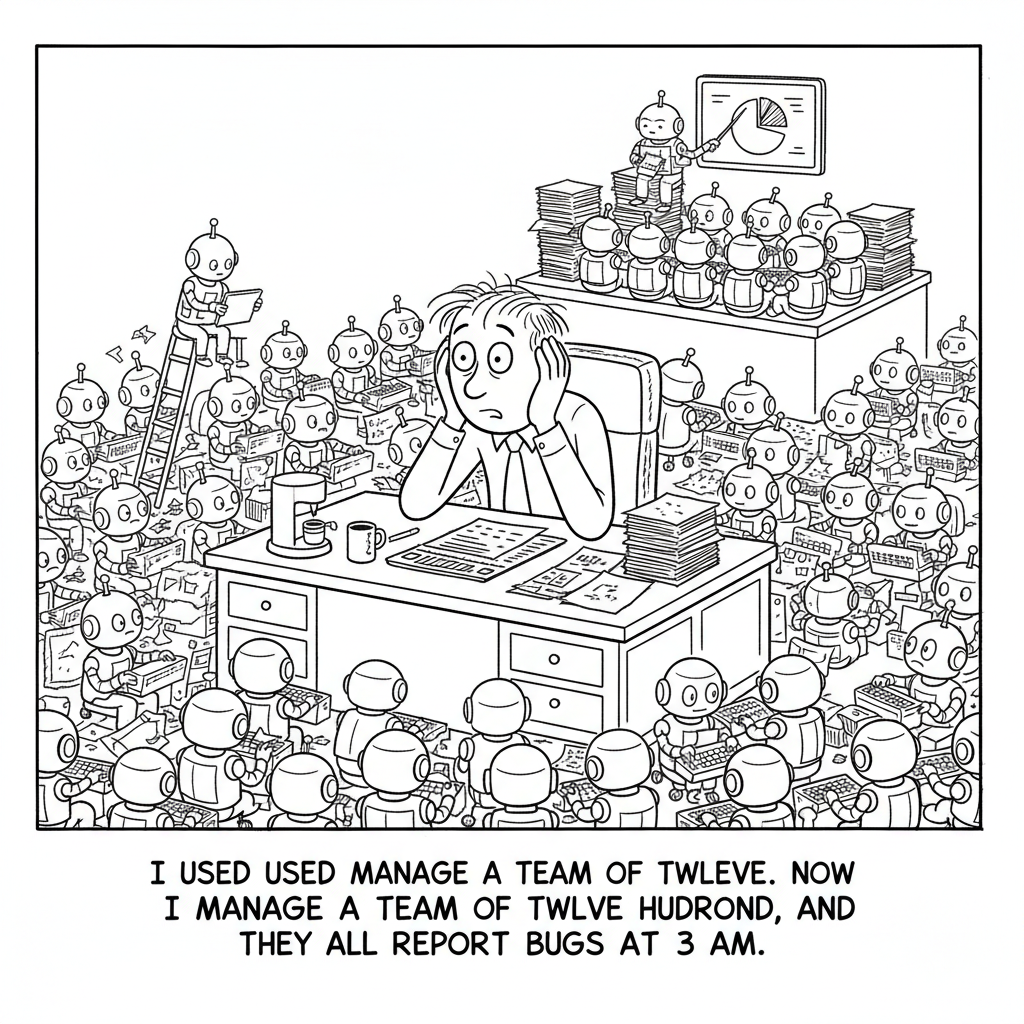
Huang envisions 100 AI workers per human. NVIDIA currently has 42,000 employees; Huang projects 75,000 working alongside 7.5 million agents within a decade. A McKinsey survey found 62% of organizations experimenting with agents, while McKinsey itself already operates 25,000 agents alongside 40,000 employees. Andrej Karpathy reported an AI agent running 700 experiments in two days, producing 20 optimizations for language model training.
NYT explores how people actually use AI agents. Beyond the anxiety narrative, the companion piece examines real deployments: multi-step task automation, customer service, research synthesis, and enterprise workflows that function without constant human input.
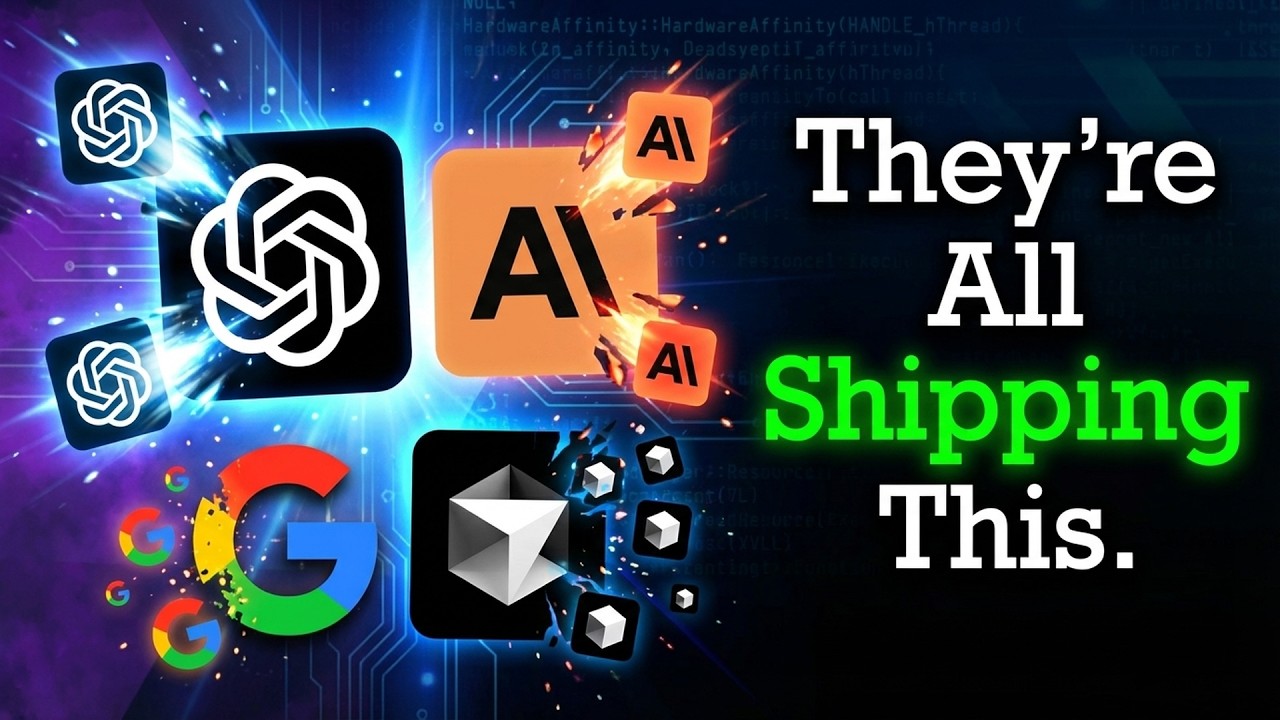
The Subagent Era arrives. Cole Medin documents how all major AI labs now prioritize smaller, faster, cheaper models over flagship models because most token-heavy coding work demands speed and parallelism over maximum reasoning. GPT 5.4 Nano outperforms Claude Haiku 4.5 on benchmarks at one-fifth the cost and 188 tokens per second versus Haiku's 53. The critical insight: subagents solve context rot by isolating research tasks in separate contexts, returning only summaries to the main agent.
The Human Reckoning
Cognizant raises AI disruption estimate to $4.5 trillion. After examining 18,000 tasks across nearly 1,000 jobs, the firm found 93% of jobs face some disruption, with 30% facing existential threat, both figures sharply higher than their 2023 projections. Their admission: "What we projected might take until 2032 to unfold is happening now before our eyes." Block has cut nearly 50% of its workforce citing AI, Meta plans 20% cuts from 79,000 employees, and Atlassian reduced headcount 10% to fund AI investments.
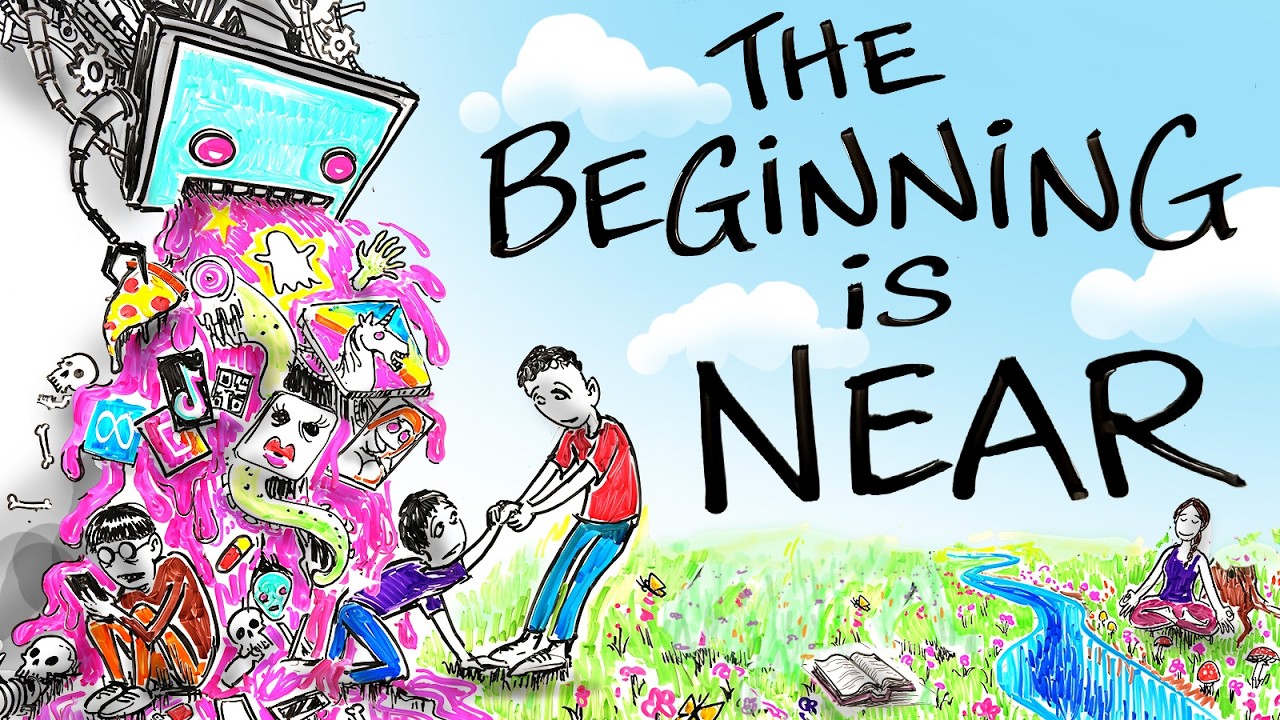
After Skool argues AI slop will spark a renaissance. The animated essay traces a pattern: agriculture severed spiritual connection to nature, writing weakened memory, GPS destroyed spatial orientation, and now AI threatens authentic creative expression. The thesis: "meaning cannot be manufactured" because AI lacks capacity for struggle, shame, or failure. The prediction for the 2030s: "unsimulated humanity" becomes a luxury commodity, and the economy pivots from rewarding quantity to rewarding quality.
Filmmaker Andreas Hem confronts AI head-on. Hem identifies "the collapse of visual trust" as AI's most corrosive effect on creative industries: "for the rest of his life, whenever he sees a photo or video, he will have to ask himself whether it is real or generated." His warning: 2026 marks the beginning of the end for narrow creative specializations unless you are in the top 1%. His prescription: expand your skill tree, lean into non-fictional work that requires physical presence, and use AI as a tool while retaining creative control.
Anthropic surveyed 81,000 people about what they want from AI. The largest qualitative AI study ever conducted (80,508 users, 159 countries, 70 languages) found "Professional Excellence" as the top vision at 18.8%, followed by "Personal Transformation." The data suggests users want AI to make them better at what they already do, not to replace what they do.
Infrastructure, Safety, and Business Models
UL Solutions launches the first AI safety certification. UL 3115 evaluates algorithm transparency, bias detection, training data verification, and human oversight throughout a product's lifecycle. CEO Jennifer Scanlon: "Innovation without safety is failure." Two companies have already achieved certification. The standard fills a gap created by minimal government oversight and fragmented state-level AI regulations.
OpenAI signals the end of unlimited ChatGPT plans. ChatGPT's head called the subscription model "accidental" and said pricing will "significantly evolve" toward usage-based models as compute costs surge. The shift reflects the economic reality that flat-rate pricing becomes unsustainable as AI capabilities, and therefore costs per user, increase.
Microsoft Copilot Health raises privacy alarms. The new portal lets users upload medical records and wearable data for AI analysis. Privacy experts urge caution, highlighting the tension between AI's analytical power and the sensitivity of health data.
Pokemon Go's 30 billion photos now train delivery robots. Niantic Spatial converted a decade of player-submitted images into a photorealistic world model. Coco Robotics operates 1,000 delivery bots across five cities using Visual Positioning, solving GPS failure in dense urban environments where satellite signals fail. The original Google Earth creator now runs the enterprise division, and player participation was always voluntary and opt-in.
The Developer Toolkit Expands
Claude Code goes fully local and free. Chase AI demonstrates running Claude Code through Ollama with open-source models. SWE-bench scores: GLM 4.7 hits 73.8% (91% of Opus 4.6's 80%), while the flash variant runs on a standard MacBook Pro at 59.2%. Local Claude Code trades cutting-edge performance for complete privacy and zero cost, approximately one year behind frontier capabilities on consumer hardware.
Claude Code SSH and Remote Control. Leon van Zyl shows how SSH makes your local hardware irrelevant for heavy AI workloads, while a companion video demonstrates QR-code pairing for controlling Claude Code from any device. Together with free local mode, the toolkit now covers every access pattern: cloud, remote server, local private, and mobile.
Agent SDK demo and the Library Meta-Skill. Developers get hands-on with Anthropic's Agent SDK for building custom agent workflows, while the Library Meta-Skill video covers distributing private skills, agents, and prompts across teams, addressing the growing need for organizational AI infrastructure.
GPT-5.4 achieves native computer use. Scoring 75% on OSWorld-Verified, exceeding the 72.4% human expert baseline, GPT-5.4 is the first general-purpose model with native desktop interaction, moving beyond text generation into direct system manipulation.
The Throughline
Today's 21 stories divide into three conversations that keep bleeding into each other: the scale of what's happening, the speed at which it's happening, and who benefits from what comes next.
On scale: Cognizant looked at its own 2023 projections, found they had underestimated every metric, and revised upward to 93% job disruption and $4.5 trillion in labor value at stake. Thompson's "Agents Over Bubbles" makes the complementary case from the investor side: agents don't just reduce costs, they restructure the enterprise value chain entirely, collapsing the number of humans needed to direct productive work. Huang's 100-to-1 ratio isn't hyperbole if you pair it with Karpathy's data point about an agent running 700 experiments in two days. The math works. The question is whether the transition is orderly.
On speed: the subagent architecture documented by Cole Medin shows how the ceiling keeps rising without requiring new frontier models. GPT 5.4 Nano runs at 188 tokens per second at one-fifth of Haiku's cost. Claude Code now works locally, via SSH, or from your phone. The developer toolkit that was elite-only six months ago is now free and ubiquitous. Cognizant's confession that what they projected for 2032 "is happening now before our eyes" captures the mood across every story today.
On who benefits: the Anthropic survey is revealing. When 80,508 users across 159 countries name "Professional Excellence" as their top desire, they are saying they want AI to make them better, not to make them unnecessary. The After Skool video and Andreas Hem's essay represent the creative community's answer: authenticity, struggle, and physical presence as differentiators that AI cannot replicate. UL 3115 represents the institutional answer: safety standards that ensure AI products have human oversight throughout their lifecycle. OpenAI's pricing evolution represents the business model answer: flat-rate subscriptions can't survive the compute demands of autonomous agents, and the shift to usage-based pricing will create winners and losers. The Pokemon Go story is the quiet revelation: 30 billion images, voluntarily submitted by players over a decade, are now training robots to navigate cities. The data you generated for fun is powering the infrastructure Huang is describing.
The Bigger Picture
We are watching two clocks run simultaneously. The capability clock, measured in benchmark scores, token throughput, and agent autonomy, is accelerating. The adaptation clock, measured in workforce retraining, safety standards, and business model evolution, is struggling to keep pace. Every story today sits somewhere on the gap between those two clocks.
The most significant development may be the least dramatic: UL Solutions issuing a voluntary safety certification because companies are proactively seeking private-sector standards rather than waiting for government regulation. If UL 3115 gains adoption, it establishes a precedent where industry self-governance moves faster than legislative action. That's the same pattern that governed electrical safety for a century. Whether it works for AI, where the risks are cognitive and economic rather than physical, remains an open question.
The Cognizant revision deserves particular weight because it comes from a company with $19 billion in revenue and 350,000 employees whose business depends on understanding labor markets. When they say their own projections were too conservative by a factor of two, and that the timeline compressed by six years, that's not a think-tank thought experiment. That's a firm recalibrating its own strategy in real time. Pair it with Thompson's framework, Huang's vision, and the developer tooling that makes all of it accessible, and the picture is clear: the agent era is not a prediction to be debated. It is a condition to be navigated.
What to Watch
UL 3115 adoption velocity. If major enterprises adopt voluntary AI safety certification before regulation requires it, the standard becomes the de facto benchmark. Watch for announcements from large companies seeking certification in Q2, particularly in healthcare and automotive where AI is embedded in physical products.
OpenAI's pricing transition. The move from flat-rate to usage-based pricing will reshape who can afford to run AI agents at scale. Enterprise customers with predictable workloads may benefit; individual developers and small teams may face cost shocks. The pricing structure that emerges will define the economic accessibility of the agent era.
Cognizant's "happening now" admission vs. actual layoff data. The firm projected 30% of jobs facing existential threat, but current layoffs (Block, Meta, Atlassian) are concentrated in tech. Watch for whether the disruption spreads to healthcare, legal, and other white-collar sectors Cognizant flagged, or whether it remains concentrated in industries that were already over-hired.
Go Deeper
The Subagent Era Is Officially Here -- Cole Medin breaks down why all major AI labs now prioritize smaller models for subagent workflows, with concrete benchmarks (GPT 5.4 Nano at 188 tokens/sec, one-fifth the cost of Haiku) and a critical warning about never splitting implementation across subagents.
How AI Slop Will Spark the Next Human Renaissance -- After Skool's animated essay traces how every powerful tool in history delivered benefits while eroding something valuable, and argues the 2030s will see "unsimulated humanity" become a luxury commodity.
Claude Code: 100% Free. 100% Private. 100% Local. -- Chase AI demonstrates running the full Claude Code agent harness through Ollama, with SWE-bench comparisons showing open-source models at 91% of Opus performance for zero cost.
Before You Adapt to AI... Watch This -- Andreas Hem identifies the collapse of visual trust as AI's most corrosive creative-industry effect and offers five concrete preparation steps for filmmakers facing the end of narrow specializations.