A new class of knowledge workers is emerging: those who negotiate AI token budgets as aggressively as they once negotiated equity packages. The practice, dubbed "tokenmaxxing," reflects a fundamental shift in how productivity is measured and compensated in the age of AI agents.
As companies like Nvidia push AI tokens as a standard job perk and workers discover that deploying more AI compute directly translates to higher output, the gap between token-rich and token-poor employees is becoming the defining fault line of the AI workplace.
A Bank of America report reveals that while new business formation is surging, these AI-enabled startups are hiring fewer employees. Founders are leveraging AI tools to boost productivity, with some reducing engineering teams by a third.
Adobe CFO Dan Durn is deploying autonomous AI agents across the finance organization to handle forecasting, contract reviews, and email management, processing 300,000 emails annually while cutting contract review time in half.
A new research paper explores how reliance on AI tools is reshaping human cognitive patterns, introducing the concept of "cognitive surrender" where users increasingly defer reasoning to AI systems rather than engaging in independent thought.
Sashiko monitors public mailing lists to evaluate proposed Linux kernel changes using AI-driven analysis across multiple subsystems, operating as an automated reviewer that augments human code review.
The tiny corp's open-source hardware line is designed for efficient machine learning training and inference, offering an alternative to Nvidia's dominance in the AI compute stack.
The Lighter Side
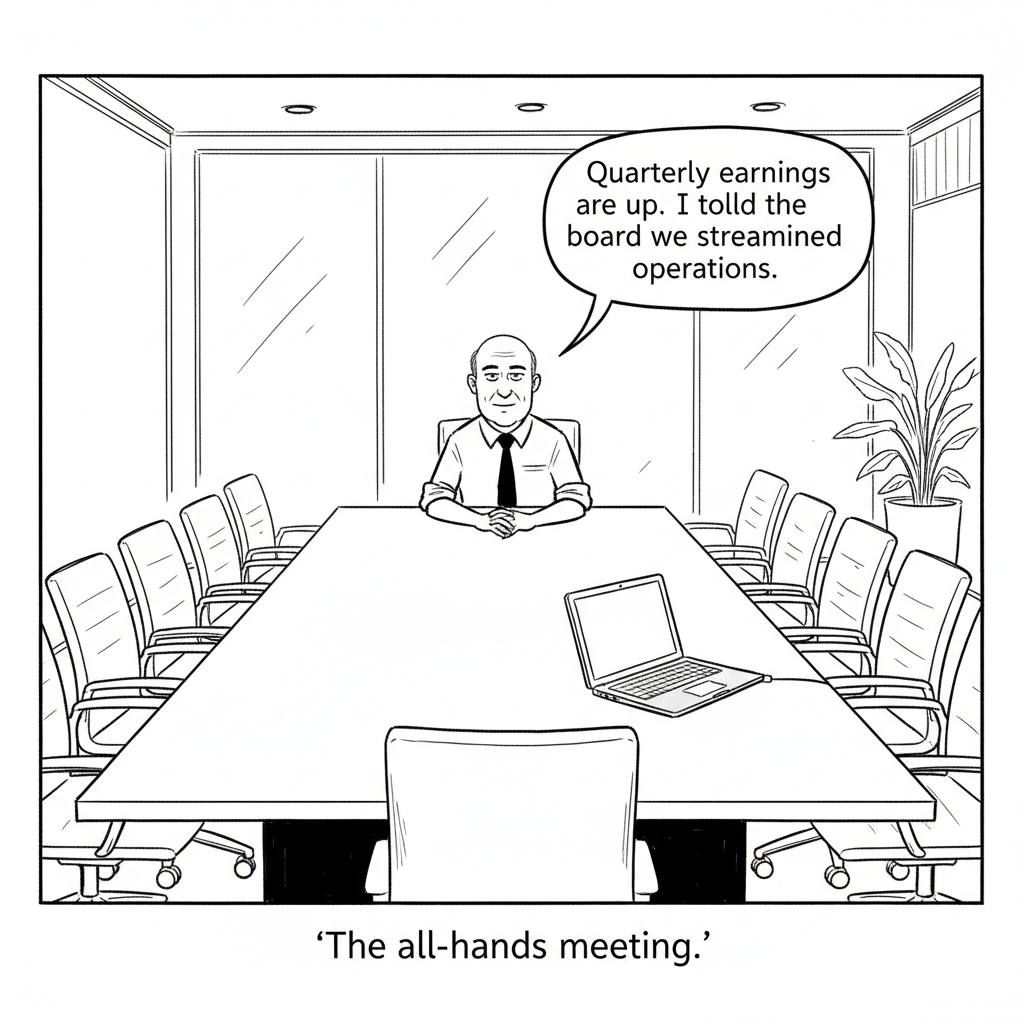
"Quarterly earnings are up. I told the board we streamlined operations."
Unscramble each AI headline word. The red letter in each scramble spells a hidden 4-letter bonus word.
NGIEATC
These AI systems act on their own
SNKOET
AI currency, the new signing bonus?
OEDAB
The company whose CFO built an AI lab
LNRKEE
Linux core reviewed by AI line by line
Bonus Word
·
·
·
·
What AI agents write, review, and ship this week
Puzzle complete! All five words solved.
✦ The Big Picture
An engineer at Ericsson likely spends more on Claude API usage than he earns in annual salary. His employer covers the tab. That single detail from today's lead story captures something bigger than a compensation trend: we're watching the emergence of a workforce measured not by what it produces, but by how much AI compute it deploys.
▶Listen to the Digest~7 min
Today's Headlines
The Token Economy
'Tokenmaxxing' enters the lexicon. The New York Times reports engineers at Meta and OpenAI are competing on internal leaderboards tracking token consumption, running swarms of agents that burn through millions of tokens daily with minimal human input. Where an average knowledge worker might use 10,000 tokens in an afternoon, a tokenmaxxing engineer deploys millions in the background without typing a word.
Jensen Huang wants tokens as salary. At GTC 2026, Nvidia's CEO proposed token budgets worth roughly half an engineer's base salary on top of existing pay, framing AI compute as a productivity multiplier. His new formula: Revenue equals Tokens per Watt times Available Gigawatts. The company expects $1 trillion in Blackwell and Vera Rubin chip orders through 2027.
TechCrunch pushes back. Connie Loizos warns engineers to "hold the line" before treating token budgets as compensation, questioning whether companies are genuinely adding value or repackaging infrastructure costs as perks. When your token spend approaches your salary, finance starts asking different questions about headcount.
The hardware to feed the habit. tinygrad's tinybox line ranges from $12,000 (4x AMD 9070XT, 778 TFLOPS) to $65,000 (4x RTX PRO 6000 Blackwell, 3,086 TFLOPS), with a planned $10 million Exabox promising one exaflop by 2027. All ship within a week, wire transfer only, no customization.
The Zero-Employee Company
More businesses, fewer jobs. High-propensity business applications jumped 15.1% year-over-year in January 2026, but applications with explicit hiring plans fell 4.4%. Employers cut 92,000 positions in February; Fed Chair Powell noted "effectively zero net job creation in the private sector." AI is cited in 8% of all job cut announcements this year, roughly 12,304 instances.
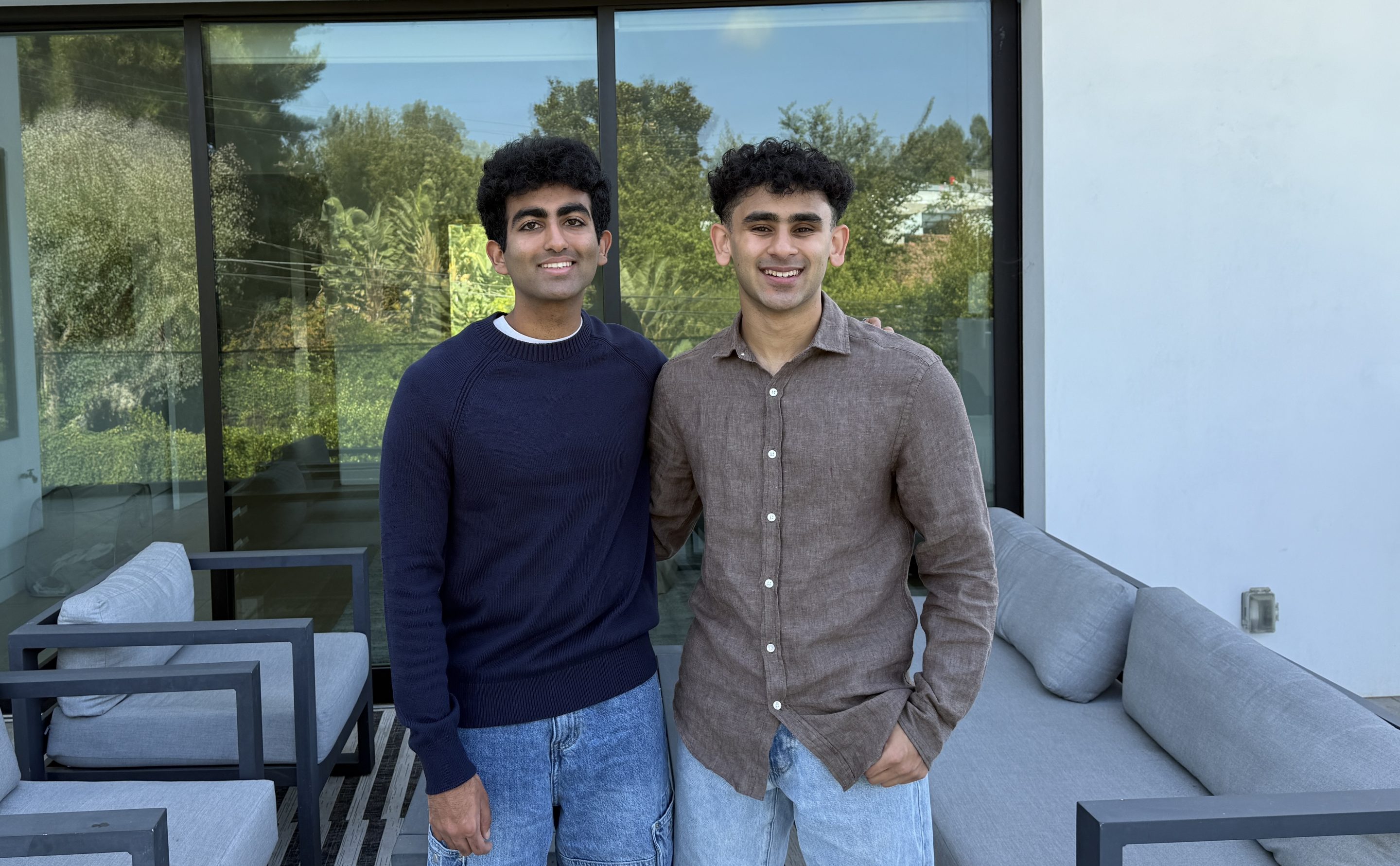
TurboAI: 8.5 million users, 13 employees. Two 21-year-old founders (Northwestern and Duke) built this AI-powered educational tool for under $300. It now generates $1 million in monthly revenue. Pre-AI, they estimate it would have required 100+ employees. A VC partner speculates AI may eventually enable "founderless unicorn companies."
Adobe's CFO goes agentic. Dan Durn deployed autonomous AI across Adobe's finance org: PDF AI surfaces investor insights in minutes, contract review is cut "roughly in half," and an email system auto-responded to 300,000 emails in 2025 alone, saving 5,000+ hours. Adobe's AI-first product revenue more than tripled year-over-year in Q1 fiscal 2026. McKinsey notes that while 88% of organizations experiment with AI, fewer than 20% see bottom-line results, positioning Adobe as the exception.
Cognitive Surrender
Wharton researchers name the new cognitive risk. Shaw and Nave ran three preregistered experiments (N=1,372; 9,593 trials) using a modified Cognitive Reflection Test with randomized AI accuracy. When the AI was accurate, participant performance rose 25 percentage points. When it was deliberately wrong, performance dropped 15 points below baseline. Crucially, AI access inflated self-reported confidence by half a standard deviation even when answers were wrong.
The "System 3" proposal. Extending Kahneman's dual-process theory, the paper argues AI represents a genuinely new cognitive pathway: external, automated, data-driven, and dynamic. "Cognitive offloading" is strategic delegation. "Cognitive surrender" is uncritical abdication of reasoning itself. High-trust participants had 3.5x greater odds of following faulty AI advice.
Building More Reliable AI
Sashiko reviews the Linux kernel. This open-source, Linux Foundation project uses agentic AI to review kernel patches across architecture, security, resource management, and concurrency. Testing against 1,000 upstream commits with "Fixed:" labels, it identified 53.6% of bugs. It's model-agnostic, probabilistic by design, and funded by Google compute.
Claude Code gets real-time channels. Anthropic's new Channels feature (research preview) lets MCP servers push webhooks, alerts, and chat messages directly into Claude Code sessions. Supported bridges include Telegram and Discord. The security warning is blunt: ungated channels are prompt injection vectors.
Anthropic publishes a hallucination playbook. Techniques range from simply letting Claude say "I don't know" (described as "drastically" reducing false information) to chain-of-thought verification and best-of-N output comparison. The caveat: "these techniques significantly reduce hallucinations" but "don't eliminate them entirely."
The Throughline
The tension running through today's stories is almost too clean: we are simultaneously building tools to make AI more trustworthy while constructing an economy that makes trusting AI without scrutiny the default operating mode.
Consider the sequence. Sashiko catches 53.6% of kernel bugs. Anthropic publishes a guide to reducing hallucinations. Claude Code now accepts real-time notifications from external systems. Each of these is a genuine step toward more reliable AI. But at the same time, Adobe's finance department is auto-responding to 300,000 emails a year, TurboAI runs $1M/month in revenue with 13 people, and engineers are competing on leaderboards that track how much AI compute they burn through, not what they actually build.
Shaw and Nave's cognitive surrender research sits at the center of this contradiction. Their most unsettling finding isn't that AI makes people wrong more often. It's that AI makes people confident they're right even when they're wrong. Confidence rose half a standard deviation regardless of answer correctness. That's the mechanism by which a tool designed to augment judgment ends up replacing it. And the people most vulnerable to it are the ones with the highest trust in AI, which is to say, precisely the engineers tokenmaxxing their way up internal leaderboards.
The counterargument, voiced by Apollo's Torsten Slok, is that this is a transitional mess. More companies will eventually mean more jobs. The AI tools will improve. The humans will learn. But that framing assumes the stepping-stone positions historically used to develop junior talent will survive long enough to train the next generation of critical thinkers. When a company can be built for $300 and run with 13 people, the question isn't whether AI creates value. It's who gets to develop the judgment to evaluate it.
The Bigger Picture
Jensen Huang's formula at GTC, Revenue = (Tokens per Watt) x (Available Gigawatts), is the most concise statement yet of where the AI economy is heading. Tokens are becoming the base unit of economic value, the way CPU cycles were in the 1990s and cloud compute hours were in the 2010s. But there's a difference: CPU cycles and cloud hours were measured in terms of human-directed work. Tokens are increasingly autonomous, spent by agents that humans launch and then walk away from.
That shift redefines what "work" means. The tokenmaxxing engineer isn't working in any traditional sense. They're deploying capital, specifically compute capital, and the value they generate is a function of how much they deploy, not how hard they think. This looks less like engineering and more like asset management. And asset management, as an industry, employs far fewer people than the sectors it replaced.
The per-million-token price dropped 92% in three years, from $30 to under $2.50. That deflation makes token-based compensation viable but also makes human labor comparatively expensive. When Adobe saves 5,000 hours of manual email work with an AI system, those hours don't get redistributed. They vanish. The question we're not asking loudly enough: as AI gets cheaper and humans don't, what happens to the 80% of organizations McKinsey says haven't seen bottom-line AI results yet? Do they keep investing in human development, or do they just wait for the tools to get cheap enough to skip it entirely?
What to Watch
Token budgets as a recruiting differentiator. Watch for whether major tech employers start listing token allocations in job postings alongside salary and equity. If tokens appear in the next round of Y Combinator demo days, the shift from perk to expectation is complete.
Cognitive surrender in high-stakes domains. Shaw and Nave specifically flagged education and healthcare. Watch for evidence, particularly AI-assisted medical diagnosis accuracy studies, where over-reliance on AI recommendations degrades physician performance on cases the AI gets wrong.
The junior talent pipeline. If AI-native startups continue operating with 10-15 employees where 100+ were previously needed, the entry-level positions that historically trained the next generation of senior talent simply won't exist. Watch for early signs in tech hiring data: not just layoffs, but the disappearance of junior roles entirely.