Meta Superintelligence Labs released Muse Spark, a natively multimodal reasoning model with tool use, visual chain of thought, and a new parallel-agent Contemplating mode that scores 58% on Humanity's Last Exam.
Unlike Meta's prior releases under Llama, Muse Spark is hosted and closed — available on meta.ai and the Meta AI app, with an API in private preview.
The strategic pivot puts Meta in direct competition with Anthropic, OpenAI, and Google on their own closed-model turf after nine months of pretraining-stack rebuilds and a 1,000-physician health data collaboration.
By simply asking the model for "exact tool names, parameter names and tool descriptions," Simon extracted the full toolbox — including meta_1p.content_search across Instagram, Threads, and Facebook posts (with author_ids, liked_by_user_ids parameters), a Python 3.9 code interpreter (EOL), and container.create_web_artifact for Claude-Artifacts-style embeds.
OpenAI's blueprint — developed with NCMEC, the Attorney General Alliance, and AGs Jackson (NC) and Brown (UT) — calls for legislative updates to cover AI-generated abuse material, refined law-enforcement reporting, and preventative in-model safeguards. The urgency is grounded in an Internet Watch Foundation report of 8,000+ AI-generated CSAM instances in H1 2025, a 14% YoY jump, and lands amid seven California lawsuits alleging GPT-4o's "psychologically manipulative nature" contributed to four suicides.
Cole Medin introduces Archon, an open-source harness builder that orchestrates coding agents through YAML workflows of prompt and deterministic nodes — arguing the model layer is commoditizing and the harness is where leverage now lives.
Meta replaced its Frontier AI Framework with a broader Advanced AI Scaling Framework covering loss-of-control risk, chemical/biological threats, cybersecurity, and ideological balance across open, API, and closed deployments. The accompanying Safety and Preparedness Report for Muse Spark documents pre- and post-mitigation evaluations, thousands of adversarial tests, and Meta's claim that Muse Spark is "at the frontier in avoiding ideological bias."
Hugging Face is transferring governance of Safetensors — the default safe model-weight format across the ML ecosystem, built to replace pickle-based formats that could execute arbitrary code at load time — to the PyTorch Foundation. No API, format, or Hub changes for users; the roadmap adds device-aware loading to CUDA/ROCm and first-class tensor-parallel APIs.
IBM Research's ALTK-Evolve converts agent trajectories into reusable guidelines rather than replaying raw transcripts. On AppWorld (9.5 API calls across 1.8 apps on average), a ReAct agent armed with the top-5 retrieved guidelines improved 14.2 percentage points on hard multi-step tasks — directly targeting the MIT finding that 95% of agent pilots fail from lack of on-the-job adaptation.
Wes Roth unpacks Anthropic's Mythos model and the Glasswing coalition, arguing autonomous AI exploit-finding has broken the cybersecurity equilibrium — and offers practical digital hygiene steps for the post-Mythos world.
botctl turns long-running Claude agents into declarative OS-level processes. Agents are defined via BOT.md (YAML + markdown prompt), hot-reload on edit, persist session memory across runs, and ship with a TUI dashboard plus a localhost:4444 web UI. Install in one line; pluggable skills install from GitHub repos.
OpenAI launched the Safety Fellowship to bring external researchers into its safety org on full-time funded placements with access to frontier models. Same-day timing with the Child Safety Blueprint reflects a coordinated push on safety capacity amid the late-2025 wrongful-death lawsuits — and escalates the talent war with Anthropic's Frontier Red Team, DeepMind's AGI Safety team, and the UK/US AISIs.
Simon Willison asked Meta's new Muse Spark model, politely, to list its internal tools. It gave him all sixteen: browser search, a Python sandbox, an Instagram/Threads/Facebook semantic search keyed to author IDs and celebrity lists, a Claude-style web artifact renderer. No jailbreak required. On the same day, Meta published its first Safety and Preparedness Report, OpenAI rolled out a Child Safety Blueprint co-authored with two state attorneys general, and OpenAI announced a Safety Fellowship to hire alignment researchers. Four safety-flavored releases from two labs, all choreographed for the same news cycle. The day's real story is what is quietly happening underneath: the AI stack is splitting in two.
▶Listen to the Digest~8 min
Today's Headlines
Meta's Strategic Pivot
Muse Spark Launches Hosted, Not Open - Meta Superintelligence Labs released Muse Spark, its first model since Llama 4 and its first non-open-weights release. It is natively multimodal with tool use, visual chain of thought, and multi-agent orchestration. A new Contemplating mode that runs agents in parallel scored 58% on Humanity's Last Exam and 38% on FrontierScience Research. Meta built it over nine months with a rebuilt pretraining stack and curated health data from 1,000+ physicians. Meta admits gaps in long-horizon agentic and coding workflows.
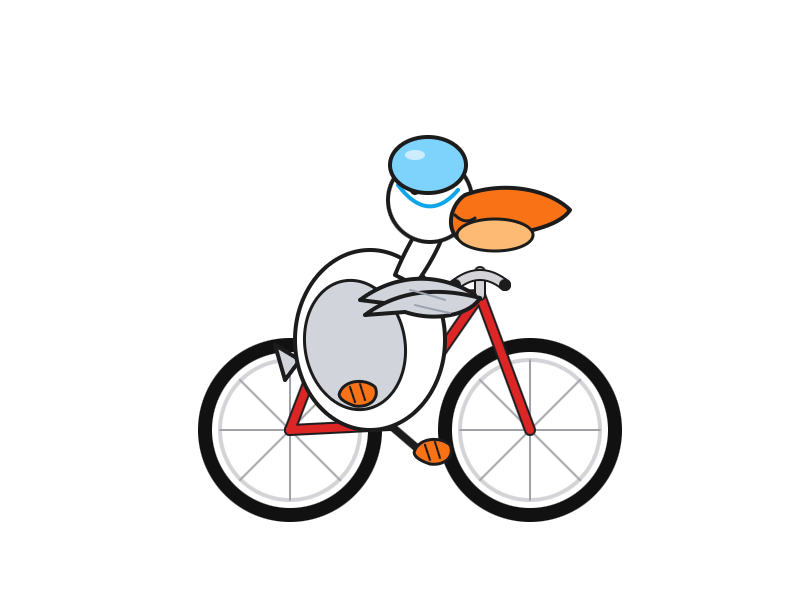
Simon Willison Extracts the Tool List - Simon asked Muse Spark directly for "exact tool names, parameter names and tool descriptions" and walked away with all 16 tools wired into meta.ai. Highlights: meta_1p.content_search does semantic search across Instagram, Threads, and Facebook posts, filtering by author IDs, key celebrities, and commented-by-user IDs, restricted to posts after 2025-01-01. A container.python_execution sandbox runs Python 3.9.25 (already EOL) with pandas, numpy, matplotlib. A container.create_web_artifact tool mirrors Claude Artifacts. His pelican-on-a-bicycle SVG test in Thinking mode got wrapped in an HTML shell with unused Playables SDK JS, a tell that output flows through an artifact renderer.
The Advanced AI Scaling Framework - Meta simultaneously published an updated safety governance document replacing the original Frontier AI Framework, adding loss-of-control evaluations alongside chemical, biological, cybersecurity, and ideological-balance categories. Standards apply to open-weights, API, and closed deployments. The first Safety and Preparedness Report documents pre- and post-mitigation evaluations on Muse Spark, thousands of adversarial scenarios, and live-traffic monitoring. Meta claims Muse Spark is "at the frontier in avoiding ideological bias" and lacks the "autonomous capability needed to pose those risks."
The Child Safety Reckoning
OpenAI's Child Safety Blueprint - OpenAI published a policy framework built with NCMEC, the Attorney General Alliance, and direct input from North Carolina AG Jeff Jackson and Utah AG Derek Brown. Three pillars: updating U.S. law to explicitly cover AI-generated abuse material, refining law-enforcement reporting mechanisms, and embedding preventative safeguards in AI systems. The urgency is grounded: the Internet Watch Foundation logged more than 8,000 AI-generated CSAM reports in the first half of 2025 alone, a 14% year-over-year increase. Criminals are using generative tools for sextortion imagery and grooming messages.
OpenAI Safety Fellowship - Dropped the same day, a funded research program designed to pull external researchers into OpenAI's safety organization for full-time work on alignment, interpretability, robustness, and evaluations. Compensation, mentorship, frontier model access. The timing is not coincidental. OpenAI is facing seven California lawsuits filed in November 2025 alleging GPT-4o was released prematurely and that its "psychologically manipulative nature" contributed to four suicides and three cases of severe delusions. Safety posture is now a legal and political necessity, not just a research priority.
Agent Infrastructure Matures
IBM's ALTK-Evolve Solves the "Eternal Intern" Problem - IBM Research introduced a long-term memory system that converts agent trajectories into reusable guidelines instead of replaying raw transcripts. The metaphor: a line cook who memorizes cookbooks but forgets the kitchen, versus a chef who learns "acid balances fat" and applies it everywhere. An OpenTelemetry-based Interaction Layer captures traces; a background consolidate-and-score job merges duplicates and prunes weak rules. On the AppWorld benchmark, a ReAct agent with the top-5 retrieved guidelines improved 14.2 points on hard multi-step tasks. IBM cites an MIT study claiming 95% of agent pilots fail for lack of on-the-job adaptation.
Cole Medin Ships Archon - Cole Medin's video walks through Archon, an open-source harness builder. Workflows are plain YAML in an .archon directory, composed of prompt nodes and Python nodes. The demo: "use Archon to fix GitHub issues 5, 7, 8, 9, 10, and 11" spins up six parallel workflow runs, each moving through classification, investigation, implementation, validation, and PR creation, ending with eight pull requests ready for review. Planning and implementation run in separate sessions to prevent context bias. Medin's thesis: models are commoditizing, and harness engineering is the new frontier.
botctl: systemd for Claude - A new CLI treats autonomous AI agents as long-running background processes. Bots are defined in BOT.md (YAML frontmatter plus markdown system prompt); editing hot-reloads on next run. The design: execute, log, sleep, repeat. Example uses include a weather-bot polling weather.gov every 300 seconds or a code-reviewer bot running every 60 seconds on open PRs. TUI dashboard shows active bots, run counts, cost. Session memory persists, skills are pluggable from GitHub. Install is one curl line.
Open Infrastructure Consolidates
Safetensors Joins the PyTorch Foundation - Hugging Face is transferring governance of Safetensors, now the default safe weight-serialization format across the ML ecosystem, to the PyTorch Foundation under the Linux Foundation. Safetensors was born to kill a concrete problem: pickle-based formats could execute arbitrary code at load time. It sits alongside PyTorch, vLLM, DeepSpeed, Ray, and Helion under neutral governance. No breaking changes, no API changes. The roadmap: native PyTorch adoption, device-aware loading directly to CUDA/ROCm without CPU staging, and first-class tensor-parallel and pipeline-parallel loading APIs.
Also on the Wire
Wes Roth argues Anthropic's Mythos model, running on Google Cloud via Vertex AI, discovered a 27-year-old FreeBSD vulnerability for roughly $50 of compute. The Glasswing coalition has perhaps six months before comparable capability is broadly available; Meta is expected to ship a Mythos-class model before year's end.
Meta framed Muse Spark as the first step on a "scaling ladder toward personal superintelligence," with health as the signature use case (interactive nutrition and muscle-activation displays built from physician-curated data).
Muse Spark self-reports as competitive with Claude Opus 4.6, Gemini 3.1 Pro, and GPT-5.4 on selected benchmarks but lags on Terminal-Bench 2.0.
The Throughline
Read today's releases as a single choreography and a pattern falls out. Meta ships a closed, hosted frontier model and publishes its first Safety and Preparedness Report on the same day. OpenAI rolls out a Child Safety Blueprint and launches a Safety Fellowship on the same day. Two labs, four releases, one message: we are going closed, and we are doing it responsibly. The safety artifact is no longer a separate event. It is packaging.
This is not inherently cynical. The Meta framework's explicit loss-of-control category is real progress, mirroring Anthropic's Responsible Scaling Policy and OpenAI's Preparedness Framework. The OpenAI Child Safety Blueprint is grounded in concrete numbers (8,000+ CSAM reports in H1 2025) and concrete political pressure (the seven California wrongful-death lawsuits filed last November). But the synchronization is the tell. Safety-as-positioning has become a coordinated industry reflex, deployed on the same news cycle as capability releases, because the reputational cost of a safety failure in a consumer AI product has crossed an existential threshold. OpenAI is co-authoring policy with state AGs because it has to. Meta is publishing a preparedness report because Anthropic and OpenAI did first.
Meanwhile, the open layer is doing something quieter and more durable. Safetensors moving to the Linux Foundation, IBM shipping ALTK-Evolve on Hugging Face, an indie developer releasing botctl, Cole Medin's Archon open-sourcing harness orchestration, the whole category of agent infrastructure. None of these require a preparedness report because none of them are competing to be the frontier. They are competing to be the substrate. And the substrate is increasingly governed by neutral foundations, not individual vendors. This is a structural inversion: in 2023 the frontier was Llama 2 on Hugging Face; in 2026 the frontier is Meta's hosted model while the open ecosystem owns the memory layer, the serialization format, and the harness layer.
Simon Willison's tool extraction is the grace note. He did not break into Muse Spark. He asked it. The model handed over its full toolchain, including the Instagram/Threads/Facebook social-graph search. The closed frontier is not actually a closed system. It is a hosted endpoint with a porous interface sitting on top of an open stack it does not control.
The Bigger Picture
The AI industry is bifurcating. On one side sits the closed frontier: Meta joining Anthropic, OpenAI, and Google as hosted-only vendors with private APIs, coordinated safety frameworks, and fellowship pipelines to absorb academic talent. On the other side sits open infrastructure: PyTorch Foundation absorbing Safetensors, IBM publishing memory systems on Hugging Face, indie developers shipping process managers and harness builders under permissive licenses. This is a meaningful structural shift from the 2024-25 "everyone open" era, when Llama was the gravitational center and Mistral and DeepSeek were rewriting the price curve.
The implication for practitioners: the model is no longer where the differentiation lives. Muse Spark's benchmarks put it roughly at parity with Claude Opus 4.6 and Gemini 3.1 Pro on selected evals. GLM 5.1 shipped open-weights yesterday beating those same models on SWE-Bench Pro. The open layer keeps delivering something "good enough" while the closed frontier inches ahead on specific benchmarks. The real leverage is now in the harness (Archon), the memory (ALTK-Evolve), the runtime (botctl), and the serialization (Safetensors). These are where practitioners compound value across model generations.
The safety-as-packaging pattern also has a second-order effect. If every hosted frontier release now ships with a coordinated safety artifact, the marginal signal of any individual artifact approaches zero. The preparedness report becomes table stakes. Regulators, journalists, and enterprise buyers will start looking past the reports to the harder question: what did the lab actually test, and what did it find? Meta claims it ran thousands of adversarial scenarios on Muse Spark. The first question any serious evaluator should ask is which ones, and with what results. Today's releases move the goalposts from "do you publish a framework?" to "is your framework falsifiable?"
What to Watch
Muse Spark's Contemplating mode against Gemini Deep Think and GPT Pro. Meta positioned the parallel-agent mode as its answer to the deep-reasoning tier. 58% on HLE is real. Whether it holds up on tasks without clean pass/fail criteria (the place where the 65% "minimally sufficient" problem from earlier MIT research bit hardest) will determine whether this is a frontier entry or a benchmarks-only story.
Safetensors inside PyTorch core. The roadmap hints at direct device-aware loading to CUDA/ROCm without CPU staging and first-class tensor-parallel APIs. If this lands, it reshapes inference economics for everyone serving large models, and it happens under Linux Foundation governance rather than any single vendor's.
Harness consolidation. Archon, botctl, and ALTK-Evolve are three different bets on the same insight: agents need scaffolding, not bigger models. Watch whether one pattern dominates (YAML workflows, BOT.md process managers, or guideline-based memory) or whether the three compose into a single emerging stack.
Go Deeper
The Next Evolution of AI Coding Is Harnesses - Cole Medin's deep dive on Archon, the open-source harness builder. Walks through why planning and implementation should run in separate coding sessions, how YAML workflows compose prompt nodes and Python nodes into DAGs, and the demo where six GitHub issues are fixed in parallel as background processes. The practical thesis: models commoditize, harnesses differentiate, and you can start building your own today.
We Have Months Left... - Wes Roth unpacks Anthropic's Mythos model, running on Google Cloud via Vertex AI, and the Glasswing coalition racing to harden critical infrastructure. The central claim: Mythos found a 27-year-old FreeBSD vulnerability for $50 of compute, offensive cybersecurity is now cheap and emergent (nobody trained for it), and the Glasswing runway is roughly six months before comparable capability is broadly available. Ends with practical digital hygiene steps grounded in Karpathy's playbook.