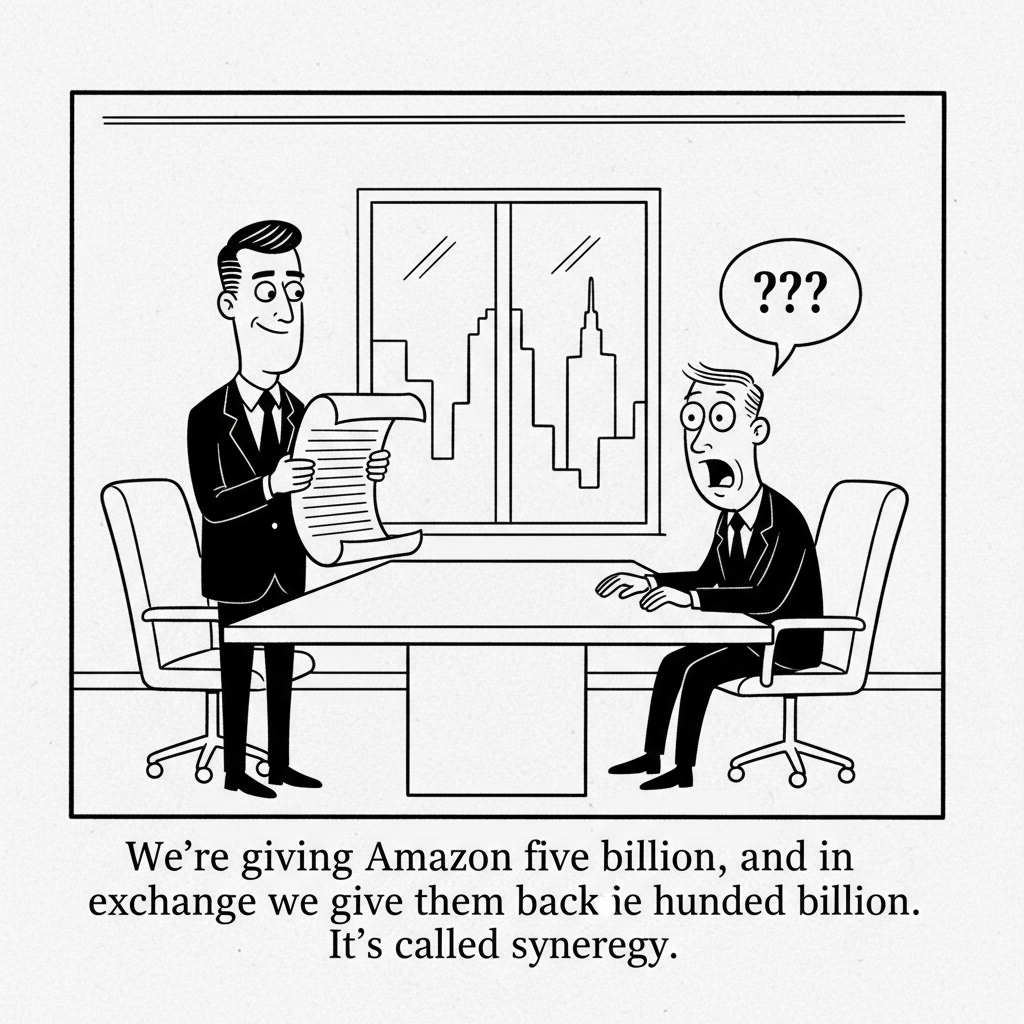
Amazon has invested another $5 billion in Anthropic, taking its total stake to roughly $13 billion. In return, Anthropic has committed to more than $100 billion of AWS spending over the next decade, with access to up to 5 gigawatts of compute.
The deal is the clearest restatement yet of the hyperscaler-model-lab bargain: the lab gets capital and capacity, the cloud gets a decade of locked-in demand. Google and Microsoft are running the same play with their own labs. The question is no longer whether frontier AI is compute-bound, but whose compute it's bound to.
Wes Roth unpacks the coding-model arms race among OpenAI, Anthropic, xAI, and Google, arguing that AI-assisted programming is about to compound every other advantage the market leaders already have. The study guide goes through the new benchmark numbers and where GPT 5.5 still falls over.
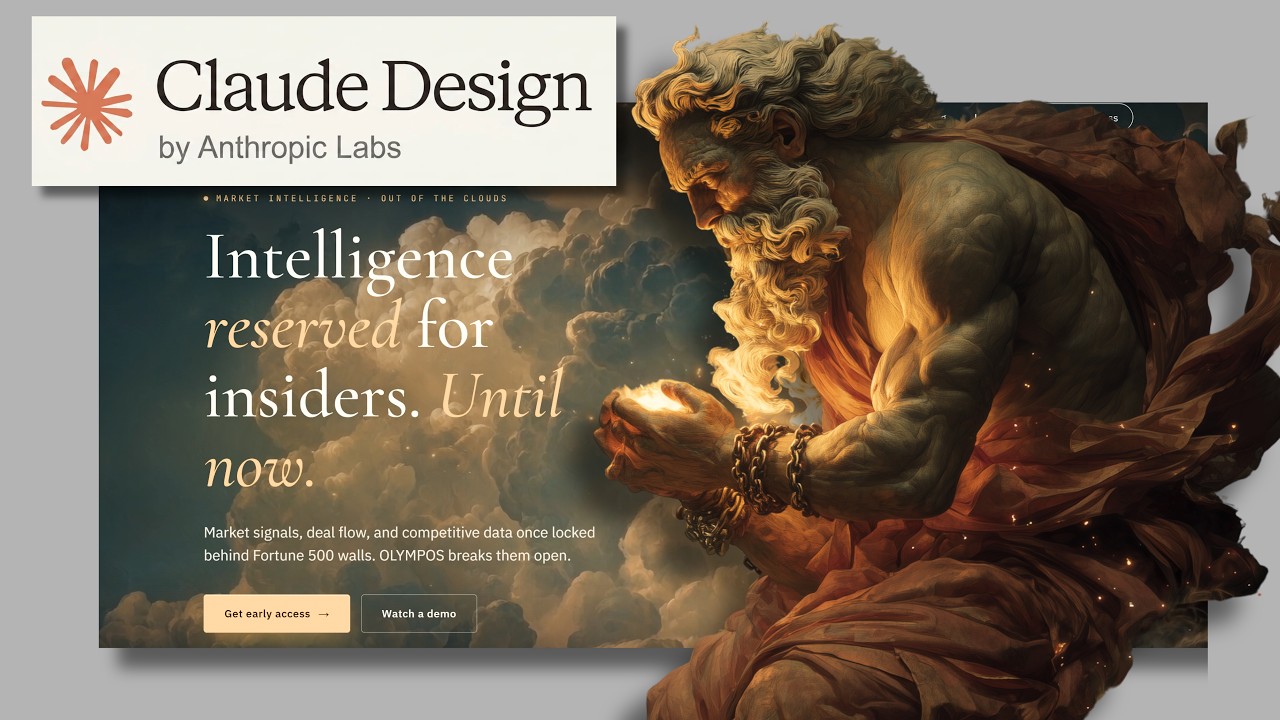
Chase chains Nano Banana Pro, Claude Design, and Seedance 2.0 into a single pipeline that produces fully animated marketing sites, then hands the layout off to Claude Code. The study guide captures the macro-to-micro prompting workflow and where the output still needs human polish.
The NSA has reportedly gained access to Anthropic's restricted Mythos model for cybersecurity vulnerability scanning, even as Anthropic remains at odds with the Pentagon over unrestricted military use. The story lays out the gap between Anthropic's public usage policy and the quiet carve-outs happening inside the national security state.
Ben Thompson reads TSMC's latest earnings as a subtle tell: leadership may not fully buy the AI growth narrative even as it funds the next wave of N3 fabs. The piece threads that reading through the Nvidia ramp and what it implies for how long the AI capex boom has left to run.
Google is expanding its Gemini-in-Chrome assistant to seven Asia-Pacific countries including Australia, Indonesia, and Vietnam, on desktop and iOS. The rollout adds cross-tab Q&A and personalization tied to existing Google services, putting an AI sidebar a keystroke away from whatever the user is already reading.
Co-founder/CEO Toby Neugebauer and CFO Miles Everson abruptly stepped down from the Rick Perry-backed nuclear AI data center company. Shares dropped 22% as the firm rebrands as "Fermi 2.0" amid ongoing struggles at its Texas Project Matador site, a visible tremor in the AI-plus-nuclear thesis.
Roughly 75,000 AI-generated tracks arrive on Deezer daily, 44% of all new uploads. Listener engagement stays at only 1-3% of streams, and most AI uploads get flagged as fraudulent, but the flood is changing what "new music" means on streaming platforms.
A distinctive "not just X, it's Y" construction has become a telltale sign of AI-generated writing, appearing more than 200 times in corporate documents analyzed in 2025 versus about 50 in 2023. Once you see it, you can't unsee it. The piece is a field guide to the phrase that gave the whole thing away.
NVIDIA publishes a tutorial on building culturally grounded Korean AI agents using the Nemotron-Personas-Korea dataset: 6 million synthetic personas rooted in official Korean demographic statistics. The piece walks through filtering, embedding, and deploying personas that respect Korean language and cultural context.
Scramble
Unscramble — each clue below is a word from today's news. The red letters from all four unscramble into today's bonus word.
E X C P A S
Elon Musk's rocket company, reportedly buying its way into AI coding tools.
Z A M N O A
The $5B investor behind today's Anthropic lead.
I V N I D A
GPU maker whose ramp looms over the TSMC earnings piece.
R E Z D E E
Music platform where 44% of daily uploads are AI-generated.
Bonus word (4 letters)
Clue: What developers write, and what's eating the world.
Amazon signed up for another decade of Anthropic compute the same week TSMC's own management started hedging on the AI demand story. Read those two datapoints together and today's issue stops looking like a news roundup and starts looking like a map of who actually believes the boom, and who is quietly making sure they don't get caught holding the bag.
▶Listen to the Digest~5 min
Today's Headlines
The Compute Bargain
Amazon doubles down: $5B in, $100B out. Amazon added $5 billion to its Anthropic stake (total now $13B) in exchange for Anthropic pledging more than $100 billion of AWS spending over ten years, with access to up to 5 GW of compute and a locked-in path through Trainium2, Trainium3, and the unreleased Trainium4. The structure mirrors the Amazon-OpenAI deal two months ago (Amazon put $50B into a $110B round at a $730B pre-money), and TechCrunch notes Anthropic is reportedly being offered new money at over an $800B valuation.
TSMC earnings suggest the builder of the boom isn't fully buying it. Ben Thompson's read on TSMC's latest numbers: management isn't truly bought into the AI growth story. That's from the same week new N3 fab capacity is being committed and Nvidia's ramp rolls on. The firm manufacturing almost every chip that matters is the one hedging.
Fermi's nuclear-AI bet stumbles hard. Fermi's CEO and CFO departed abruptly, shares fell 22%, and the Rick Perry-backed Project Matador in Amarillo is being rebranded as "Fermi 2.0" after reported friction with a key customer. The "we'll just run reactors next to the data centers" thesis is harder to execute than the pitch decks suggest.
National Security Gets Its Hands on Mythos
NSA is reportedly using Anthropic's Mythos. Per Axios, the NSA has access to Mythos Preview, the frontier cybersecurity model Anthropic withheld from public release and limited to roughly 40 organizations. The NSA is reportedly using it to scan environments for exploitable vulnerabilities. The UK AI Security Institute also has access.
And the Pentagon is simultaneously calling Anthropic a supply-chain risk. The DoD labeled Anthropic a risk weeks ago over the company's refusal to allow Claude for mass domestic surveillance and autonomous weapons. Now its own intelligence arm is using the most restricted model the company has shipped. Dario Amodei met Susie Wiles and Scott Bessent at the White House last Friday in what was called a productive meeting.
Wes Roth's read (GPT 5.5 study guide): "the Anthropic effect" is being so good that even customers who are publicly feuding with you can't actually stop using your product. The same study guide argues Mythos is almost certainly real capability, because dismissing it would mean Anthropic fooled Jamie Dimon, the NSA, Jerome Powell, and Sergey Brin.
The Coding Flywheel
OpenAI shadow-drops GPT 5.5 (study guide). Wes Roth reports OpenAI has quietly pushed what is widely believed to be GPT 5.5 ("Zenith"), and it appears to beat Claude Opus 4.7 on front-end coding. The standout capability is image-to-code: feed the model a design and it produces near-perfect working front-end output, a direct shot at Claude Design.
Google treats coding as strategic priority. Per The Information, Sergey Brin and DeepMind CTO Koray Kavukcuoglu are personally leading a strike team to improve Gemini's coding performance. Every Gemini engineer is reportedly being forced to use internal agents. Leadership even floated removing Claude access internally to "equalize" adoption and reportedly nearly triggered DeepMind resignations.
Claude Design + Seedance 2.0 (study guide). Chase AI chains Nano Banana Pro, Claude Design, and Seedance 2.0 into an animated-landing-page pipeline. Claude Design runs on its own usage meter separate from Pro/Max, and one demo ran about $5 in overage. The Claude Design plan-mode prompt ("ask me any questions before you begin") front-loads the composition discussion before any pixel gets generated.
AI In The Consumer Layer
Deezer: 44% of daily music uploads are AI-generated. About 75,000 AI tracks a day (over 2M/month), up from 10,000/day in January 2025. Streams of AI tracks are only 1-3% of total listening, but 85% of those streams are flagged as fraudulent. An AI-generated track topped iTunes charts in five countries the previous week. A Deezer survey found 97% of people cannot reliably distinguish AI music from human music.
Gemini in Chrome ships to 7 APAC markets. Australia, Indonesia, Japan, Philippines, Singapore, South Korea, Vietnam. The sidebar handles cross-tab Q&A, drafts email, schedules meetings, transforms images with Nano Banana 2, and taps Gmail and Google Photos through Personal Intelligence. The agentic browser-control feature is still U.S.-only and paid-tier only.
AI writing has a tell, and it's everywhere. Barron's found the "It's not just X - it's Y" construction quadrupled in corporate filings from ~50 mentions in 2023 to 200+ in 2025. TechCrunch cites examples from Cisco, Accenture, McKinsey, Workday, and a Satya Nadella Microsoft post using the construction three times. Pangram CEO Max Spero: "it's not just X, it's Y is a tic preferred by 2025-era frontier language models."
Grounding Agents in Local Reality
NVIDIA ships Nemotron-Personas-Korea. 7 million synthetic personas (26 fields, 17 provinces, 2,000+ occupations) grounded in KOSIS demographics, NAVER seed data, and Gemma-4-31B narrative generation. Zero PII, CC BY 4.0, PIPA-compliant. The blog's argument: most agents are "identity-blind" and fail in Korean contexts (wrong speech register for a 60-year-old, U.S. healthcare workflows in Korean clinics). Joins existing Nemotron-Personas sets for USA, Japan, India, Singapore, Brazil, and France.
The Throughline
Two stories should be read on top of each other today. Amazon is committing $100 billion of compute spend to Anthropic over ten years. TSMC's management, according to Ben Thompson, isn't actually bought into the AI growth story. These are both true at the same time, and the gap between them is the most honest picture we have of where the market is on AI. The hyperscalers are signing decade-length contracts priced off a curve that assumes AI demand keeps compounding. The fab operator that literally builds the silicon under that curve is hedging. One of those two parties is wrong, and the scale of the mistake will be measured in tens of billions of dollars either way.
Then look at Fermi. The Rick Perry nuclear-AI data center pitch, the one that was supposed to let hyperscalers and AI labs sidestep the grid, just lost its CEO and CFO in one day and dropped 22%. The Project Matador site in Amarillo is struggling with customer friction. The people writing the $100B AWS contract need power for 5 GW of compute. The people trying to deliver that power outside the utility stack cannot keep their C-suite intact. Infrastructure reality keeps pulling harder on AI plans than AI plans pull on infrastructure reality, and the Fermi collapse is today's tell.
The Mythos story is the political version of the same pattern. The Pentagon formally labels Anthropic a supply-chain risk, and the NSA is simultaneously using Mythos Preview to hunt vulnerabilities. Anthropic withheld Mythos from public release on capability-concentration grounds, and is quietly letting intelligence agencies use it on the same grounds. The public-policy posture and the actual-operational posture have decoupled. Wes Roth names the mechanism directly in the GPT 5.5 study guide: once a capability is good enough, the organizations publicly feuding with the vendor still use it anyway. That is not a healthy equilibrium. It's how you end up with technology deployed faster than anyone has agreed to deploy it.
The coding stories tie the knot. If GPT 5.5 really does beat Claude Opus 4.7 on front-end coding, and if Google really has Sergey Brin personally leading a coding-model strike team, then the Amazon-Anthropic compute bargain is a bet that Anthropic can keep its lead in coding long enough to justify $100B of locked-in spend. Claude Design plus Seedance 2.0 is a preview of what that lead looks like in product terms: an image-to-animated-landing-page pipeline a solo builder can run for about $5. OpenAI's image-to-code capability is a direct shot at the same product surface. The whole compute bargain is downstream of this one fight. If coding is the lever on the intelligence flywheel (Roth's thesis), the lab that wins coding wins the curve that TSMC's management is hedging against.
The Bigger Picture
The honest read of this week is that AI has stopped being a software story. The consequential moves are happening in capital structure (Amazon's cloud-spend-for-equity), in chip supply (TSMC's posture toward N3 allocation), in energy (Fermi and the broader AI-nuclear thesis), in national security (NSA use of withheld models the Pentagon is publicly fighting over), and in labor markets (Deezer's 75,000 AI uploads a day). The pure-model news, GPT 5.5 shadow-dropping and Claude Design chaining into Seedance, is genuinely exciting but it's also the tip of an iceberg whose bulk is now infrastructure, policy, and content-industry economics.
Read against that, the Nemotron Korea dataset matters more than its Hugging Face-blog framing suggests. Every persona dataset NVIDIA ships (USA, Japan, India, Singapore, Brazil, France, now Korea) is a bet that AI agents need to be nationalized at the persona layer even while the frontier models stay global. The Amazon-Anthropic compute bargain assumes global scale on one side of the stack. The agent layer is fragmenting into region-specific personas, local chart data, local language registers, local healthcare workflows. Both pressures are real and they're pulling in opposite directions. The winners over the next two years will be the ones who can serve global-scale frontier models through region-specific agent layers, because regulators, users, and domain workflows are not going to accept "identity-blind" assistants much longer.
The Deezer number is the one that should scare labels and seed skepticism about how much of this is actually demand. 44% of daily uploads are AI, but only 1-3% of streams, and 85% of those streams are flagged as fraudulent. That's a flood of supply into a platform whose users are voting, clearly, not to listen. Which is to say: capability is running way out ahead of real consumer pull in at least one major content vertical. If that pattern shows up elsewhere (AI-written finance reports anyone actually reads? AI-generated video anyone actually watches?) the productivity gains the labs are pricing in may not show up on the demand side of anyone's P&L for longer than the capex cycles allow.
What to Watch
Whether the reported $800B Anthropic valuation round actually closes, and at what structure. If the money is cash (not cloud credits) and fewer strategic strings are attached, it's a signal that VCs think Anthropic can run compute multi-cloud. If it's more AWS-structured, the Amazon lock-in deepens and the hyperscaler bundle hardens.
TSMC's next capex guidance. Thompson's read is that management is hedging. The next earnings update will show whether that hedge translates into slower N3 expansion. If it does, expect a scramble across hyperscalers to secure allocation, and expect it to show up first as pricing pressure on the AWS/GCP/Azure compute tier.
Whether the Pentagon-Anthropic feud gets resolved, rolled back, or extended. Amodei met Wiles and Bessent on Friday. If the supply-chain-risk designation quietly disappears in the next 30 days, that's the NSA Mythos situation forcing the formal policy to match the operational reality. If the designation hardens, expect more under-the-table arrangements of the NSA-Mythos type.
How fast the coding flywheel actually turns. If GPT 5.5 numbers hold up in real benchmarks and Google's coding strike team ships visibly improved agents, Anthropic's pricing power on the Amazon $100B deal shifts meaningfully. This is the fight that determines who gets the compute curve TSMC is hedging on.
Go Deeper
OpenAI's GPT 5.5 Is Wild... - Wes Roth's full argument for a coding-model intelligence flywheel, with concrete reporting on the GPT 5.5 "Zenith" shadow drop, the Sergey Brin-led Google coding strike team, and why "the Anthropic effect" (customers who publicly feud with the vendor still use its product) explains the NSA-Mythos paradox.
Claude Design + Seedance 2.0 = INSANE Animated Websites - Chase AI's full three-tool pipeline, including the composition-first prompting discipline, the plan-mode prompt that makes Claude Design front-load typography and copy voice, the 15-knob tweaks panel for micro-iteration, and the specific Seedance rendering settings that produce cinematic background motion.