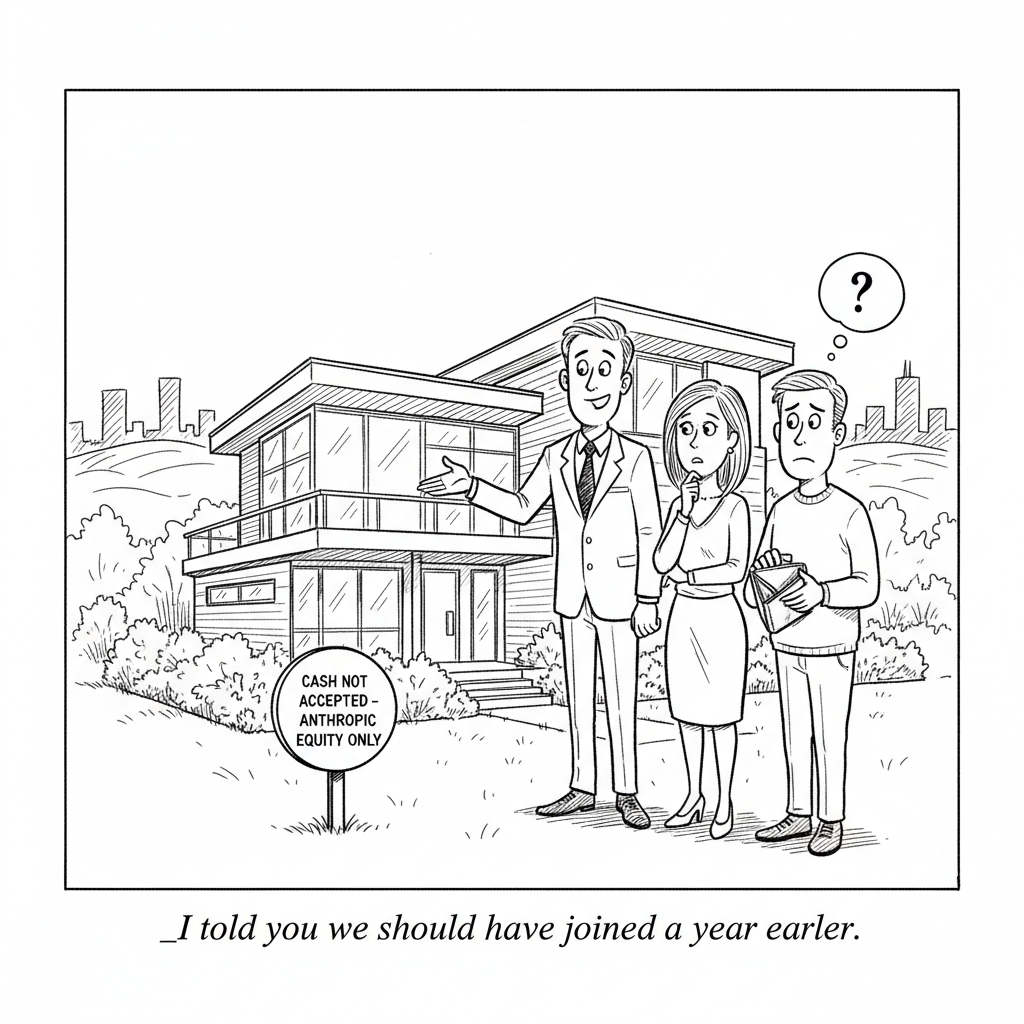
A 13-acre Mill Valley property hit the market today asking for Anthropic equity instead of cash. That detail is not the funniest item in the issue; it is the most clarifying one. The thread running through Monday's AI news is the same one: the people, institutions, and benchmarks that defined the prior era are quietly being replaced by AI-native versions that operate on different rules.
Today's Headlines
AI Wealth, AI Power
- Anthropic equity for a Bay Area home (TechCrunch) - A Mill Valley listing is asking buyers to pay in private Anthropic stock instead of dollars. The seller is functionally creating a private liquidity event for AI insiders, and the market is letting them.
- AI could kill anonymity online (Washington Post) - The opinion piece argues that practical anonymity on the open internet is being eroded not by any single product but by the cumulative effect of AI-driven identification, profiling, and inference. The threat model is no longer "a hacker doxxes you," it is "any motivated party with API access can."
The Benchmark Era Ends
- OpenAI drops SWE-bench Verified (OpenAI) - OpenAI publicly explained why it will no longer evaluate coding capability on SWE-bench Verified, citing the gap between the benchmark and real engineering work. Coming from the lab that helped popularize the leaderboard, this is the soft death notice for the post-it-and-claim-it era of AI coding evals.
- Apple's quiet repositioning (Nate B. Jones) - Jones argues Apple is not behind in AI; it is staking out the on-device, privacy-bounded layer that nobody else can credibly own. The bet is that the next trillion dollars of AI value sits where the chips, the OS, and the data trust live in the same hand.
The Open-Source Counter-Stack
The Open-Source Counter-Stack
- Hermes Agent (Wes Roth) - A live walkthrough of an open-source agent framework that the community is taking seriously enough to put against the closed-lab alternatives.
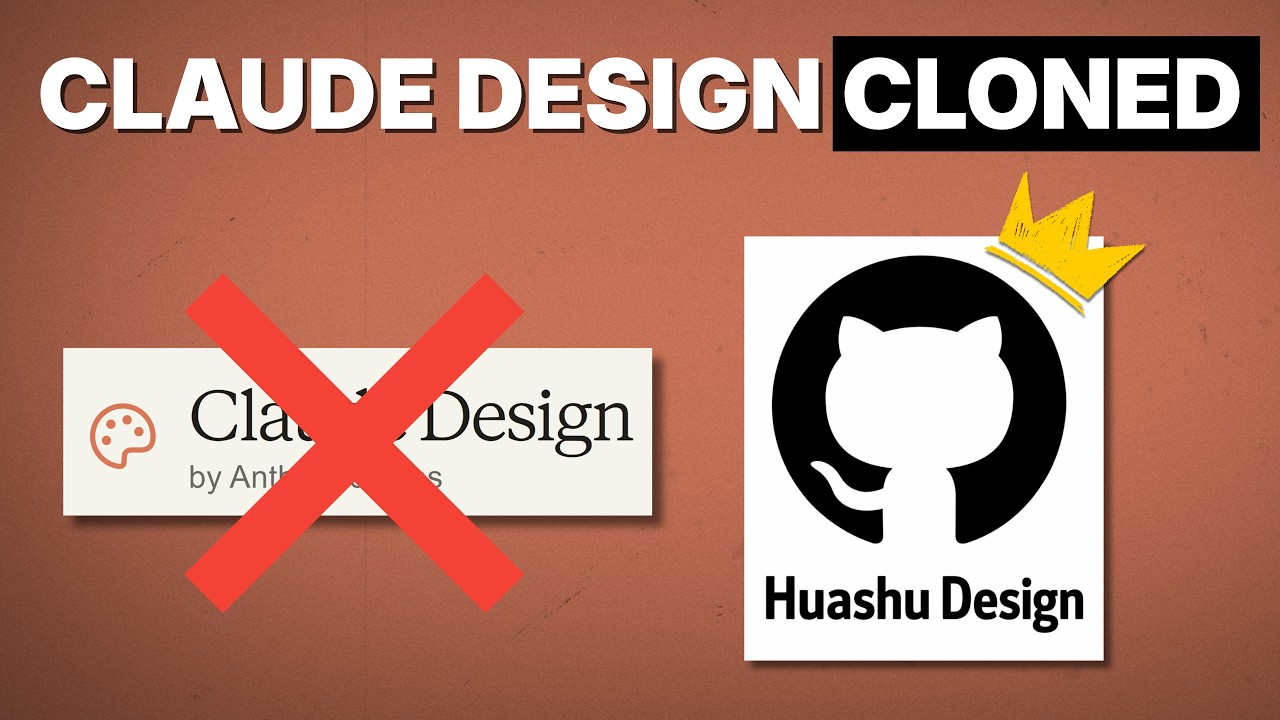
- Open-source Claude Design clone (Chase AI) - An open-source recreation of Anthropic's Claude Design system that is good enough for indie production work. The closed-vs-open frontier is no longer just about model weights; it is about the surface area around them.
- Chrome Prompt API (Chrome for Developers) - Chrome's built-in Prompt API exposes Gemini Nano running locally in the browser to any web page. The on-device inference layer is moving from research demo to web platform feature.
- evanflow (GitHub) - 16 cohesive Claude Code skills that walk an idea from brainstorm to plan to TDD execution to iteration. Skills, not prompts, are where serious dev workflows are being built now.
Perspective
- AI should elevate, not replace, your thinking (Koshy John) - A measured counter to the "let the model do it" reflex. The argument is not anti-AI; it is pro-discernment about which loops you keep humans in.
The Throughline
The Mill Valley listing is a punchline, but it is also a leading indicator. When private AI equity becomes a substitute for cash in real-asset markets, the labs holding that equity are no longer just companies; they are quasi-currencies. That has knock-on effects we are not yet pricing in: who can buy what, who is locked out of the next housing cycle, and whose paper appreciates fast enough to count as money.
OpenAI's quiet exit from SWE-bench Verified is the same pattern in a different domain. The lab that helped train the industry to chase a number is now telling the industry the number was never the goal. Read this alongside Apple's reframe and a clear story emerges: the metrics that mattered in the chat-model era (coding benchmark scores, parameter counts, public eval leaderboards) are being deprioritized by the labs themselves in favor of integration depth, on-device privacy, and real-economy impact. The next era is not measured in points on a leaderboard; it is measured in what the model is plumbed into.
The open-source threads are the response. Hermes Agent, the Claude Design clone, Chrome's Prompt API, and evanflow are different shapes of the same instinct: if the closed labs are going to build moats around integration and distribution, the open community will rebuild the surrounding stack so the moat shrinks. Chrome shipping local Gemini Nano inference to every page on the web is a particularly large quiet detail, because it means a meaningful share of "AI features" can stop calling APIs entirely.
The Bigger Picture
Today's stories share a substrate: the institutions, currencies, and metrics that organized the previous tech era are being repriced against AI-native ones. Equity in a private lab is becoming a liquid asset class. A web browser is becoming an inference runtime. A coding benchmark is becoming a footnote. The Washington Post warns about online anonymity, but the underlying vector is the same one running through the rest of the issue: AI capability is now woven deeply enough into ambient infrastructure that the older defaults (cash, anonymity, leaderboard-based capability claims) no longer hold by default.
None of this is irreversible. Cash still works. Anonymity tools still exist. Benchmarks will be replaced, not abandoned. But the direction of travel is unmistakable: the AI economy is no longer adjacent to the rest of the economy, and the rules that used to govern housing markets, public discourse, and engineering hiring are being rewritten in real time by the people building the models.
What to Watch
- Whether the Mill Valley deal closes, and at what implied Anthropic valuation. If it does, expect copycat listings and the first lawsuits over what counts as "delivered" equity.
- What OpenAI uses instead of SWE-bench. The next benchmark or eval methodology OpenAI publishes will tell us where the labs actually believe coding capability now lives.
- How fast Chrome's Prompt API gets adopted. If meaningful web apps ship local-Nano features in the next quarter, the cloud-AI margin story changes for everyone downstream.