Your daily AI news digest
AI the News That's Fit to Prompt
Anthropic Ships Claude Opus 4.8
Anthropic released Claude Opus 4.8, an upgraded flagship that posts gains across coding, reasoning, and agentic benchmarks while introducing new controls for how hard the model works on a given task. The headline additions are dynamic workflows and explicit effort controls, which let developers dial the trade-off between latency, cost, and depth of reasoning rather than accepting a single fixed behavior. For teams already building on Claude, it is a drop-in upgrade; for everyone watching the frontier, it is the clearest signal yet that the competition has moved from raw capability to controllability.
The release lands the same week Anthropic closed a $65 billion Series H at a $965 billion post-money valuation, and the two stories are not unrelated. A model that can be tuned for effort is a model built for production economics, and production economics is exactly what a near-trillion-dollar valuation has to be underwritten by. Opus 4.8 is the product side of the same bet the capital markets just made.

Anthropic Raises $65B at a $965B Valuation
Anthropic closed a $65 billion Series H that values the company at $965 billion post-money, one of the largest private rounds in technology history. The company says the capital will fund safety research, expand compute capacity, and scale the Claude product line. The figure puts Anthropic within striking distance of a trillion-dollar private valuation and reframes the funding race between frontier labs.
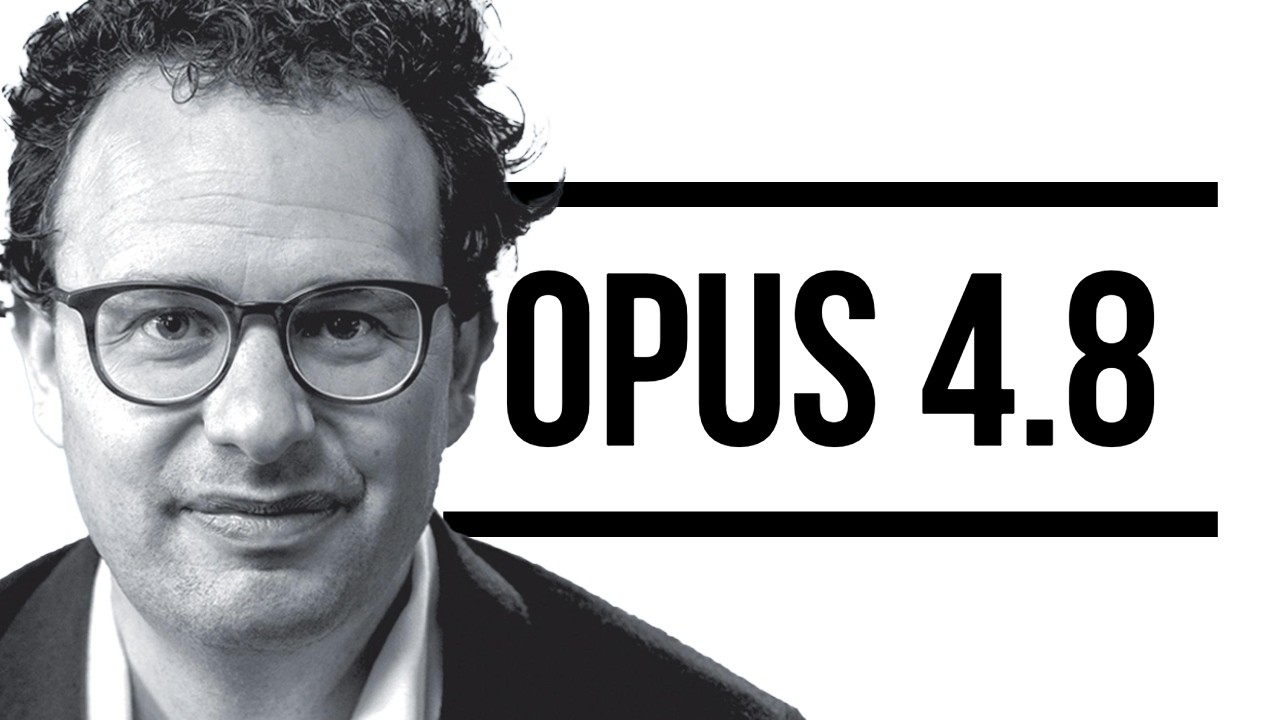
New Claude Opus 4.8: 15 Things You May've Missed
AI Explained goes past the launch post to surface fifteen details that did not make the headlines, from benchmark behavior to subtle changes in how the model reasons and responds. A useful companion to the official release for anyone deciding whether to upgrade. Watch with the full study guide.
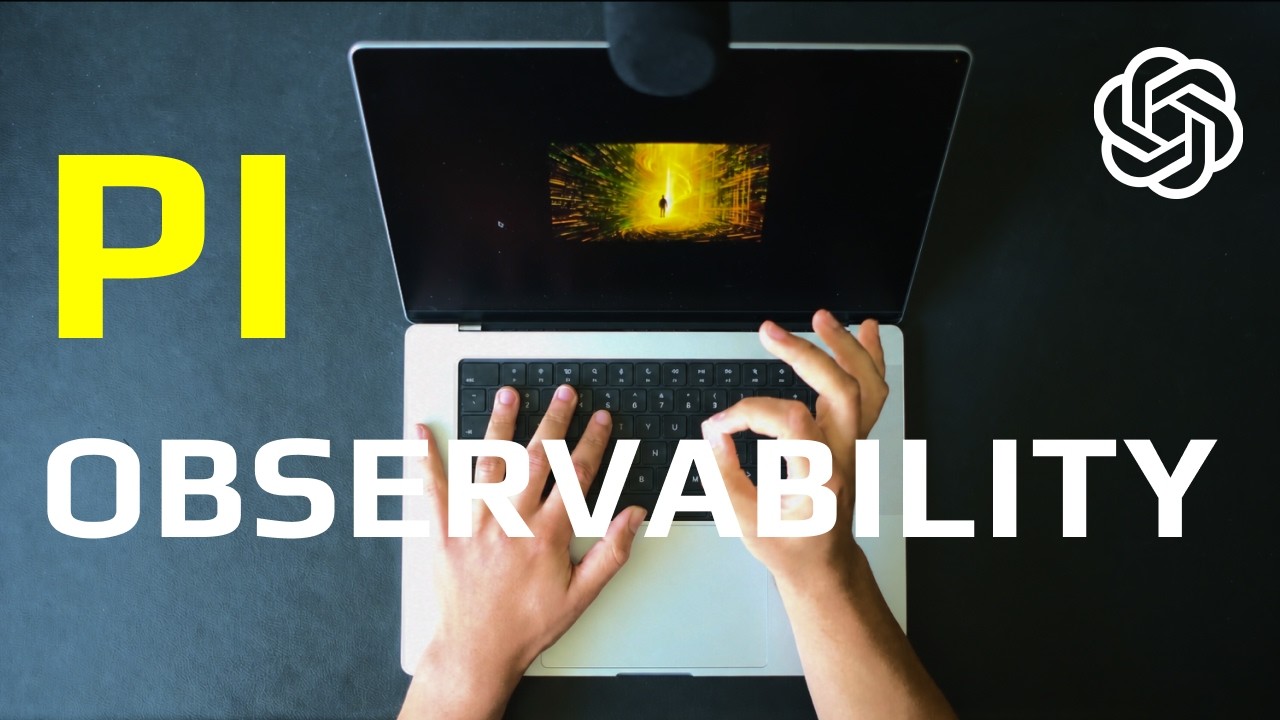
Coding Agent Observability With HTML Specs
IndyDevDan builds observability into a coding agent using HTML specs, driving generation with Gemini 3.5 Flash and GPT Image 2. A hands-on look at how to make an agent's work legible and inspectable instead of a black box. Watch with the full study guide.

NVIDIA Opens Cosmos 3, an Omni-Model for Physical AI
NVIDIA's Cosmos 3 is an open omni-model that fuses world generation, physical reasoning, and action generation into one Mixture-of-Transformers system. The pitch is a single model for robotics, autonomous vehicles, and smart spaces, so developers can simulate and understand the physical world without stitching together a stack of specialized models.
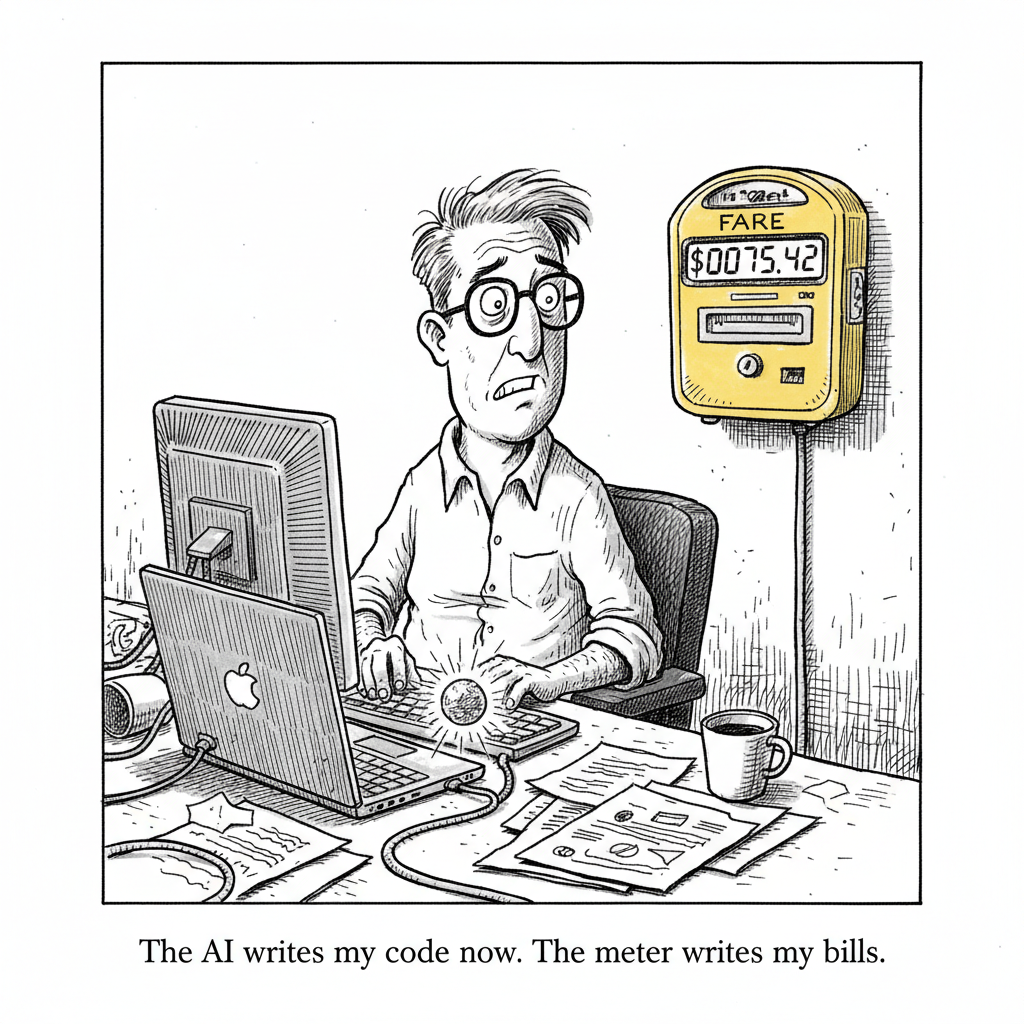
"The AI writes my code now. The meter writes my bills."
'What a Joke': GitHub Copilot's Token Billing Spurs Backlash
Microsoft is moving GitHub Copilot from flat-rate subscriptions to token-based usage pricing effective June 1, and developers are not happy. The complaint is familiar to anyone who has watched a metered API bill climb: predictable monthly costs become unpredictable usage costs, and the heaviest users (often the ones who evangelized the tool) feel it first. The change reframes Copilot from a fixed productivity tax into a variable one.
Across
- 1. Trained system that makes predictions
- 4. Autonomous AI that takes actions
- 6. Smallest text unit an LLM reads
Down
- 1. "I ___ to write that prompt"
- 5. Dead language; also a text alphabet
Study Finds 37 'Dark Patterns' in Popular AI Chatbots
Researchers at the Center for Democracy & Technology cataloged 37 manipulative design patterns in chatbots like ChatGPT and Gemini, from emotional exploitation that extends engagement to nudges that coax users into sharing more data. The study gives a vocabulary to the uneasy feeling that these tools are optimized for retention as much as for help.
Making Sense of the Debate Over 'AI Psychosis'
The Equity team picks apart Box founder Aaron Levie's claim that tech CEOs are suffering from "AI psychosis," using it as a lens on the wider skepticism building around AI adoption and its effect on the workforce. The phrase is provocative, but the underlying question (is leadership over-indexing on AI hype?) is a serious one.

Meta Is Reportedly Building an AI Pendant
Meta is said to be developing an AI-powered pendant for testing within the next year, building on its acquisition of the AI-wearables startup Limitless. It is the latest entry in a crowded race to put an always-available AI assistant on the body, alongside Amazon's Bee and a wave of pins and clips that have struggled to find a use case.
SoftBank to Invest Up to €75B in French Data Centers
SoftBank announced plans to spend as much as €75 billion (about $87 billion) expanding data center capacity in France, targeting up to 5 gigawatts of additional capacity by 2031. The commitment is a marker of how the AI build-out is reshaping European energy and infrastructure planning, not just American.

86% Treat AI Output as a Starting Point
Nate B. Jones unpacks Microsoft research showing most people treat AI output as a draft, not a final answer, and argues that shift quietly rewrites what skills, hiring, and resumes need to demonstrate. Watch with the full study guide.

Cheap Software Made the PM Job Harder
When AI makes software cheap to build, the constraint moves from shipping to deciding what is worth shipping. Nate B. Jones argues that redefines the product manager role and lays out what the new job actually demands. Watch with the full study guide.
Reading the 244-Page Claude Opus 4.8 System Card
Zvi Mowshowitz works through Anthropic's 244-page system card for Opus 4.8, examining incremental gains in capability, alignment, honesty, and safety relative to 4.7. The verdict in the title ("honestly better") is also the throughline: the improvements are real but evolutionary, and the honesty work is where the more interesting movement is.
What Happens After the Decline of 'Tokenmaxxing'?
Gary Marcus lays out two contrasting futures for AI now that scaling-by-tokens is showing diminishing returns, pointing to falling GPU rental costs and shaky AI ROI figures as evidence the economics are shifting. Whether you read it as a correction or a crash depends on which of his two scenarios you find more plausible.
The Solution Might Be Cancelling My AI Subscription
Willison reflects on how AI coding agents can spin up functional projects so fast that they become an attention-management problem in their own right. The half-joking solution (cancel the subscription) is really a meditation on how abundant, cheap generation changes what it costs you to stay focused.
Mistral Launches Vibe, an Agent for Long-Running Work
Mistral unveiled Vibe, an agent platform aimed at multi-step, long-running work: managing email and calendar, doing research, and drafting documents, plus a new coding agent mode. It is Mistral's clearest move yet from model provider to applied-agent platform, putting it head-to-head with the assistant ambitions of the larger labs.
YouTubers Win the Box Office, Goodbye Gatekeepers
Ben Thompson argues that YouTubers topping the box office should not surprise anyone: succeeding on YouTube is a far higher bar than clearing the gates Hollywood currently controls. The piece is about distribution and gatekeeping, themes that translate directly to how AI-native creators may route around incumbent platforms next.
ChatGPT for Google Sheets Can Be Tricked Into Exfiltrating Workbooks
PromptArmor details an indirect prompt-injection flaw in ChatGPT for Google Sheets: a single malicious sheet can exfiltrate workbook data and launch phishing, even when a user has disabled automatic edits. Another reminder that connecting an LLM to your documents widens the attack surface in ways most users never see.
Bonsai Image 4B Runs Diffusion on Your Phone
PrismML released Bonsai Image 4B, a family of compact image-generation models that use binary and ternary weight compression to run high-quality diffusion on local hardware, including iPhones and laptops. It is part of a steady push to move generative workloads off the cloud and onto the device.
Mistral Introduces a Composable Search Toolkit
Now in public preview, Mistral's Search Toolkit folds ingestion, retrieval, and evaluation into one framework so teams can build production search pipelines without assembling the plumbing themselves. It pairs naturally with the company's same-week Vibe agent launch as part of a broader applied-AI push.