SpaceXAI has released Grok 4.5, positioning it as a direct competitor to the frontier tier and, in Elon Musk's framing, an "Opus-class" model that trades blows with Anthropic's best. The company's headline claim is efficiency: roughly twice the token efficiency of rival models at comparable capability, which translates into a lower bill for the same work.
That pitch lands squarely in the week's dominant anxiety. As the industry pivots from spending freely on capability to scrutinizing what every token returns, a frontier-grade model that claims to do the same job for half the tokens is aimed less at the leaderboard than at the invoice. The question buyers will ask is not whether Grok 4.5 is smart, but whether "Opus-class at half the cost" survives contact with real workloads.
OpenAI unveiled GPT-Live-1 and GPT-Live-1 mini, full-duplex voice models that can speak and listen simultaneously, enabling natural interruptions and live translation. It is the clearest sign yet that the interface for AI is shifting from typing to talking, with latency and turn-taking now the battleground rather than raw text quality.
AI Culture · Cartoon
"Turns out the expensive one is the model that actually finishes the job."
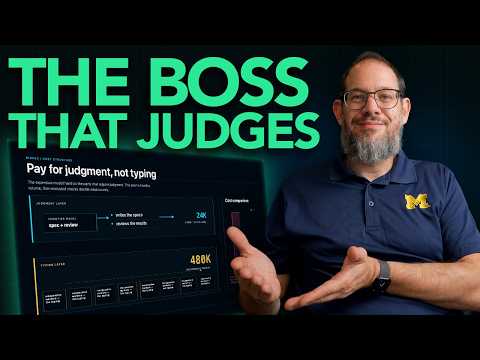
Nate B. Jones runs a multi-agent org chart with Claude Fable 5 as a non-coding "boss" directing cheaper worker and checker agents to rebuild his deaf-blind author wife's accessible website in about two hours for roughly $8. The study guide breaks down the verification loop that automatically caught four escalating failures, and why the frontier model earns its keep as the manager, not the laborer.
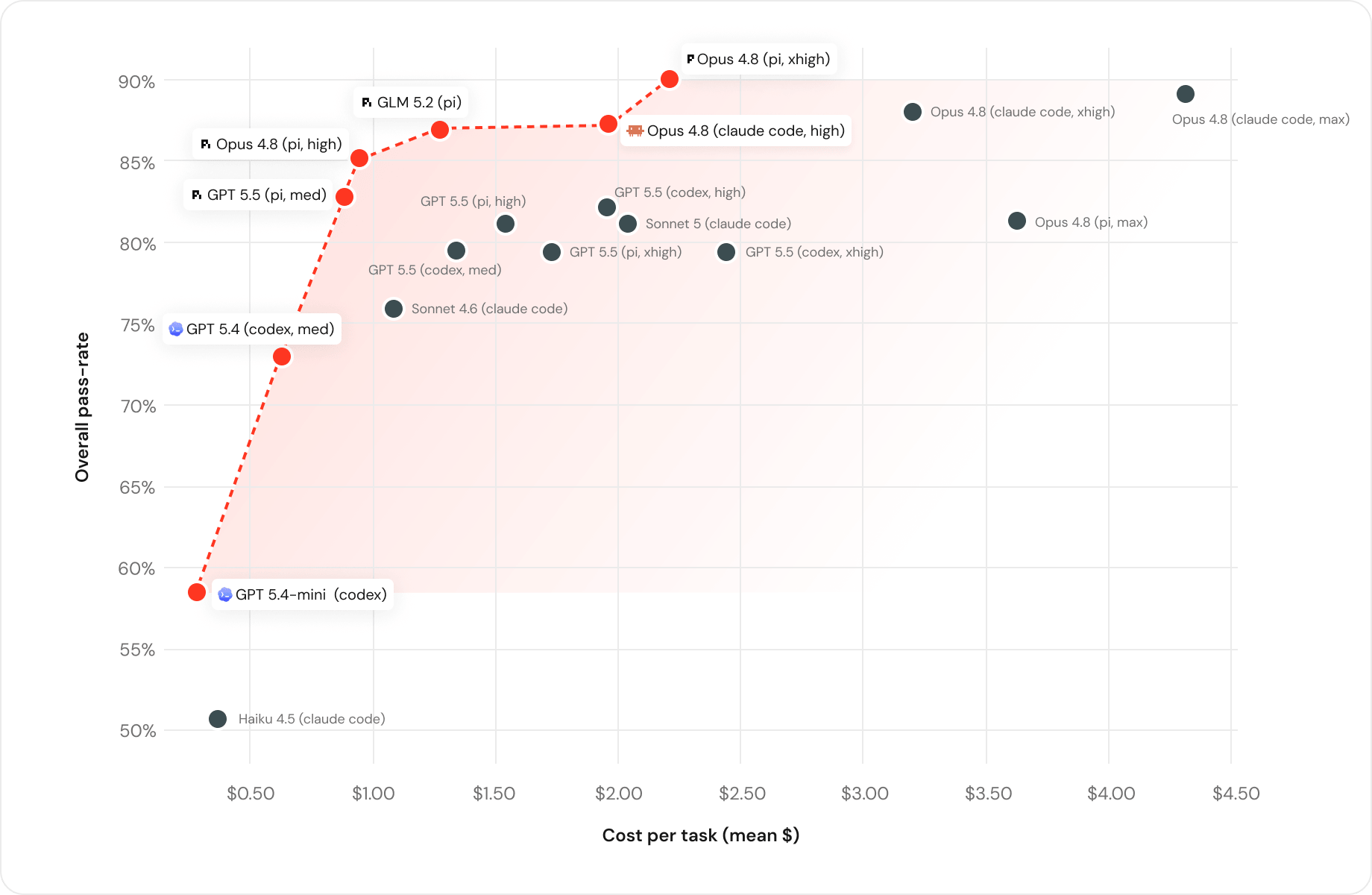
Databricks built an internal benchmark that evaluates coding agents on real engineering tasks drawn from its multi-million-line codebase, and found that no single model wins outright. A mix of models from OpenAI, Anthropic, and open source occupies the best cost-performance frontier, another data point in the week's argument that the smart move is portfolio, not monogamy.
General Intuition is training foundation models for physical AI on millions of hours of video-game footage, betting that virtual play can substitute for the scarce, expensive real-world data that has bottlenecked robotics. If it works, it would do for robots what internet text did for language models: turn abundant simulated experience into general competence.
Prime Intellect closed a $130 million Series A at a $1 billion valuation to sell the infrastructure and tooling that lets organizations build and train their own AI agents without leaning on the frontier labs. The thesis is the same one running under today's cost-cutting stories: own the agent stack rather than rent it by the token.
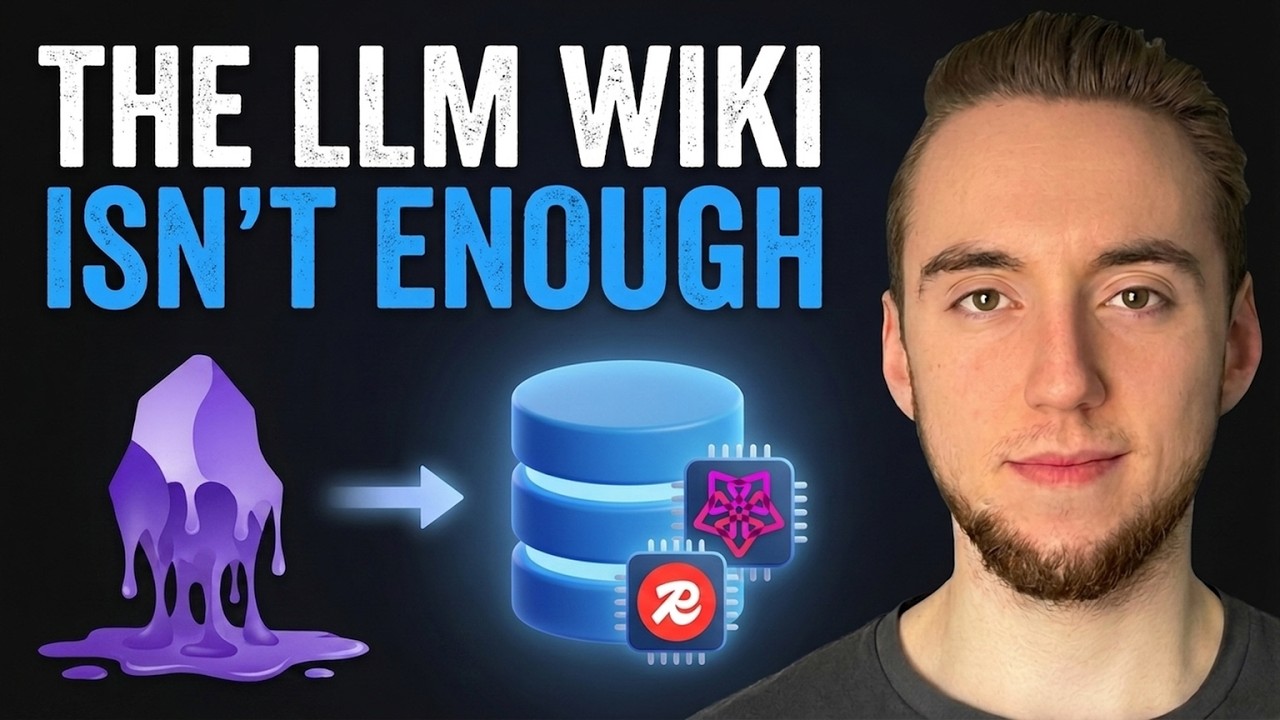
Cole Medin explains why the markdown-driven Karpathy LLM wiki is perfect for a personal second-brain agent but breaks the moment you ship an agent to other people, then walks through the production architecture that does scale: a context retriever paired with agent memory over a database. The study guide maps the whole pattern with real tools.
The Swedish vibe-coding startup Lovable is reportedly raising $300 million at a $13.2 billion valuation, double its December mark, with Menlo Ventures expected to lead. The pace is a reminder that while enterprises fret over token costs, investors are still paying frontier prices for the companies turning natural language into shipped software.
Google's new Video Remix feature uses Gemini Omni to transform clips in seconds, applying cinematic relighting, background swaps, and stylized effects like watercolor or oil painting. It pushes generative video editing into the default photo app on a billion-plus phones, making synthetic-media tools a mainstream consumer default rather than a specialist toy.
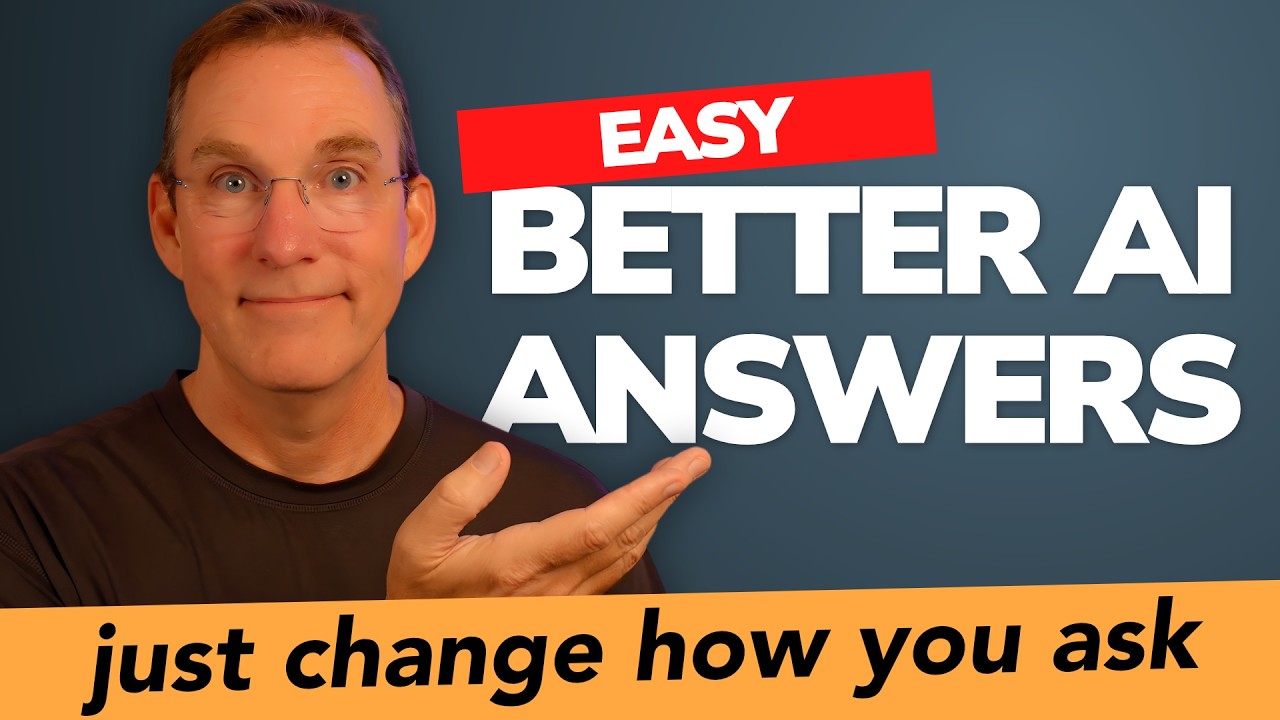
Matt Maher shows how the exact words and verbs you use when prompting an agent decide whether it guesses or actually searches your files, then explains how agent files (AGENTS.md, CLAUDE.md, GEMINI.md) silently prepend standing instructions to every new conversation. The study guide turns both into a repeatable setup.
Meta added a safeguard that disables the camera on its AI glasses if the recording LED is tampered with, a gesture toward privacy. But the company keeps widening data collection across its AI products, leaving the glasses caught between a "less creepy" message and a strategy built on ever more personal data.
Google's SynthID watermarking system flagged an AI-generated image of Senator Mitch McConnell that had spread on Reddit and X, helping debunk a fabricated hospital photo. It is a rare, concrete win for provenance tech, and a preview of the detection arms race that every generative-media launch quietly accelerates.
Cryptogram
Every letter is swapped for another. Three are filled in. Crack the AI-flavored quote.
Fireship breaks down Anthropic's paper claiming Claude has a spontaneously emerged "global workspace" where it privately reasons before speaking, probes it with the Jacobian Lens, and skeptically weighs whether any of it actually implies consciousness, from a company that also happens to sell API tokens.
xAI priced Grok 4.5 at $2 per million input tokens against Anthropic's $5 for Opus and OpenAI's $5 for Sol, then let Elon Musk call it "an Opus-class model, but faster, more token-efficient and lower cost." On the same Thursday, Databricks published a benchmark run on its own multi-million-line codebase and concluded that an open model, GLM 5.2, hit top-tier coding results at $1.28 per task while Opus 4.8 cost $1.94, declaring flatly that "open models are here for coding." Read together, today's twenty stories are one argument wearing twenty outfits: capability is no longer the scarce thing. Cost, judgment, and taste are.
▶Listen to the Digest~8 min
Today's Headlines
The Price of the Frontier
xAI shipped Grok 4.5 and made price the headline. Musk framed it as "roughly comparable to Opus 4.7, but much faster," at $2 input / $6 output per million tokens, undercutting Opus 4.7 ($5/$25) and OpenAI's Sol ($5/$30) while claiming about twice the token efficiency. TechCrunch notes the benchmarks land it "just short of best-in-class," and that OpenAI dropped GPT-5.6 the very same day. The pitch is aimed at the invoice, not the leaderboard.
Databricks benchmarked coding agents on its own codebase and open models won on cost. Built from recently merged pull requests across ten languages (with human review so models can't cheat from git history), the study found frontier performance spread across OpenAI, Anthropic, and open source. GLM 5.2 reached top-tier results at $1.28 per task versus Opus 4.8's $1.94, and, tellingly, Sonnet 5 cost more per task ($2.09) than Opus despite a lower per-token price, because it reasoned less efficiently. Their conclusion: the harness matters as much as the model, and routing beats loyalty.
Prime Intellect raised $130M to let enterprises build their own agents. The Series A at a $1 billion valuation (Radical Ventures leading, Nvidia and Intel participating) funds a modular stack of compute, an RL framework, and evals so companies can train proprietary agents instead of renting frontier tokens. CEO Vincent Weisser: "It shouldn't just be a few nerds in a glass tower in San Francisco that have the capability to train AI models." Customer Ramp reportedly beats frontier models on accuracy while cutting cost.
Agents That Actually Ship
Nate B. Jones rebuilt an accessible website for about $8 with Claude Fable 5 as the boss. His study guide walks a multi-agent org chart where a frontier model manages, rather than performs, directing cheaper worker and checker agents to rebuild his deaf-blind author wife's site in roughly two hours. A verification loop caught four escalating failures automatically. The frontier model earns its premium as the judgment layer, not the labor.
Bun was rewritten from Zig to Rust by an agent harness, and the receipts are wild. Simon Willison details Jarred Sumner's roughly eleven-day, agent-driven port, motivated by memory safety, validated against Bun's million-assertion test suite, and run on Anthropic's Fable model. The compute bill: 5.9 billion uncached input tokens, 690 million output tokens, about $165,000, shipped in Claude Code v2.1.181 and improving Linux startup by ~10%. Sumner reviewed the generation process, not a million-line PR.
Cole Medin explains why the Karpathy LLM wiki doesn't scale, and what does. The markdown second-brain is ideal for a personal agent but breaks the moment you ship to other people; the production answer is a context retriever paired with agent memory over a database. It is the same lesson as Fable 5 and Bun: the demo pattern and the shippable architecture are different animals.
Matt Maher shows that the verbs you use decide whether an agent guesses or searches. His guide dissects how word choice steers an agent toward actually reading your files, and how agent files (AGENTS.md, CLAUDE.md, GEMINI.md) silently prepend standing instructions to every conversation. Prompting is quietly becoming configuration.
The Interface Learns to Talk and See
OpenAI's GPT Live models speak and listen at the same time. GPT-Live-1 and a mini variant are full-duplex, allowing interruptions and live translation, integrated with GPT-5.5 for reasoning. Product lead Atty Eleti notes over 150 million people already use ChatGPT voice, with some sessions running 30-40 minutes. A live Hindi translation demo still carried "a heavy American accent," a reminder the seams show.
Google Photos added Video Remix, powered by Gemini Omni. The Create-tab feature relights dark footage, swaps backgrounds, and applies watercolor or oil-painting styles in seconds, rolling out across 14 countries to paid tiers. Generative video editing just became a default in the photo app on a billion-plus phones.
Trust, Consent, and the Machine's Mind
Meta will disable its AI glasses' camera if the recording LED is tampered with. The safeguard responds to users obscuring the light to record covertly, often targeting women, but TechCrunch argues it clashes with Meta's expanding data collection, including reported prototypes that continuously capture audio and snap photos every few seconds. The privacy message and the strategy point opposite directions.
Google's SynthID watermark debunked a fake McConnell hospital photo. The AI-generated image spread on Reddit and X before Snopes confirmed it carried SynthID, the invisible signature that survives screenshotting. It only flags images from participating tools, but with OpenAI joining the program in May 2026, provenance tech scored a rare concrete win.
Fireship pressure-tests Anthropic's claim that Claude has a "global workspace." His study guide breaks down the paper's assertion of a spontaneously emerged internal space where the model privately reasons before speaking, probes it with the Jacobian Lens, and skeptically asks whether any of it implies consciousness, from a company that also sells the API tokens.
Lovable is reportedly raising $300M at a $13.2 billion valuation. The Swedish vibe-coding startup, less than three years old with a $500M revenue run rate and clients like Workday, Asana, and Nvidia, would double its December mark with Menlo Ventures leading. In the same market TechCrunch pegs Replit at $9B and notes Cursor's $60B acquisition by SpaceX.
The Throughline
The single thread running through today's issue is a repricing of what AI capability is worth. For three years the frontier could charge a premium because it was the only thing that worked. That premium is now under direct attack from two sides at once. On price, Grok 4.5 offers "Opus-class" at roughly a third of Opus's token cost, and Databricks' own benchmark says an open model already matches the frontier on real coding tasks for less money. On architecture, Prime Intellect is selling enterprises the tools to stop renting frontier tokens entirely. When the second-best model is 60% cheaper and the gap is "just short of best-in-class," the rational buyer stops paying for the last few points of capability and starts paying for cost.
But notice what the Databricks study actually found, because it complicates the cheap-wins story. Per-token price was misleading: Sonnet 5 cost more per task than Opus despite a lower sticker price, because it reasoned less efficiently, and the biggest cost lever was the harness, where the Pi setup cut context-per-turn threefold. The lesson is not "buy the cheapest model." It is that raw model choice is becoming a commodity input to a system whose real leverage lives in orchestration: routing, verification, memory, and prompting. That is exactly the picture the study guides paint from the ground. Nate B. Jones' $8 website works because a frontier model manages cheap ones and a verification loop catches failures. The Bun rewrite works because an agent harness runs against a million-assertion test suite while a human supervises the process, not the diff. Cole Medin's whole argument is that the pattern which works for one person breaks when you productionize it.
So the value did not disappear when capability commoditized. It moved. It moved up the stack, from "which model" to "which system," and it moved into the human, from "can you get an answer" to "do you know what to ask for and how to verify it." Matt Maher's point that the verbs you choose determine whether an agent guesses or searches is the small, practical version of the same truth the whole issue is telling: as the models converge, the differentiator is judgment.
The consent and interpretability stories are the shadow side of that convergence. When capability is cheap and everywhere, the constraints stop being technical and start being social. Meta can disable a camera LED, but its strategy still pulls toward more data; SynthID can catch a fake, but only from participating tools; Fireship can ask whether Claude is conscious, but the company answering also sells the tokens. The frontier's next premium is not going to be raw intelligence. It is going to be trust, legibility, and the ability to prove what a system did, which is precisely the thing that is hardest to commoditize.
The Bigger Picture
What we are watching is AI crossing from its speculative phase into its industrial phase, and industrial phases are not won by the most impressive demo. They are won on unit economics and system design, the way electricity, cloud computing, and every other general-purpose technology matured. The proliferating signals all rhyme: multi-vendor pricing wars, open models reaching cost parity, enterprises building in-house agent stacks, and a benchmark from one of the industry's own heavyweights concluding that the smart play is to route between models rather than bet on one. The model itself is commoditizing. The durable advantage is migrating to distribution, orchestration, and trust.
If that is right, then the scarce resource in an AI-saturated market is not compute or even capability, it is taste, the ability to know which problems are worth pointing all this cheap intelligence at, and to recognize a good answer from a plausible one. That is why the funding keeps flowing to the layer that translates intent into shipped software: Lovable at a reported $13.2 billion, a $500M run rate on natural-language app building, Prime Intellect funded to democratize training, robotics startups betting that eight minutes of real-world data plus a good foundation model beats a warehouse of sensors. The market is not paying for raw model access anymore, which is getting cheaper by the week. It is paying for the judgment layer that decides what to build and the systems that make cheap models reliable.
The uncomfortable question underneath the optimism is whether taste scales the way tokens do. If everyone has access to Opus-class intelligence for two dollars a million tokens, the competitive edge is no longer the model, it is the person or organization that knows what to ask for. That democratizes the floor and raises the ceiling at the same time, and it means the winners of the industrial phase may look less like the labs that build the smartest model and more like the teams that build the best judgment around a good-enough one. Today's crossword said it in seven words: when everyone has AI, taste is the edge.
What to Watch
Whether "Opus-class at a third of the price" survives real workloads. Grok 4.5's efficiency claim and Databricks' open-model verdict both hinge on cost-per-task in production, not benchmark scores. Watch whether enterprises actually shift token volume to cheaper models, and how Anthropic and OpenAI defend their premium, likely on trust and interpretability rather than raw capability.
The harness, not the model, becoming the product. Databricks found orchestration cut cost as much as model choice did. Watch for routing layers, verification loops, and agent memory systems (the Prime Intellect thesis) to attract the funding and attention that used to go to model training.
Provenance tech under election-season pressure. SynthID caught a McConnell hoax, but it only works on participating tools. Watch whether more image generators join, and whether watermarking holds up as generative video (Google's Video Remix) puts convincing synthetic media in a billion hands.
Go Deeper
Claude Fable 5 Bossed 20 Cheap AI Agents. The Whole Site Cost $8. — Nate B. Jones' walkthrough is the most concrete illustration of the week's central idea: a frontier model as manager, not laborer. The guide details the org-chart structure, how the boss agent delegates to cheaper workers and checkers, and the verification loop that automatically caught four escalating failures while rebuilding his deaf-blind wife's accessible website in about two hours. It is the practical answer to "if models are commoditizing, where's the value?", the value is in the system design around them.
I Love the Karpathy LLM Wiki, but It Doesn't Scale. Here's What Does. — Cole Medin's guide is the architecture companion to the cost story. He explains exactly why the beloved markdown second-brain works beautifully for one person and falls apart when you ship an agent to others, then lays out the production pattern that scales: a context retriever paired with agent memory over a database. If you have ever prototyped something magical and watched it break in front of real users, this is the map from demo to deployable.
Help AI Finally Understand You — in 13 Minutes — Matt Maher's guide operationalizes the "judgment is the edge" thesis at the keyboard. It shows how the specific verbs in a prompt determine whether an agent guesses or actually searches your files, and how agent files (AGENTS.md, CLAUDE.md, GEMINI.md) silently prepend standing instructions to every new conversation, turning prompting into persistent configuration. It is the smallest, most immediately usable version of the day's biggest lesson.
Claude Is Definitely Not Conscious… — Fireship's fast, skeptical breakdown of Anthropic's "global workspace" paper is the interpretability counterweight to a day obsessed with cost. The guide covers the claim that Claude has a spontaneously emerged internal space where it reasons before speaking, the Jacobian Lens used to probe it, and the sharp question of whether any of this implies consciousness, especially coming from a company that also sells API tokens. If trust and legibility are the frontier's next premium, this is where that debate actually happens.