Your daily AI news digest
AI the News That's Fit to Prompt
Meta Releases Muse Spark Open, Calling It the Most Capable US Open-Weight Model to Date
Meta is releasing the weights for Muse Spark Open, a natively multimodal model with 816 billion total parameters, 42 billion active, and a 1 million token context window. The company says it is built for coding and agentic work, and that it is the first in its class to run on a desktop, using two Apple M5 Ultra Mac Studios and the latest MLX framework.
The model is available through API platforms including Baseten, Fireworks AI, Groq, Modal, Nebius, OpenRouter, and Together AI, and the weights can be downloaded from Hugging Face, Amazon SageMaker AI, Google Cloud Model Garden, and Microsoft Foundry Models. It runs on engines such as vLLM, SGLang, llama.cpp, and Apple MLX.
Anthropic Gives METR Employee-Like Access as Part of Stronger Outside Evaluation

Anthropic has started giving a team from METR, a nonprofit that evaluates frontier models, employee-like access, and METR will publish the results of its risk assessments. SecureBio and Accenture are also evaluators, and talks are under way with others, including Hugging Face. Anthropic says evaluators should hold no equity in it and not depend on it financially or operationally.
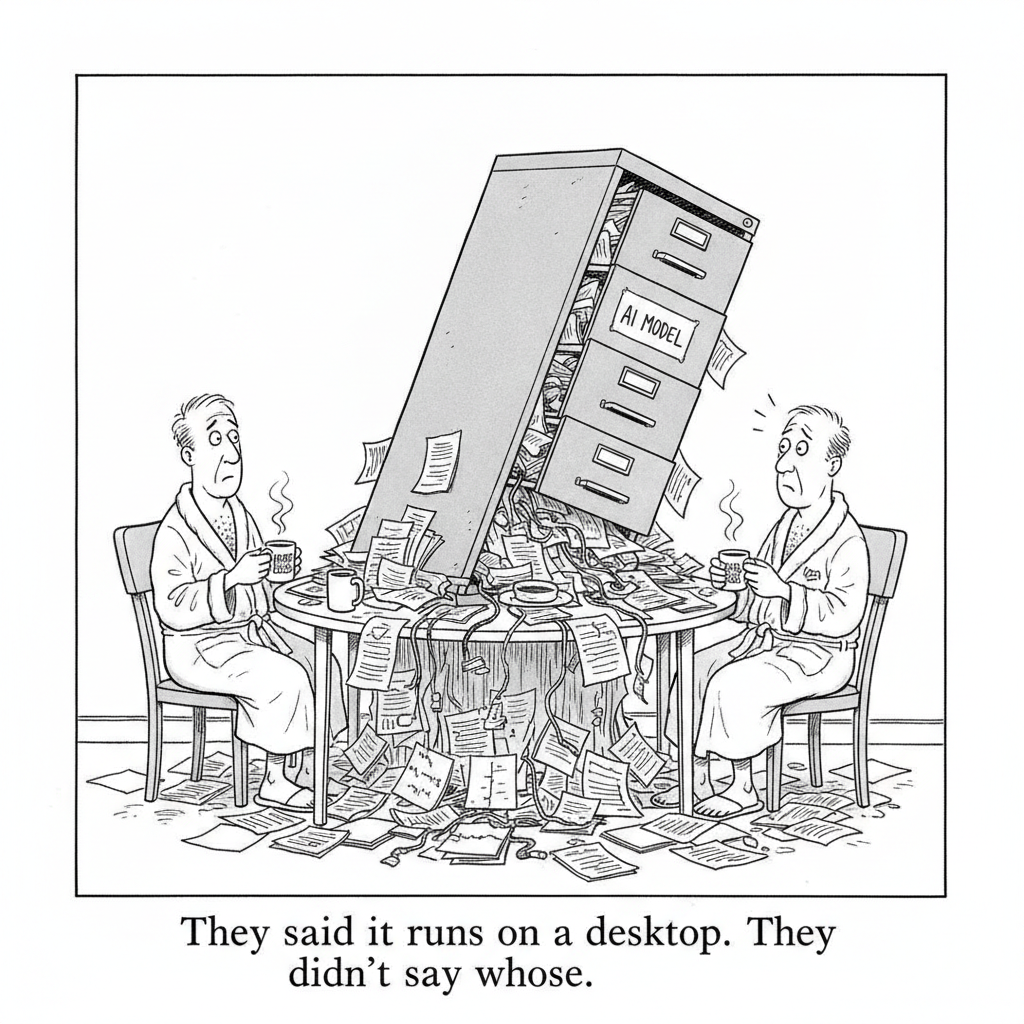
Apple Shows Muse Spark Open Running on a Cluster of Mac Studios
With the latest MLX and RDMA over Thunderbolt, a cluster of four Mac Studios generates over 36 tokens per second from the nearly trillion parameter model, faster than average reading speed. Apple also benchmarks the M5 Ultra against the M3 Ultra, crediting the M5’s GPU Neural Accelerator for the gains.
Google Antigravity Helps Biologists Hunt for Antimicrobial Peptides
Researchers used Antigravity and the ProtNLM function-prediction model to filter millions of uncharacterized UniProt entries down to a 97 amino acid bacteriocin with predicted activity against respiratory pathogens. The lead is still in wet lab validation, and Google is adding a 3D Biomolecular Structure Viewer to the tool.
- GEMINI
- ARGON
- WEIGHTS
- ORGANOID
- KREA
- TOKENS
- MLX
EmbeddingGemma 2 Puts Text, Images, Audio, and Video in One On-Device Embedding Space
The 740 million parameter model is released under Apache 2.0, has an 8K context window, and can truncate vectors from 768 to 128 dimensions for up to 6 times less storage. Google says the text-only weights need about 191MB of RAM on a Pixel 11 Pro. The first EmbeddingGemma passed 20 million downloads.
Goodfire Argues Neural Networks Are Already Clean

The essay argues that the canonical evidence for polysemantic neurons and superposition was misread. In InceptionV1, it says, architectural problems made later layers overflow and weak tools made them look incoherent. Goodfire now claims it can understand most neurons in models up to trillions of parameters, which would make the outlook for mechanistic interpretability far better than feared.
Microsoft Research Brings Zero-Knowledge Proofs to Everyday Programming Languages With Magnetar

Zero-knowledge proofs let someone verify a computation without rerunning it or seeing the data. Microsoft says Magnetar makes them faster, simpler, and quantum-ready, with support for standard programming languages.
Gemini 4 Argon Scores 87 Percent on the ERQA Embodied Reasoning Benchmark

Google says Argon beats every other frontier model on ERQA using pure reasoning. The post shows it driving a Boston Dynamics Spot to step on a foot-pedal trash bin after practicing in a MuJoCo digital twin, building simulation twins from robot camera feeds and hand-drawn sketches, and iteratively improving its own actions on hardware.
IBM Granite Switch 4.1 Handles Chat, Decisions, and Speech From One Endpoint

Granite Switch 4.1 adds a Decision adapter and what IBM calls the fastest ASR model on the OpenASR leaderboard. The pieces are composed into one model that uses about the same VRAM as the base model, and the adapters reuse the base model’s KV cache so switching between chat, decisions, and speech stays fast.
GovAI’s Alan Chan on Agent IDs, Monitoring, and Rogue Agents

Chan grades the field against his 2024 proposals for agent identifiers, real-time monitoring, and activity logging. He favors embedded auditors over legislated metrics, and he says rogue agents on the internet are very likely here for the foreseeable future, whether escaped, deliberately launched, or simply negligent.
Google Details the Safety Work Behind Gemini 4 Argon

Argon solved all 12 end-to-end simulated cyberattack scenarios, up from five for its predecessor, so Google wrapped it in three layers of real-time protection: input screening, activation probes that read the model’s internal signals, and continuous monitoring that can cut off an agent mid-stream. External bio jailbreak red teaming unlocked less than 1 percent of tested sub-tasks, and honeypot tests for covert sabotage found no instances.
Krea 3 Is an Image Editing Model Built for Production
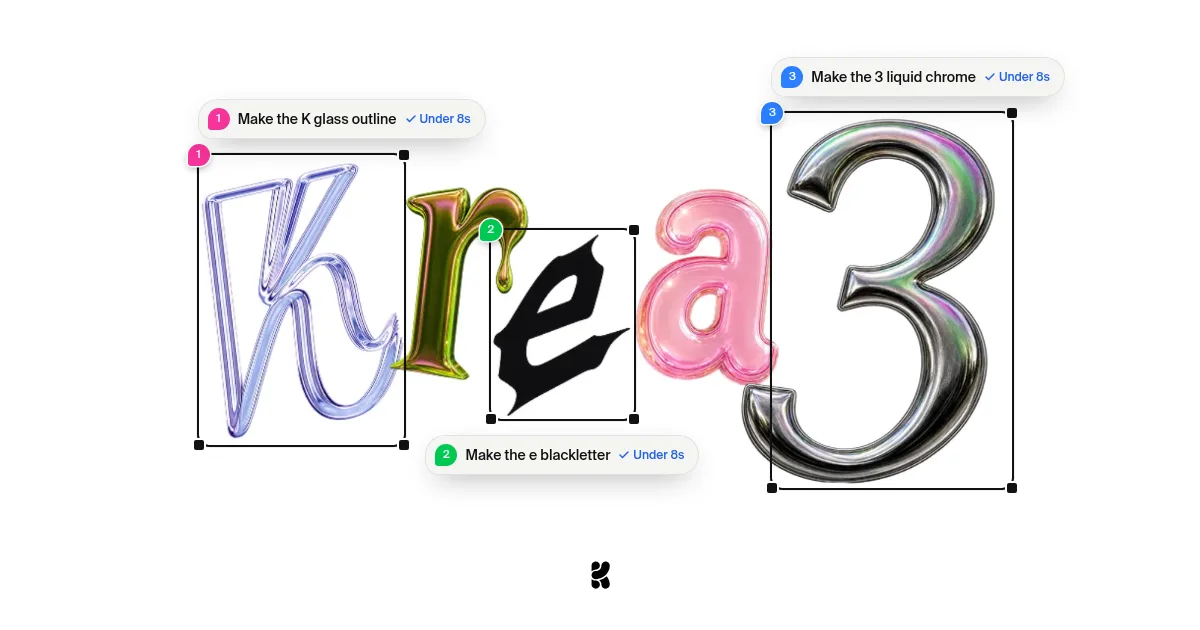
Krea says its new model changes only what you ask, finishes an edit in under 8 seconds, and costs $0.06 per image, against $0.135 for Nano Banana Pro. The launch page claims 4 times the speed of Nano Banana Pro and runs twelve identical prompts side by side against it and GPT Image 2.5.
Human Brain Organoids Learn to Identify Braille Letters
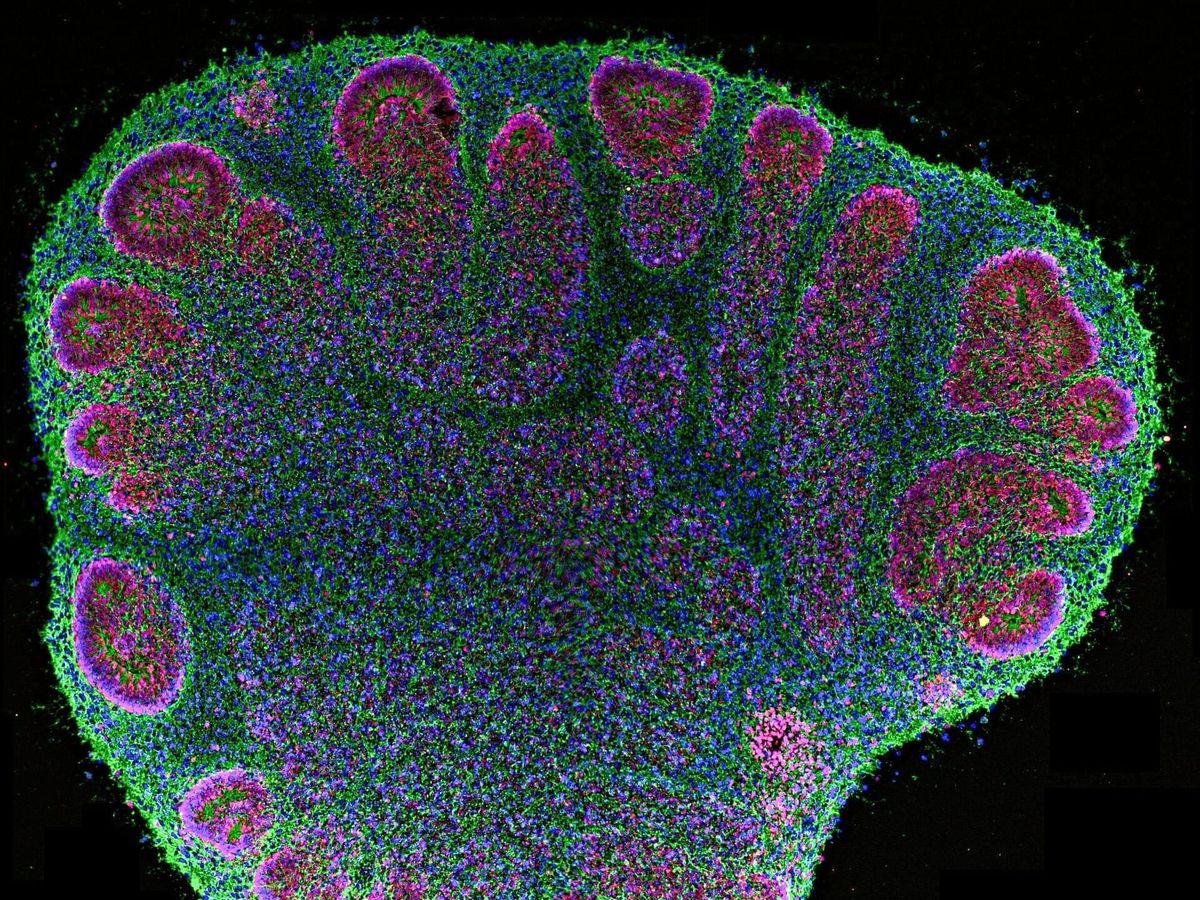
In a study in Frontiers in Artificial Intelligence, a single organoid of about 10,000 neurons classified Braille letters with about 61 percent accuracy, and teams of three organoids reached 83 percent. The Bristol team says it wants to know whether such tissue can learn or adapt.
NVIDIA and AI4Bharat Release 2.8 Trillion Tokens of Indic Pretraining Data

Nemotron-pretraining-Indic-v1 covers the 22 languages in India’s Constitution, with native-script data for all 22 and romanized data for twelve. It ships with an open GPU-accelerated pipeline, including prompts and quality checks, that translates English math, code, and question-answer material into those languages.
AWS Labs Publishes Adaptive Workflow Rules for AI Coding Agents
AI-DLC turns AI coding assistants into structured, verifiable software delivery workflows. One harness-neutral core runs natively in Claude Code, Kiro, Codex CLI, Cursor, opencode, and GitHub Copilot, and the MIT-0 licensed repository is at version 2.11.0.
Goodfire’s Eric Bigelow on How Agents Decide

Bigelow resampled about 30 rollouts at every token of chain-of-thought answers and found the answer distribution often holds steady, then suddenly collapses, sometimes on an arbitrary token. Goodfire has found reward hacking in 50 to 96 percent of rollouts across Kimi K3 and other leading open models.