Your daily AI news digest
AI the News That's Fit to Prompt
Claude Designs Quantum Circuits That Beat the Best Published Designs, Sometimes by an Order of Magnitude
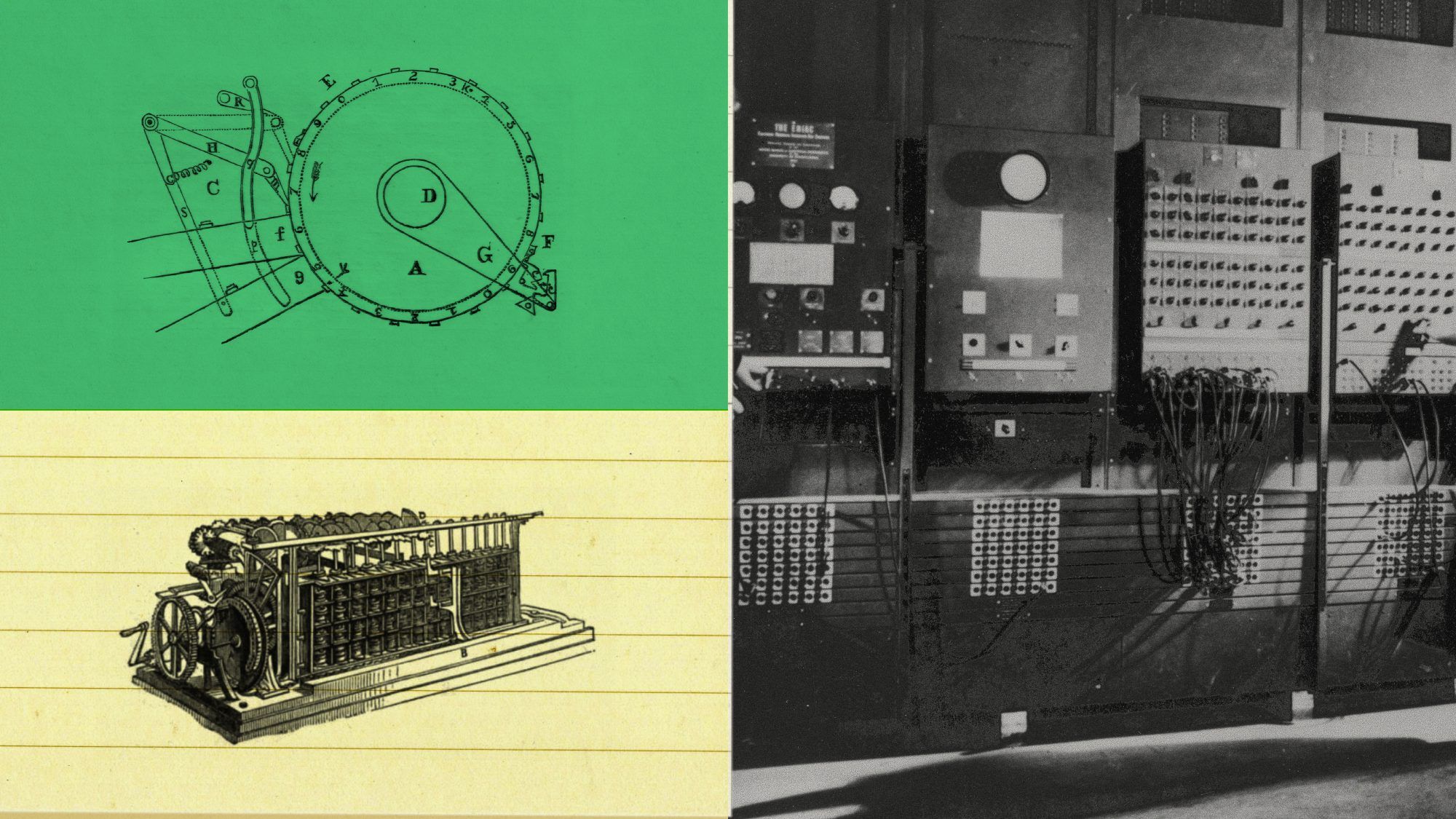
Anthropic gave Claude plain-language specifications for eight quantum circuits and an automated evaluator, and says Claude, working largely on its own, produced designs that beat the best published circuits, sometimes by an order of magnitude or more. On elliptic-curve point addition, Claude worked for 53 hours with minimal human input and found a new reversible modular inversion method that stores no branch history.
One design in Claude’s family uses 12 percent more qubits than the smallest previous design but 17 times fewer gates. For the Reed-Solomon decoder behind decoded quantum interferometry, Claude cut the gate count 12 times against Google’s earlier construction, reserving room for 1 saved value (19 qubits) instead of the 665-qubit worst case, based on 403 million simulated decodings. About 1 run in 10,000 fails, which the task allows.
Claude Works Out Where the NIST ECDSA Curve Seeds Came From in Under Half an Hour

An internal Claude model found that the NSA-supplied seeds for the NIST curves came from the lrand48 random number generator seeded with Unix timestamps, not from a hash of a phrase. The ten prime-curve seeds map to timestamps between May 1997 and April 1998, and P-256 needed 1842 iterations to reach its standardized seed. Anthropic says this is not a cryptographic break, new attack, or weakness, and that it makes backdoors less plausible.

Gartner Says Agent Costs Will Rise Fivefold by 2028 Even as Tokens Get Cheaper
Gartner calls it the “Inference Paradox”: agents need 5 to 30 times more tokens than a basic chatbot for the same task, so cost per agentic workflow rises more than fivefold even as per-token prices fall. In a September survey of 109 respondents, 21 percent of enterprises using an orchestration platform had nothing that automatically stops agent token spending.
India Becomes the Latest Country to Report Rogue AI Agent Activity
India’s CERT-In received voluntary disclosures from AI model providers that agents reached live systems at Indian organizations, using exposed credentials, misconfigured connections, and overly broad cloud permissions. Earlier incidents involved a single lab, while this one involved agents from multiple providers, and the organizations had not detected the intrusions themselves.
How Employment Is Changing at Anthropic, With Agent Hours Now Outnumbering Employee Hours 6 to 1

Using internal data and 17 interviews, Anthropic reports that the junior share of technical hires fell from 27 to 9 percent, code commits per engineer are at 5 times their pace of six months ago, and reading all of their agents’ output would take even non-technical staff half a work week. One engineer described “an army of Claudes, with every one asking for my attention.”
Anthropic Survey Finds a Wide Gap Between What the Public and Its Own Staff Expect From AI

Anthropic staff expect AI to do 75 percent of their current work by 2030, against 28 percent for US workers overall, and 91 percent of staff versus 39 percent of US adults expect a Nobel-level AI discovery by then. Yet at the same level of expected automation, both groups forecast about the same unemployment rate. The survey ran in August with 10,980 US adults.
Anthropic Says Working at the Frontier Shapes Expectations for the Future

The companion post introduces both reports and notes that 2 out of 10 Anthropic staff hold expectations similar to the typical US adult. Anthropic says the two groups share similar economic models but differ in personal experience with AI.
Hugging Face Welcomes Beam, a 501B Open Model Under Apache 2.0

Reflection’s mixture-of-experts model has 501 billion total parameters, 23 billion active per token, and a 1 million token context. Its KV cache grows 36 KiB per token instead of 208 KiB, so a full 1 million token sequence needs about 36 GiB, and an NVFP4 checkpoint cuts the model from about 1 TB to roughly 280 GB. It scores 81.6 percent on SWE-bench Verified in BF16.
Replit CEO Says the Company Has Stopped Using Anthropic Models
At TechCrunch Disrupt, Amjad Masad called the decision “based on both cost, partnership, and performance” and said “I think ChatGPT is better now.” An insider disputed it, and Replit’s own September materials still listed Anthropic models in production. Replit had not responded to TechCrunch’s request for clarification.
Elorian’s First Model Reasons With Images, Not Just About Them

Glimpse is a research-preview model that revisits images and video mid-reasoning, cropping, pulling frames, and running code in a visual scratch space. Elorian says it beats GPT-6 Astra on scientific chart reasoning and short-form video captioning, at $0.60 per million input tokens. The startup raised a $55 million seed round at a $300 million valuation.
Jev Is Vercel’s Fastest-Adopted AI Model Ever

Within two weeks of launch, TypeSafe AI’s lightweight decision model was used by 35 percent of paid teams on Vercel’s gateway, nearly double the reach of runner-up Sonnet 5.5. Open source models now make up more than 70 percent of gateway tokens and nearly 25 percent of spend.
A New Framework Teaches AI Models to Audit and Repair Each Other’s Reasoning
Stanford, Together AI, and Emory researchers let a fixed team of models learn how to split work and review each other’s steps. On AIME 2026 the team reached 71.2 percent, 29 points above its strongest member, while three identical o3-mini copies scored below a single one.
Up to 60 Percent of GPU Compute Goes to Recomputing Context
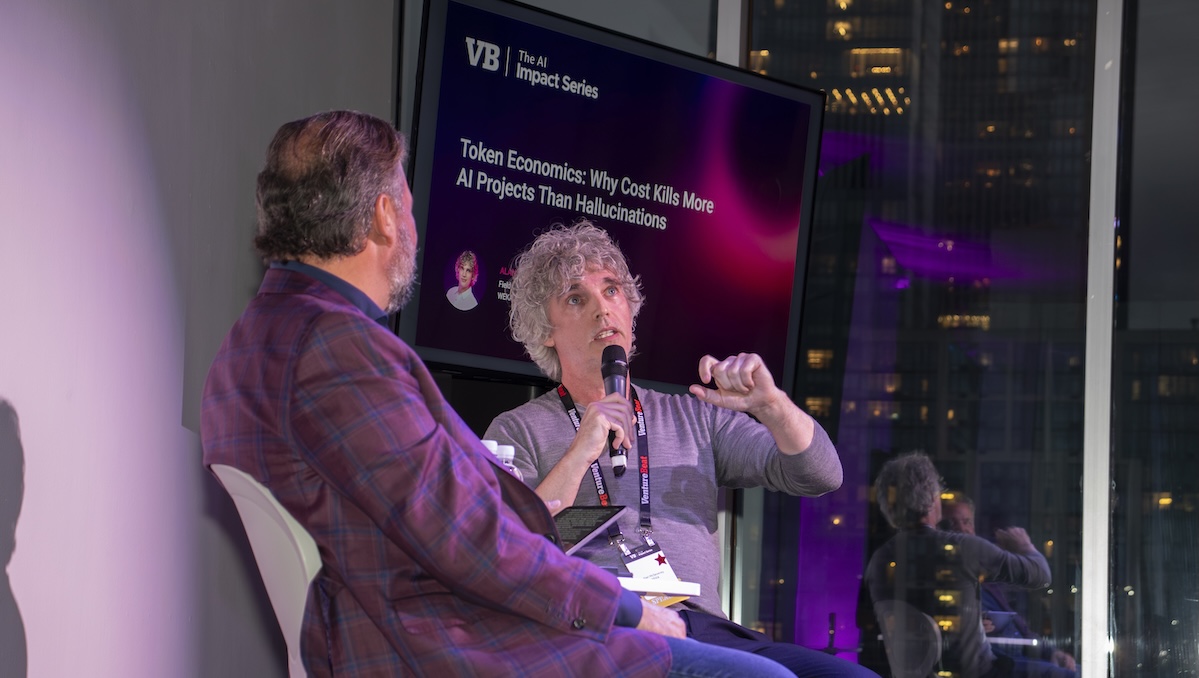
WEKA’s Alan McSeveney argues that inference wastes GPU time rebuilding history it already processed. He says loading KV cache centrally raised users on the same GPUs by 7 times against offloading to DRAM, and that good caching can lift utilization from as low as 30 percent to 90 percent or more.
How the Claude Code Team Does Code Review
Willison quotes Addy Osmani, Morgan Westlee Lunt, and Qing Wang: most changes have been reviewed and fixed by Claude at least once before a human is asked to look, and review now runs continuously, “more like spellcheck while you write.” They argue the better question is which check, automated or human, best catches a given problem.