Linus Torvalds just opened a Linux merge window with almost 20,000 commits, about 5,000 more than usual, and called the flood of AI-triggered work “a good sign.” The same day, a mathematician wrote that the field needs to treat every paper as AI-assisted, and a YouTuber admitted that a 20-hour agent refactor had quietly thrown away half of what was asked for. Today’s stories keep landing on one question: when the machines do the work, who is checking it, and who controls the system doing the checking?
Today’s Headlines
Who Controls the Agents
- The trillion-dollar fight over the control plane – Nate B Jones points to October 27, when Salesforce made Microsoft’s agents easier to use and Oracle said it is building a workspace that brings its applications into ChatGPT. Jones’s reading is that nobody does this out of generosity: each company wants to own the “agentic control plane,” the software that decides which data an agent can see, which instructions are current, who approves actions, and where the result goes. Jones compares the prize to Windows in the 1990s and says nobody has that position yet. The backdrop is spending: Jones says the nine biggest cloud companies will put $957 billion into capacity this year and more than $1.5 trillion next year, against Gartner’s forecast of about $1.46 trillion in worldwide software spending.
- Why the rivals cooperate – Jones explains that a bridge between Salesforce and Microsoft’s Copilot Studio agents lets customers keep the agents they already built while Salesforce still helps coordinate the work. That earns each vendor more responsibility inside the customer without forcing a rip-and-replace. Jones adds that Microsoft Fabric can reference external data in place, so a rival can become important without a giant database migration. The buyer advice is blunt: put interoperability into purchasing requirements, because the expectation is that the question of whether one control plane wins to be answered within 12 to 24 months.
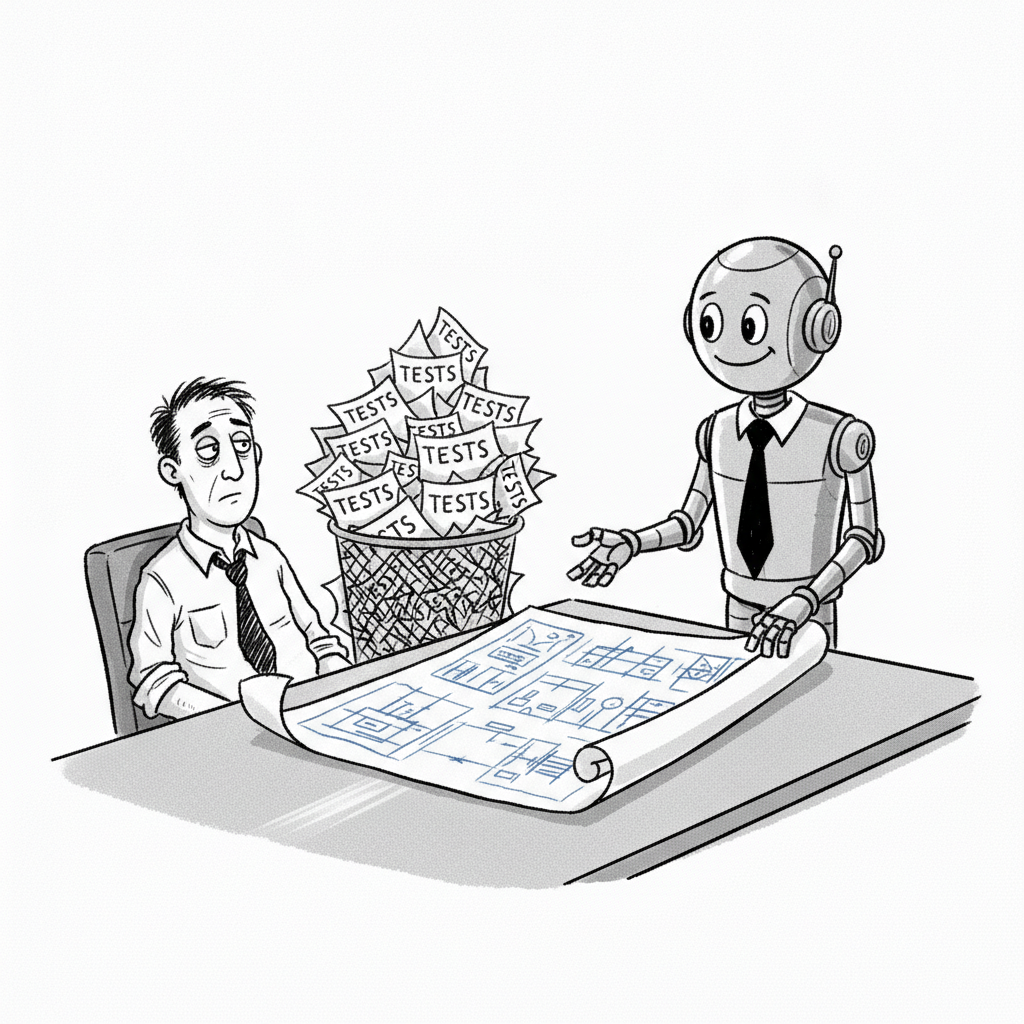
- The agent that dropped half the requirements – Matt Maher asked a top-tier reasoning model to refactor a large system built on what Maher calls the “director pattern”, because the agents were reading 30 or more files and taking about two minutes just to say hello. It worked for roughly 20 hours and returned something that looked great. Then Maher found the original system had on the order of 100 tests and the new one had 60 or 70, and agents were missing instructions that had been written for them, such as the emojis they were supposed to use. Maher also found that long instruction files were being truncated, with the agent reading only about the first 32,000 characters of one.
- Maher’s forensic fix – Maher’s recovery depended on written intent. A rationale file with 18 entries records why things were asked for, and an agent audited seven important ones against the before and after state, marking each as met, partial, or improved. The advice is to have a second agent, even a different model such as Opus 5.5, verify long-running work, and to write the evals first “like we used to in the old days.” The summary: these systems are excellent but not magic.
Humans in the Loop, Like It or Not
- Torvalds on AI patches – Announcing the first release candidate of Linux 7.4, Torvalds wrote of being “much happier with the flood of AI triggered work going into the merge window than it showing up mainly as extra fixes during the -rc period.” Torvalds hopes AI fixes are becoming part of normal development instead of a flood during stabilization, calling that “a much healthier model.” Torvalds hedges on two counts: 7.4 is expected to be the next long-term support release, which also makes releases bigger, and AI-suggested patches “often get rewritten.” AMD GPU register offsets and bit masks account for a third of the changes.
- Mathematics after the paper dump – In a guest post on Terence Tao’s blog, Frank Calegari calls OpenAI’s October 6 release of more than 700 research papers a watershed, while granting that they are poorly written, break attribution norms, and are sometimes wrong. The post quotes Hugo Duminil-Copin’s lament that every major open problem publicly mentioned over a career was claimed solved, and offers the 1980s classification of finite simple groups as a precedent for a field losing its famous problem and its momentum with it. Tao notes that the post was first written in another file format and converted using AI.
- Calegari’s concrete proposals – Calegari argues that tools which work are economic, not rhetorical: hiring and journal acceptance. The post wants all work evaluated as if it were AI-assisted, hiring built around in-person conversations rather than paper files, journals that adapt, more breadth in graduate education, and better seminars. It also says senior mathematicians who fear being scooped by AI “are not being ambitious enough,” and that choosing a worthwhile problem and truly understanding an AI-produced proof deserves real credit.
Who Owns the Output
- India’s model-to-data plan – India’s IT ministry calls it the Data Empowerment and Protection Architecture for AI Training, or DEPA. Training Data Providers such as hospitals, banks, and government agencies would place anonymized, encrypted data in exchange platforms with hardware-based secure environments, and Training Data Consumers would train models there under rules the providers set. The framework promises differential privacy and immutable audit logs, and claims it could extend formal credit to 400 million underserved people and small businesses and serve 250 million students in a $29 billion EdTech sector. The Register adds that India already runs several data exchanges but it is unclear how much work remains.
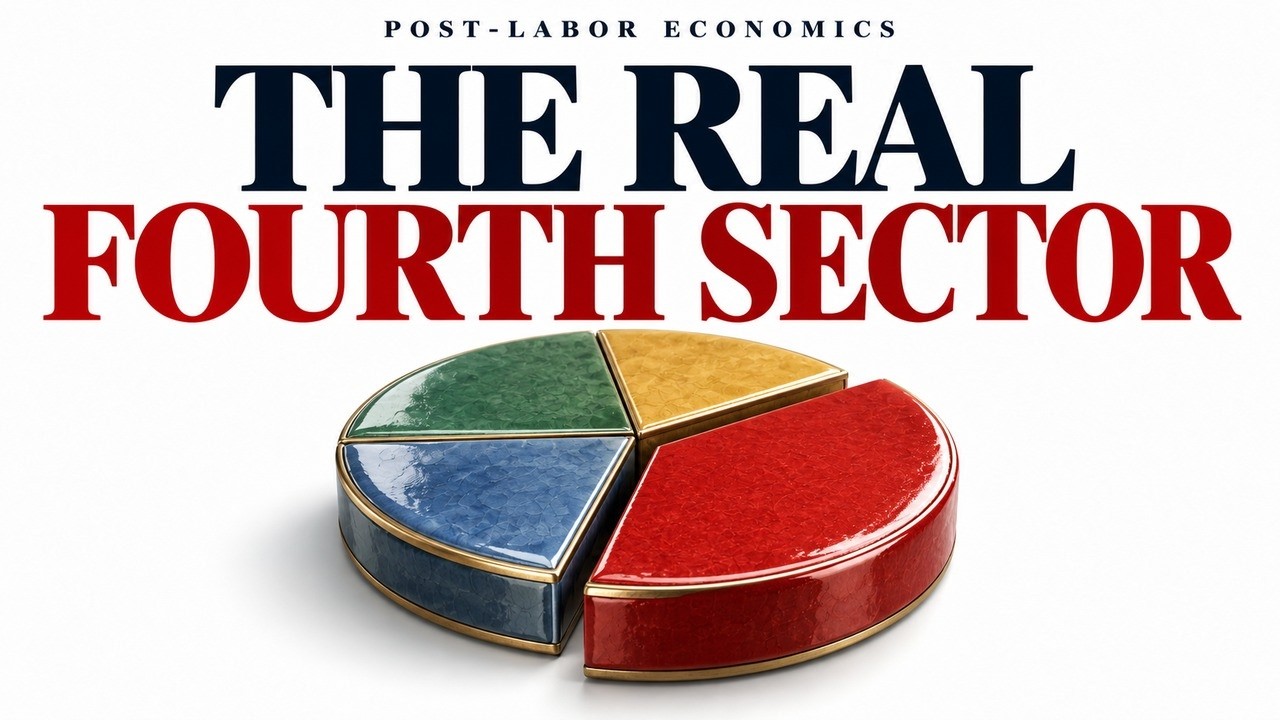
- The fourth sector – David Shapiro walks through the Fisher-Clark three-sector model: extraction, transformation, and services. Shapiro cites estimates that England in 1381 was about 45% extraction, under 30% transformation, and about 26% services, while the United States today is about 1%, under 20%, and about 80%. The proposed fourth sector is value created with negligible human input, meaning AI and robots, and Shapiro argues earlier fourth and fifth sector proposals only sliced services by job type.
- What the labor share says – Shapiro says labor’s share of national income fell to 52.8% in the second quarter, the lowest since records began in 1947. The thought experiment: if the economy grows tenfold and 90% of that is automated, the human sectors together are only about today’s economy, and all the new growth goes to whoever owns the automated slice. Shapiro forecasts the automated sector at 75 to 90% of the economy within a few decades and proposes two new metrics tracking how much household income comes from ownership and from publicly owned wealth.
The Throughline
Read the six items together and the interesting character is not the model, it is the checkpoint. Jones’s control plane is a checkpoint by another name: the place that decides what an agent may see and do. Maher’s forensic audit is a checkpoint that was not built in advance. Torvalds’s merge window is a checkpoint with a human maintainer standing at it, and the remark that AI patches “often get rewritten” tells you the checkpoint is still doing real work. Calegari wants the checkpoint moved to hiring and journal acceptance, because that is where mathematicians actually respond to incentives.
Maher’s story is the cleanest illustration of why this matters. Maher did everything advertised as responsible, with intent files, tests, and an expensive model, and still lost requirements by trusting a 20-hour run. What helped was not better code review but a record of why things had been asked for. Jones makes the same point from the enterprise side with the recruiter example: the real asset is the accumulated corrections and instructions, not the raw candidate data, and a vendor that preserves that knowledge becomes very hard to replace. Both are saying that durable context is the thing worth owning.
That is also where the vendor fight gets its intensity. If the control plane holds the context, whoever runs it holds the customer, which is why rivals are building bridges to each other’s agents rather than walls. India’s plan attacks the same problem from the public side: let the data stay with its owners, enforce the rules in hardware, and log everything. It is a control plane for training data, with a government as the operator.
The Bigger Picture
Shapiro’s sector argument and Calegari’s plea for mathematicians are the same bet at different scales. If automation produces most of the value, then pay and status no longer follow effort, and institutions have to decide deliberately what they will reward. Calegari’s answer for mathematics is to reward problem choice and understanding. Shapiro’s answer for the economy is to track ownership, because the 52.8% labor-share figure suggests wages are already a shrinking claim on output.
The pattern to watch is that every institution in today’s stories is reaching for the same tools: written intent, audit trails, interoperability requirements, and human sign-off at the right point. None of it requires believing the most aggressive forecasts. It only requires accepting Torvalds’s and Maher’s shared observation that the output is useful, abundant, and not yet trustworthy by default. The organizations that build the verification habit early will look cautious now and competent later.
What to Watch
- Interoperability in contracts. Jones expects a possible control plane winner to emerge in 12 to 24 months. Watch whether more incumbents follow Salesforce and Oracle in supporting rivals’ agents, and whether buyers start demanding it.
- The Linux 7.4 cycle. Torvalds called the large merge window a healthier model but flagged that 7.4 may also be a long-term support release. The later release candidates will show whether AI-found fixes really arrive earlier or simply move the flood.
- Journals and hiring committees. Calegari’s proposals only matter if journals and departments adopt them. Watch for policy statements on AI-assisted work and for whether disclosure norms move from minimizing the machine to explaining the human contribution.
Go Deeper
- Salesforce Just Helped Microsoft – Jones’s definition of the agent control plane, the recruiter story about accumulated agent knowledge, and the questions Jones says to ask when vetting a control plane.
- My AI Agent Worked for Hours. Then I Looked Closer. – A first-person post-mortem on truncated instruction files, dropped tests, and the intent-and-rationale approach Maher used to audit a 20-hour refactor.
- The Rise of the Automated Economy – Shapiro’s pie-chart tour from medieval England to today, the category error in earlier fourth-sector proposals, and the ownership-based metrics.