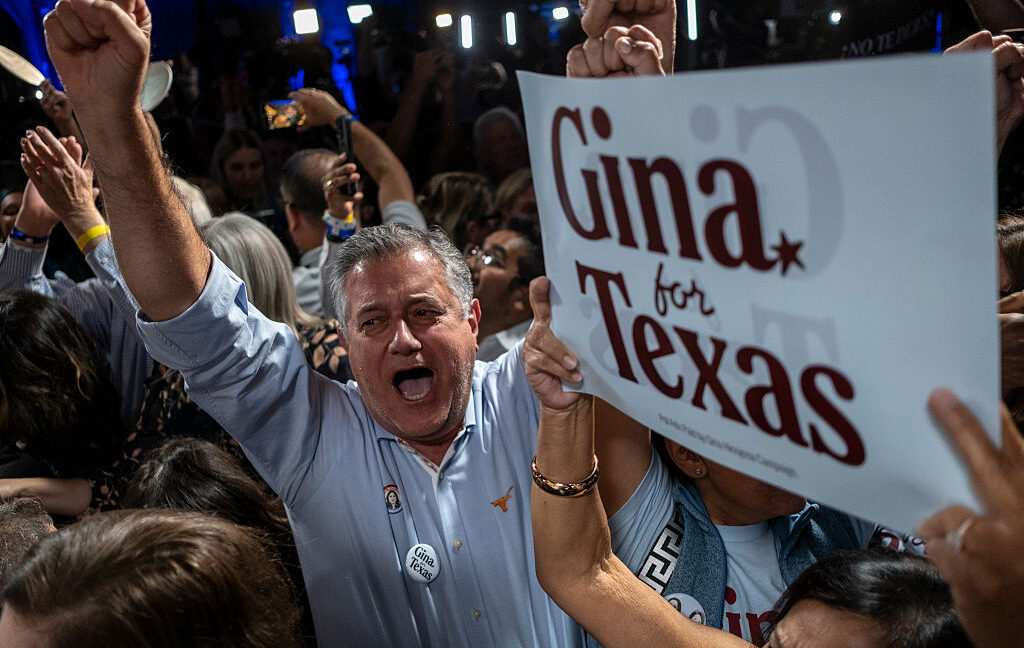
Of 44 measures across 10 states that sought to restrict data centers, 38 had passed by Wednesday, and Gregg Abbott, the governor who made Texas the easiest place in America to build one, lost his seat by more than 700,000 votes. That is the number to hold onto, because it turns a year of grumbling about electric bills and zoning into something developers have to price. Today’s stories all circle the same fact: AI’s limiting factor is no longer chips or even power, it is permission.
Today’s Headlines
The Ballot Box Meets the Data Center
- American Voters Overwhelmingly Reject AI Data Centers. 404 Media counts more than 40 races in 13 states with data centers explicitly on the ballot, and voters said no in 38. Six cities banned them outright and 12 capped the megawatts they can draw. The local detail is vivid: a Kentucky mayoral candidate who voted to approve a hyperscale project lost to a write-in, and Yukon, Oklahoma, recalled its mayor after he backed one.
- Big Tech Claims Voters’ AI Backlash Is ‘Anti-Trump’ Not ‘Anti-Tech’. Ars Technica lays out the dispute over what the results mean. Adam Kovacevich of the Chamber of Progress says Democratic gubernatorial candidates who opposed data center bans won at a higher rate than those who backed them. Blue Rose Research counters that Americans “would rather live near a prison, methadone clinic, or a nuclear power plant than an AI data center.” Redbud Consulting adds a caveat for investors: most of the 38 passed measures hit projects planned for 2028, not those already approved through 2027.
- After the Midterms, a Bigger Clash Over Data Centers Could Be Coming. An NBC exit poll found almost 80% of respondents oppose data centers in their neighborhoods and almost 60% called them a crucial or major factor in their vote. TechCrunch expects more moratoriums and rules making data centers pay for their own grid upgrades, and quotes Color of Change’s Nadine Smith saying Democrats “ran on making Big Tech pay.” A federal moratorium bill from Sanders and Ocasio-Cortez faces a possible veto.
- The Biggest Pro-AI Super PAC Network Didn’t Really Impact the Midterms. Leading the Future started with about $100 million and exits with just over $20 million. It spent roughly $10 million in the general election, mostly on safe races, and reported zero donations in the second and third quarters. Brad Carson of Public First Action called the outcome “a crushing blow to the AI industry’s anti-regulatory efforts,” and Sen. Ron Wyden’s reaction to Democrats’ plans for Big Tech hearings was one word: “Subpoenas.”
Where the Buildout Goes Now
- Texas Was the New Epicenter of the AI Data Center Buildout. That Might Be Kaput. MIT Technology Review reports that developers at an industry conference said Texas was the easiest place to build until September, when the governor’s office stopped answering emails. At stake are Stargate Frontier at 1,820 megawatts and Nexus Hubbard, mostly for Anthropic, at 6,400 megawatts. The map is messy, though: Ellis County, which leads in permit requests, still voted for Abbott.
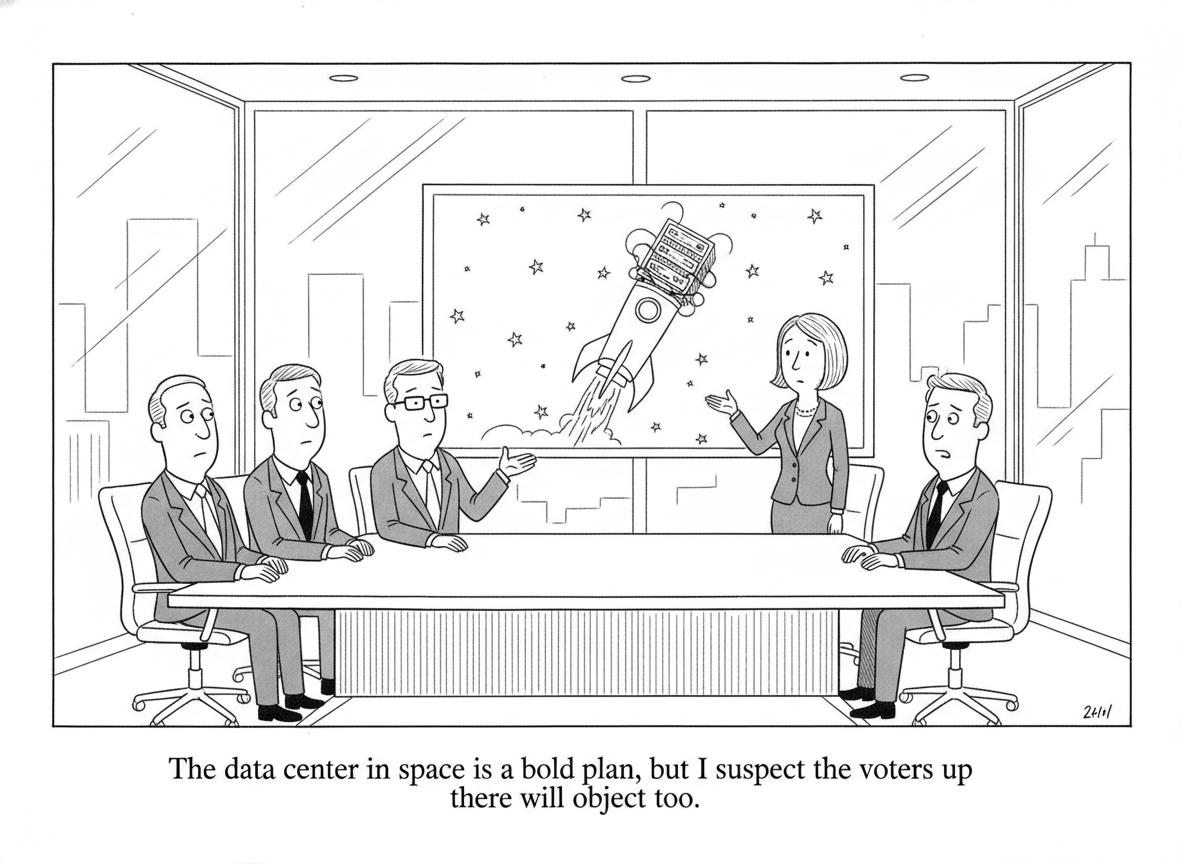
- The Blue Wave Has Tech Bros Scrambling for Data Centers in Space. WIRED notes Elon Musk, who spent more than $400 million backing Republicans who all lost, posted that orbital data centers look “pretty appealing right now.” SpaceX says it aims for thousands of AI satellites as soon as late 2027, but space data centers cost far more and cannot reach hyperscale size. On the ground, UT Austin’s Robert Paterson says developers hold strong “vested rights,” so even a hostile Texas government will be slowed.
- Analysis: AI on the Ballot. Ben Thompson writes that data centers were the most common campaign ad topic he saw in Wisconsin, with both parties accusing their opponent of being pro-data-center. His frame is the most useful of the day: the AI constraint moved from compute, to memory, to power, and finally to politics.
Money, Models and Tools
- Apple Is Reportedly Cutting Budgets for Its Internal AI Usage. Per Bloomberg via TechCrunch, Apple lowered the daily AI cap for engineering teams from $300 to $200 in October, with some allowances heading to $100 and a limit as low as $25 a day considered elsewhere. TechCrunch ties it to a brief “tsunami of tokenmaxxing” that ended when the bills arrived.
- Google Is Forcing AI Overviews in Classrooms. Google will turn Search, Gemini and Notebook off by default for schools next year, but offers no switch for AI Overviews, so a district must block search entirely to remove them. A Washington University study found only about 42 percent of AI Overviews could be fully verified from their citations. Fairfax County Public Schools built its own workaround.
- Dharma Field Extractor. Dharma-AI’s 2-billion-parameter model scored 0.834 on a 546-document benchmark, ahead of Claude Opus 5 at 0.816 and GPT-5.6 Luna at 0.741, at roughly 6 to 147 times lower cost. Read the footnote: the authors ran the benchmark, and the model runs on a self-hosted GPU while the frontier figures use list token prices.
- The Most Important Paper in AI Right Now. Matthew Berman’s walkthrough of a paper in which a frontier model reads and edits another network’s raw weights. One edit touching 3.5% of a network’s weights fixed a stuck car in all 1,024 episodes. The guide stresses limits: the model could not tell a sycophantic model from a normal one using raw weights alone.
- Also today. Simon Willison shipped datasette-llm 0.1a10, a one-line fix so a demo site only offers the models in its configuration, and datasette-apps 0.3a0, which now requires user approval before the agent grants an app any write query. 404 Media’s Jason Koebler argues the election repudiated the idea that the public should accept harms for the technology’s benefits (only the free opening was available). A sponsored piece from MIT Technology Review Insights and Cyberhaven argues agent security is a data visibility problem.
The Throughline
Read the election stories next to the cost stories and a pattern shows up: the same week the public became a veto on where AI gets built, companies became a veto on how much of it gets used. Apple trimming engineering AI budgets from $300 to $200 a day and Texas voters trimming the permit pipeline are the same signal from two directions. Both say that AI’s social and financial bills have arrived at the same time, and that the answer to “who pays” is no longer assumed to be someone else.
Thompson’s contrast with globalization is the sharpest idea in the pile. Towns hit by factory closures had no say, he writes, but data centers need permission, so people now have a veto. That explains why the results look so lopsided in the 404 Media count (38 of 40-plus) even as Ars Technica quotes strategists arguing about whether this was really about AI at all. Kovacevich may be right that an anti-Trump wave lifted Democrats, but the measures were on the ballot by name, and Blue Rose’s finding that people would rather live near a prison suggests the objection is to the buildings themselves, not just the party. TechCrunch’s private equity source says people may not hate data centers so much as AI.
There is also a good test of how much the state can really do. Thompson says Abbott declared a moratorium on new data center permits in September. 404 Media says the “pause” was not real, because regulators kept approving projects and the permitting portal only shut down after reporters asked. MIT Technology Review adds a third angle, that developers felt the chill anyway when emails went unanswered. If a governor who wanted to stop projects found it hard to do so, Hinojosa’s task is no easier, and WIRED’s experts say vested rights, unincorporated land and a Republican state senate will slow her.
Finally, the money. Leading the Future’s retreat to safe races shows that influence spending works best when it follows winners, not when it tries to change minds. A war chest of about $100 million bought dozens of wins but little persuasion, and the public-opinion numbers moved the other way. That is the argument for the Chamber of Progress line and the argument against it at once.
The Bigger Picture
For two years the AI story was about capability: who had the best model, who had the most chips. This week it became a story about consent. If Thompson is right that the constraint moved to politics, the industry’s growth rate is now set partly by city councils, county commissions and governors, which are slow, local, and not susceptible to the usual lobbying playbook. Gartner’s estimate, cited by Ars, that the AI boom is nearly $5 trillion short of paying for itself makes that friction more consequential, because every month of delay raises the carrying cost of capital already committed.
The winners from friction are less obvious. Thompson argues hyperscalers gain share because permission and capital are now both scarce, that Apple benefits from edge inference, and that China gains because it has power but lacks leading-edge chips. A Natixis economist makes the same point in Ars: a US slowdown could keep token prices high and help rivals. The space data center talk fits here too. It is mostly a reaction to the vote, and WIRED’s own caveats (higher cost, no hyperscale, dependence on launches) say it will not replace the ground buildout soon. The honest read is that this is a real constraint, not a collapse: Redbud says most passed measures bite on 2028 projects, so 2027 capacity is largely safe.
What to Watch
- What Hinojosa can do without the legislature. Public Citizen’s Adrian Shelley says a governor could move faster through executive orders or by replacing appointees at agencies such as the TCEQ and the Public Utility Commission. Watch whether those appointments, rather than any bill, become the first real test.
- Federal action. The Sanders and Ocasio-Cortez moratorium bill and Sen. Heinrich’s GRID Savings Act are on the table, but TechCrunch notes any bill faces a possible veto. Hearings that put Big Tech executives on Capitol Hill, as Wyden’s one-word reaction implies, are the likelier near-term step.
- Where the capacity moves. GLJ Research’s Gordon Johnson says projects with power but no state environmental permits could slip 12 to 18 months, and some may shift to Louisiana or Georgia. Georgia also elected a Democratic governor, so the escape routes are narrower than they look.
- Corporate token budgets. If Apple’s caps spread, they will show whether the productivity gains justify the spend. TechCrunch notes the gap between what AI costs to run and the productivity it delivers remains unclear.
Go Deeper
- The Most Important Paper in AI Right Now – Timestamped notes on Berman’s eight experiments, including the network-identification test, the one-shot ramp fix, and the reasoning-model repair that lifted MATH-500 from just under 8% to just over 48%. It also separates the paper’s claims from Berman’s own speculation and flags the auto-transcript’s uncertain details.