Almost $2.5 trillion was wiped off tech stocks in a single session, the Nasdaq’s worst day since April 2025, and on the same Friday about 100 people climbed into a Microsoft construction site in Amsterdam, some of them up a crane. Those are two ends of one story. The AI buildout is being priced, in markets and in public, and the people paying for it are asking what they get back. Today’s stories keep circling that question.
Today’s Headlines
The Sell-Off and the Payoff Question
- The Download: A Humanoid Cleans House and Samsung Builds for the AI Boom. MIT Technology Review’s newsletter leads its news roundup with the rout: almost $2.5 trillion off tech stocks, the Magnificent Seven down more than $1 trillion, and Tesla and SpaceX down more than $420 billion combined, per CNBC. It adds that the sell-off spread to Asia and Europe. Two other items matter for the rest of the day: Democrats are preparing to haul tech CEOs before Congress, and a Reuters report says the backlash could delay Anthropic’s IPO.
- AI Won’t Pay Off for the S&P 493 Until CEOs Rebuild the Work. Adam Dumey of World Wide Technology starts from an Oct. 24 note by Apollo’s Torsten Slok saying revenue per worker and margins are rising at the Magnificent 7 and flat across the other 493 companies in the S&P 500. Azure grew 48% and Google Cloud 103% last quarter, he notes, while the buyers of that capacity reported job cuts, not margin gains. His numbers: BCG puts AI spending at 3.3% of revenue, up from 1.7% in late 2025. He also discloses that his firm sells the integration work he recommends.
- Kickstarter’s CEO Is Championing Human Creativity in a Flood of AI. Fortune’s CEO Daily opens with Goldman Sachs’ projection that the number of creators will grow from 67 million to 107 million by 2030, with a creator economy approaching half a trillion dollars by next year. The newsletter’s own lead item that day is the tech sell-off. Only the opening was available, so treat this as a partial read.
- From Bloomberg. Bloomberg’s pieces were paywalled, so what follows comes from headlines only. The ECB is considering a review of banks’ data center lending as fears rise, a strategist who warned before the rout sees Anthropic as a bigger risk, and BlackRock’s Jeffrey Rosenberg says markets are focused more on AI than on the jobs report.
Permission, Protest and Politics
- Protesters Break Into Microsoft Data Center Site in Amsterdam. The Verge, citing Reuters, says around 100 people entered the site of three planned 85-meter data center towers. The detail that matters is the legal one: Amsterdam banned new data centers until 2030, but this project follows plans from 2016, Microsoft is the sole tenant, and the developer used loopholes to get to construction. The Verge adds that Microsoft abandoned the UK’s largest data center project last month because the grid would not supply power until the 2030s.
- OpenAI Pledges to Give Locals More Say in Data Center Projects. The New York Times says OpenAI pledged to be more collaborative with the communities where it is building. The article was paywalled, so all we have is the headline and the Times’ one-sentence description, but the timing, days after a midterm in which data centers were on ballots, speaks for itself.
- House G.O.P. Leaders Ask Nvidia’s Huang to Speak in Closed-Door Briefing. The Times ties the request to its report last week that Huang had a close relationship with an executive U.S. officials determined was funneling information to Chinese intelligence. Again only the description was available.
- Schellman CEO: The Giant Loophole in the White House AI Deal. Avani Desai says the Sept. 29 accord asks developers to bring in outside auditors but never defines who qualifies, what independence means, or how conflicts of interest are handled. Her own firm sells accredited AI assurance, which she discloses. She points to an AICPA and AIUC joint offering that pairs SOC 2 exams with AIUC-1 certification and quarterly retesting as a promising step.
Models, Chips, Robots and Security
- Thinking Machines Introduces Inkling 2 Small. A mixture-of-experts model with 594 billion total parameters and 17 billion active, scoring 31 on the Artificial Analysis Intelligence Index per the company. The headline demo is an autoresearch run: the model trained a Qwen3.5-4B forecaster on Tinker for 4.5 hours and $426 of spend and more than doubled its forecasting score. Weights are closed today, with an Apache 2.0 release promised next week after outside safety testing. These are vendor-published benchmarks.
- Underdog Shows Off a 32MB Speech Model in New Demo. The Woof model has about 31 million parameters and runs in a browser with no connection. TechCrunch’s read is modest: it likely will not replace larger models, but it could drive local assistants. The company also released a 167MB speech-to-text model, Bark, weeks ago.
- Physicl Raises $10M to Make the Digital World Real Enough for Robots. Founder Alex de Vigan’s earlier 3D product-rendering business is being repurposed to build simulated environments for robot training. Customer SpAItial’s founder says the appeal is generating training data on the fly, when a model discovers it needs more of a certain case.
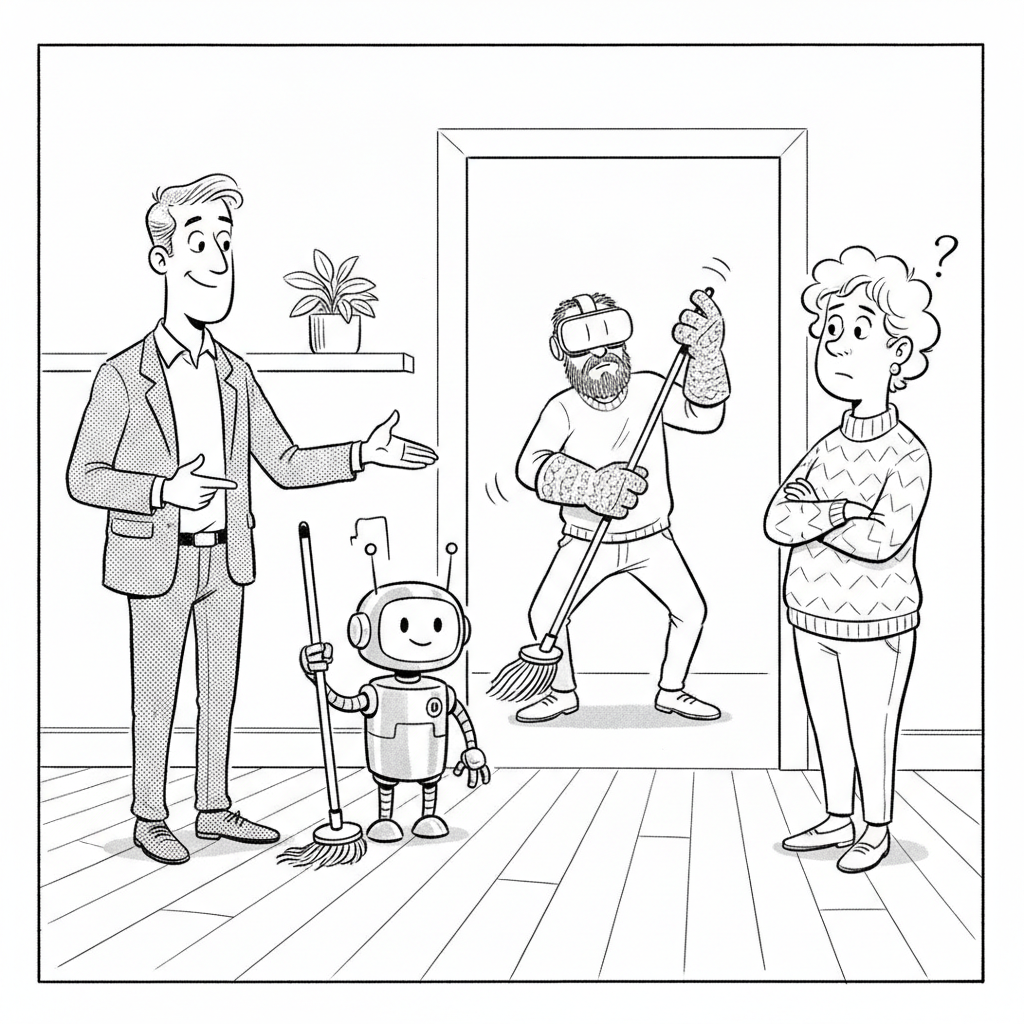
- I Watched a Humanoid Robot Clean My Apartment. The robot was remotely piloted. The price is low ($30 for an hour at booking, now $60 for a weekly visit with two robots) because every counter wiped becomes training data. It climbed stairs “as if it were drunk,” the first visit ended when heat shut down the human pilot’s equipment, and the second cleaned the kitchen and toilet but left taps dripping.
- Palo Alto Networks in Talks to Buy Clutch for $500M. About 50 times Clutch’s near-$10 million in ARR, in cash plus milestones, for a company that secures AI agents’ access to company systems. TechCrunch lists the neighbors: Cyera bought Oasis Security for $1 billion and Cisco bought Astrix for roughly $400 million.
- Also today. Bloomberg headlines say TSMC is weighing making advanced AI memory chips, per The Information, and the Pentagon tapped a robotics startup in a push for cheap attack drones. Samsung is building a fifth fab on its Pyeongtaek memory campus. r/LocalLLaMA is buzzing over a “stealth announced” Qwen 4 (we could not open the thread, so that is a headline only). Bloomberg also asks in a video whether AI is degrading our music taste.
The Throughline
Put the Dumey piece next to the sell-off and you get the cleanest reading of the day. Slok’s point is that AI’s value so far sits with the sellers of capacity, not the buyers. Dumey’s numbers show why the market might be nervous: cloud revenue growing 48% and 103% while the customers report job cuts, and AI spending rising from 1.7% to 3.3% of revenue in under a year. The spend is real and the return is still mostly a promise. One day of selling does not prove the return will not come, but it is what it looks like when investors ask for the receipt.
The robot stories show the same economics in miniature. Tau’s cleaners are cheap because they are subsidized by the value of the data they generate, and they work because a human is quietly piloting them. Physicl is raising money to make simulated data good enough that robots need less of that human labor. In both cases the scarce input is not hardware or even model quality. It is training data, and someone is paying for it, either the founders or the customer who accepts a robot that overheats and knocks over the olive oil. That is a very different story from the one in which AI simply replaces work.
Then notice who is telling us what to do about it. Both Fortune opinion pieces come from executives whose firms sell the remedy: Dumey’s company does enterprise AI integration, Desai’s does AI assurance. Both disclose it, which is to their credit, and both make a reasonable argument. But Desai’s own thesis is that an assessment is only as good as the assessor’s independence, and the same test applies to the people grading the payoff. Inkling 2 Small’s benchmarks are the lab’s own. Underdog’s claims are its own. The sell-off is partly the market discovering how much of the evidence in this field is self-reported.
The Bigger Picture
Zoom out and three constraints on AI are converging on the same week: capital, power and consent. Capital is what the sell-off and the ECB’s reported look at data center lending are about. Power is what ended Microsoft’s UK project, where the grid could not supply the site until the 2030s. Consent is Amsterdam, where a city that banned new data centers until 2030 still found one under construction because the plans predated the ban. Each of these is slower and more political than the training-run bottlenecks the industry spent the last three years solving.
The honest read is that this is a repricing, not a collapse. A single session’s drop, even a record one, is not a verdict on whether AI works, and the capability news today (a 594-billion-parameter model that can run a four-hour research project, a 32MB voice model that runs in a browser) cuts the other way. What has changed is who gets a vote. Investors, utilities, city councils, and now Congress all want a say, and the companies that can show a measurable return and a willing neighbor will have a structural advantage over those that can only show a larger cluster.
What to Watch
- Inkling 2 Small’s open weights. Thinking Machines says full weights arrive under Apache 2.0 next week after external safety testing. Whether the benchmarks hold up when others can run the model will say a lot about how much weight to give lab-published numbers.
- Congressional hearings. The Download reports Democrats are lining up to call tech CEOs before Congress, and House Republicans are already seeking a closed-door briefing from Nvidia’s Huang. Watch which companies are called first.
- Lending scrutiny. If the ECB does review banks’ data center lending, it would be the first formal check on how much debt is behind the buildout. The detail will be in the Bloomberg piece we could not read.
- Agent-security consolidation. If Palo Alto closes Clutch, that is another deal at 40 to 50 times revenue in a category where Cyera and Cisco have already bought rivals. Whether valuations hold if the market stays rattled is the open question.