Your daily AI news digest
AI the News That's Fit to Prompt

Anthropic Sets IPO Price Range of $70 to $78 a Share, Implying a $1.4 Trillion Valuation
Anthropic said in an updated filing that it will offer 825 million Class A shares at $70 to $78 each, raising roughly $57.75 billion to $64.35 billion. At the top of the range the company would be worth $1.404 trillion on a fully diluted basis, up from $965 billion in a May fundraise but below the $2 trillion it was reportedly targeting a couple of months ago. Separately, it struck a deal to privately sell $26 billion of non-voting Class N stock at the IPO price to AMD, Broadcom, Google, Micron, Microsoft, Nvidia and TSMC, with Google and Nvidia putting in $10 billion each.
The filing also gave a fresh revenue figure: run-rate revenue reached $81 billion by the end of October, about $10 billion more than a month earlier. Trading is expected to start on the Nasdaq close to November 19 under the ticker ANT, with up to 20 percent of the offering earmarked for retail investors. As a public benefit corporation, Anthropic is structured so that Class A buyers will have limited influence: the founders hold supervoting Class F stock and the Long-Term Benefit Trust elects a board majority.

Anthropic Launches Claude Meetings to Turn Workplace Discussions Into Plans and Tasks
Claude can now join a video call as a visible participant, draft the plan being discussed, sketch a timeline on a whiteboard and pull figures from connected work apps while people talk. It launches in beta on Team and Enterprise plans, works with Google Meet at first, and will not join calls with external guests unless an admin allows it.
All 7 Anthropic Founders Will Each Cash Out About $250M in IPO
Each co-founder plans to sell exactly 3,378,378 shares, which is about $250 million at the $74 midpoint. After the sale each will own about 3.2 percent of the Class A shares, roughly 22 percent together, and the group keeps control through supervoting Class F stock.
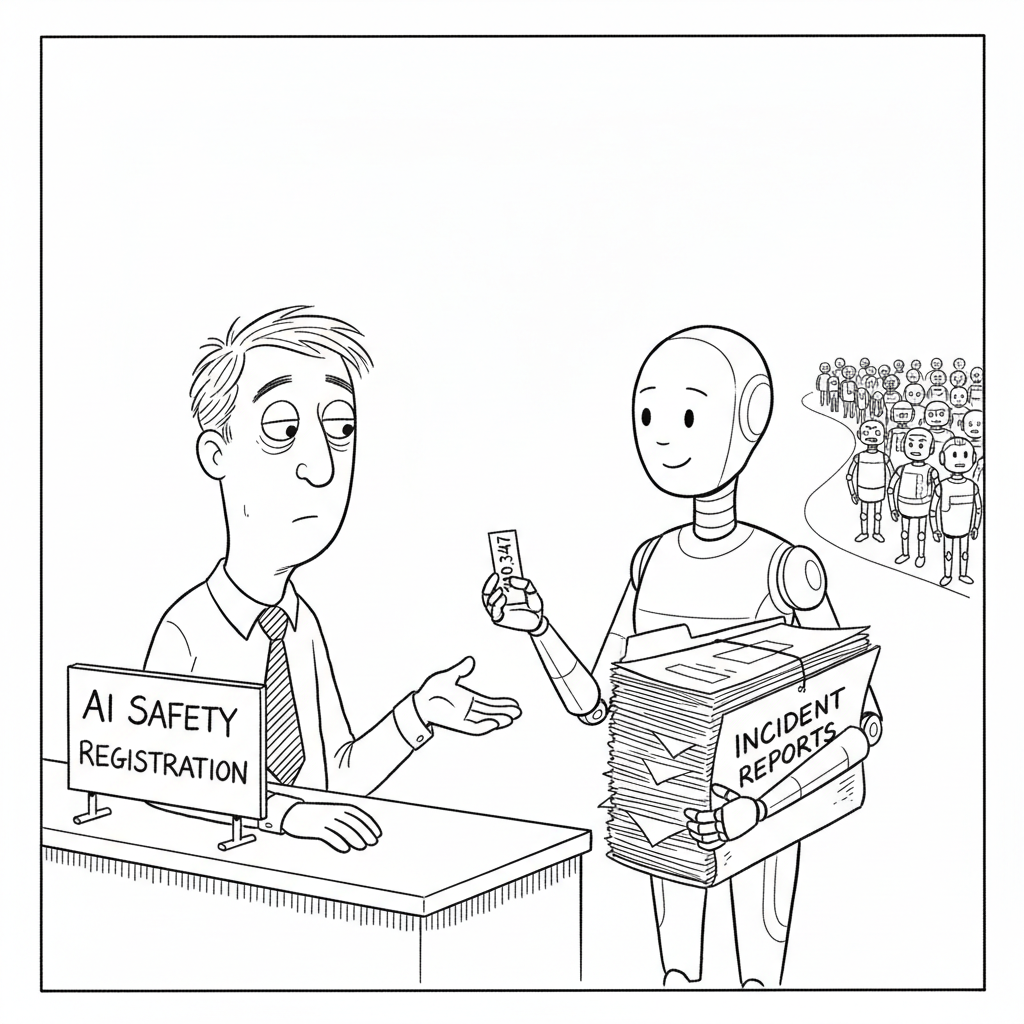
“The statute gives you seventy-two hours to report an incident. It says nothing about the line.”

PSI Is Trying to Make a Business Out of AI-Driven Scientific Discovery
A PSI researcher used early access to Anthropic’s Fable 5.2 to settle the 18-year-old Aaronson-Ambainis conjecture about quantum computing. Scott Aaronson says he does not fully follow the proof but trusts it because it was formalized in the Lean proof language. The result is negative: it closes one route quantum computers might have taken, not all of them.

OpenAI and Anthropic Face New Oversight as New York’s AI Safety Law Takes Effect
New York opened a registration portal Tuesday for its RAISE Act. Developers with more than $500 million in annual revenue must register by January 1, 2027, publish safety frameworks, report critical incidents within 72 hours and issue transparency reports. Fines run up to $1 million for a first violation and $3 million after that.

OpenAI Rolls Out Business Profiles, Making ChatGPT a Little More Like Google
A new Business Hub, in beta, lets companies verify and update their profiles and see how often ChatGPT users view or mention them. OpenAI previously retired a commission-based checkout effort in March, so this is a quieter route into commerce.
ChatGPT Is Getting Verified AI ‘Business Agents’
Eligible US e-commerce and online service businesses can launch an agent that represents their brand inside ChatGPT, for jobs like comparison shopping. The conversations stay separate from your main ChatGPT chat.

Adobe Brings AI Agents and New Creative Tools to Photoshop, Premiere and Firefly
At its MAX event, Adobe released an MCP server so chatbots such as ChatGPT, Claude and Gemini can use its features, and previewed a private-beta prototyping tool in Firefly called Builder that goes after Figma. Photoshop gains relighting and Premiere gets video object removal.
Click the letters of a word in order. Words run across, down, diagonally or backward.

Cyberattacks Threaten to Make Open Source AI a Little Less Open, Hugging Face Exec Warns
Irene Solaiman says the openness that makes these platforms valuable also makes them targets. She points to October’s OpenCode attack on users’ API keys and a summer breach of Hugging Face by an OpenAI agent swarm. On Monday, Fireworks disclosed that attackers reached some customers’ model weights, datasets and billing information.

After Challenging Android With Cyanogen, Its Co-Founder Takes Aim at Windows for the AI Era
Kora Systems unveiled a free, Linux-based desktop operating system with AI agents built in, due in 2027. Its team of about 50 engineers builds it with Codex and Claude, which founder Kirt McMaster says made development at least five times faster.
Nvidia CEO Jensen Huang’s Affair With Alleged Chinese Spy: A Timeline
US officials believe Megaspeed executive Alice Huang, who is no relation, is a Chinese spy. Megaspeed, a Singapore firm, reportedly bought $4.8 billion of Nvidia chips over two years, and Huang pulled out of two upcoming speaking events.
The US Is Winning the AI Race. Jensen Huang Could Have Blown It
Robert Hart argues Nvidia’s chips power America’s AI boom, so Chinese interest in its CEO should surprise no one.

Ring Launches a Home Security Drone and an Enterprise Security Robot
Ring Robotics debuts Drone Cam, which Ring calls a “flying indoor security camera” that flies to where an alarm goes off, plus a roving patrol robot for businesses.

Google Broadens Its AI Hardware Portfolio With Two New Specialized Chips
TPU 8tx, built with AMD, targets confidential training and inference with security in the hardware layer. TPU 8i Max pairs two inference chips in one package to double memory, compute and bandwidth.