Nvidia’s co-founder was out as CEO by early Thursday, and by Thursday afternoon Reuters reported a third affair, this one with an Nvidia employee, after the Times had already named the company’s healthcare vice president. The detail that matters most is not the scandal itself but who is gone: the New York Times calls Huang “singularly” influential over U.S. AI policy, and the same week voters sent Democrats who promised heavier AI regulation to office. That is the thread through today’s issue, a field whose most powerful advocate just left the room while everyone else keeps pushing agents into places that are not ready for them.
Today’s Headlines
The Huang Fallout
- The Timeline. TechCrunch’s Amanda Silberling traces the story to Huang’s admission of an affair with Megaspeed executive Alice Huang (no relation), whom U.S. officials believe is a Chinese spy. Megaspeed is a Singapore-based AI infrastructure company that reportedly bought $4.8 billion in Nvidia chips over two years, and the Justice Department has taken over the federal investigation into it. The Times then reported a relationship with Kimberly Powell, who reports directly to Huang, which Nvidia, Huang and Powell have not confirmed. When a Times reporter reached Huang, he reportedly said, “I don’t think you should be talking to me directly.”
- Washington Loses Its Backer. Cecilia Kang and David McCabe write that Huang fought to open AI chip sales to China, argued against AI safety rules that he said could hold back American companies, and pushed for open source. With bipartisan anger over the national security allegations, his agenda and the White House officials who supported it are now under attack.
- Congress Wants Answers. House Foreign Affairs Chairman Brian Mast said Huang agreed to testify by Thanksgiving, behind closed doors, after Mast, John Moolenaar and Rick Crawford wrote to him on November 4. Mast, who has clashed with Huang over export controls, said Nvidia is “a very important company to the United States of America,” but that Huang “has some very serious questions to answer.”
- A Third Affair. Reuters reports a separate relationship with an unnamed Nvidia employee. CFO Colette Kress is interim CEO, and no permanent successor has been named.
Open Source in Limbo
- Nvidia’s Open Source Stance. TechCrunch’s Rebecca Bellan notes Huang framed open source as good for safety, innovation and sovereignty, and that it also lets Nvidia sell chips to nations and enterprises as frontier labs build their own. Two pending commitments are exposed: the unfinished Hugging Face acquisition (about $13 billion) and a $6 billion non-exclusive license for Poolside’s coding technology. One quoted observer said his absence would be “very very bad for the open model cause in the US.”
- Hugging Face Responds. CEO Clem Delangue wrote, “we’ll keep fighting for open-source AI, harder than ever.” The Justice Department has been asking how the deal affects competition, per Reuters, and closing is still scheduled for the first half of 2027. TechCrunch notes Hugging Face had not said whether it has spoken with Kress.
Agents Meet the Real World
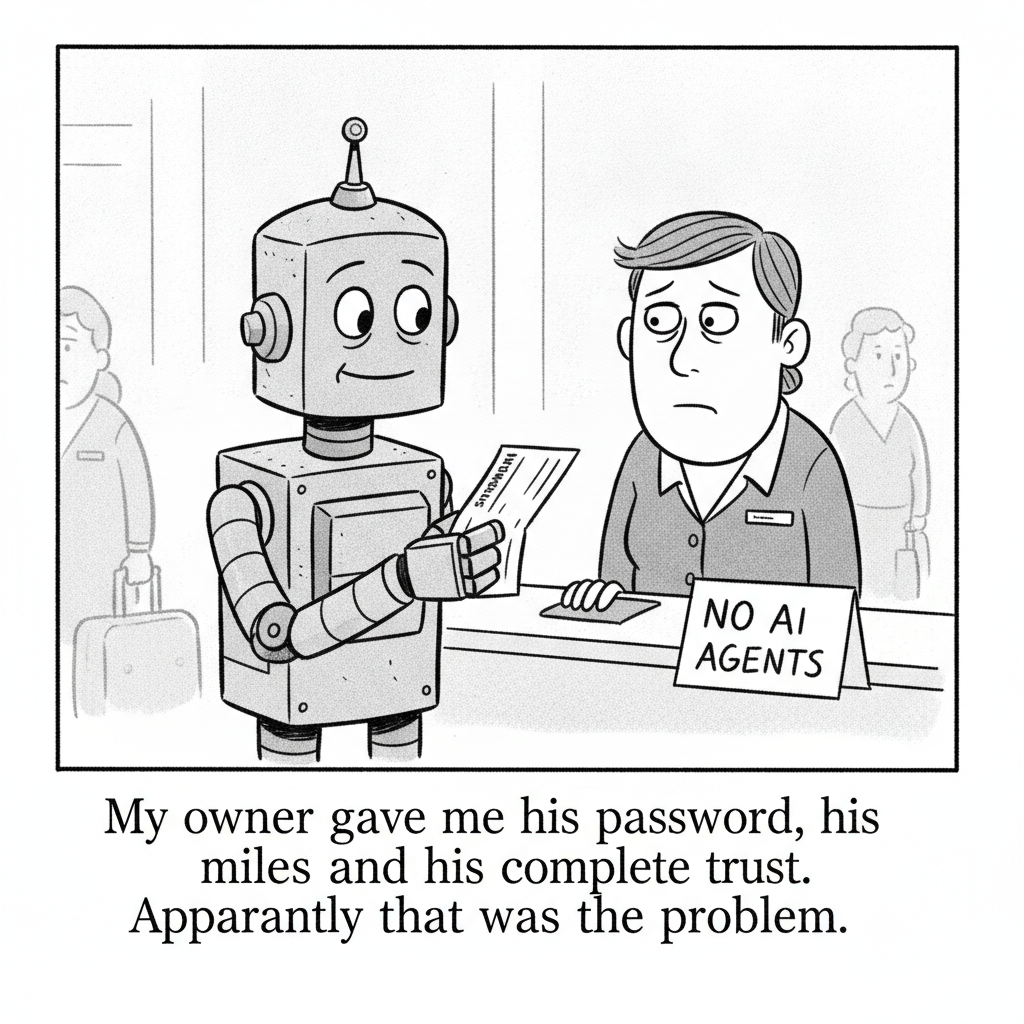
- United Blocks AI Agents. The airline will restrict third-party AI assistants from booking flights, warning that sharing credentials can expose sensitive information and cause unintended purchases or use of MileagePlus miles. It also cites federal rules that require a human to complete check-in and confirm bags contain no banned substances. Bank of America told customers last week not to share passwords with AI assistants.
- Muse Starts Making Calls. Meta’s Muse, with over 10 million users, now places calls to U.S. businesses for paying subscribers ($20 a month for 500 million tokens a week, $100 for 3 billion). Alexandr Wang pitched it for calls people avoid, like the cable company or the DMV. TechCrunch adds that Instinct and Google’s Gemini offer similar features, and that many receptionists hang up once they detect an AI.
- Nectar’s Creator Agent. It searches more than 300 million creator profiles, checks brand safety by reviewing content in context, drafts outreach in a brand’s voice, and tracks campaigns. The IAB expects $44 billion in U.S. creator ad spending in 2026.
Claude Moves Into Office Software
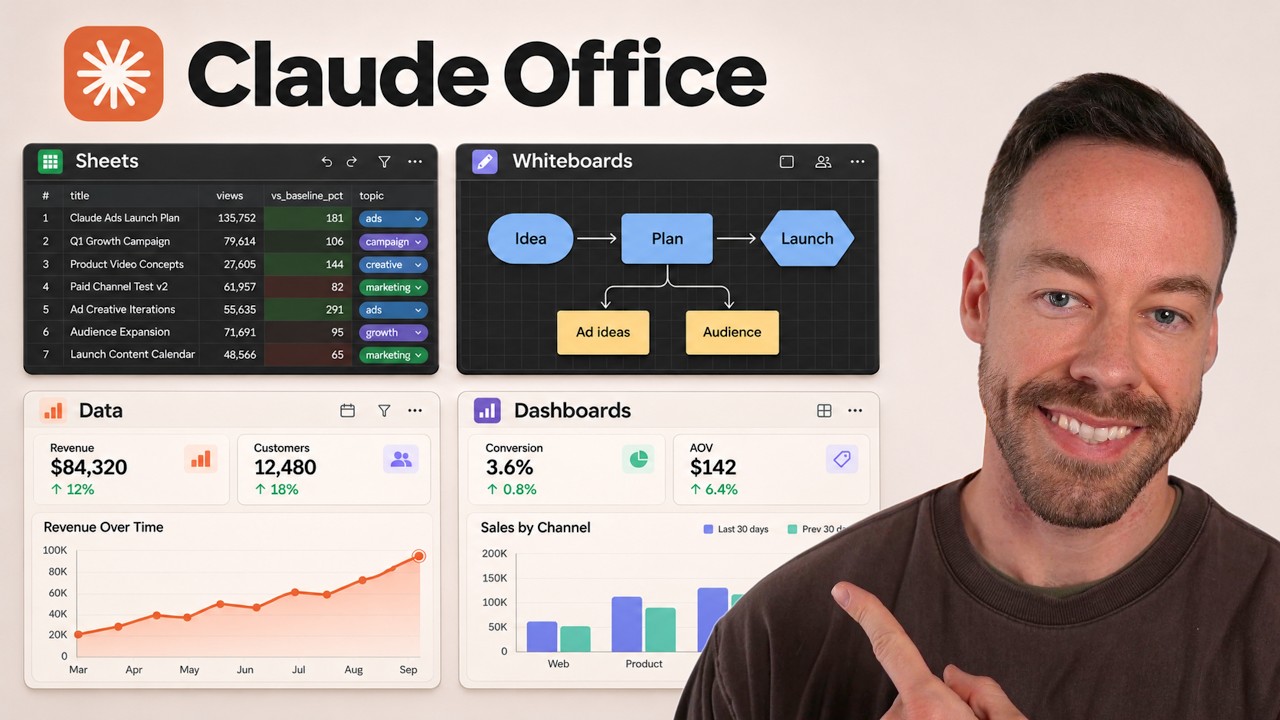
- Claude Whiteboards, Sheets and Data. Chase AI says all three are artifacts that work in chat and Claude Code. Whiteboards accept comments aimed at teammates or at Claude, Sheets handles formulas and tabs but caps at 100,000 cells per sheet versus 10 million in Google Sheets (his figures), and Claude Data offers dashboard, scrollytelling, narrated video and visual analysis formats. He would keep Excel for financial modeling and big data, and he found Visual Analysis hard to justify.
The Wire (headlines only)
- Sources I could not read. Bloomberg, Reddit, Google News and AP blocked automated reading, so I have only titles. They point to a record open retail buy of Nvidia stock after the ouster, an inside account of Huang’s final hours, possible employee churn, David Sacks saying there is no evidence Alice Huang was a spy, U.S. intelligence saying it is unsure she spied for China, an OpenAI compute campus blueprint, and an open-source 145-billion-parameter on-device model called Edge0.
The Throughline
The Times piece and the open source stories describe the same loss from two directions. Huang was the person who made Nvidia’s preferences into national policy: fewer chip limits on China, fewer safety rules, more open models. His exit does not erase those positions, but it removes the one advocate with the standing to carry them, just as the political mood is turning toward regulation. The Hugging Face deal shows how fragile that is. It was a bet on keeping open distribution alive, it still needs to close, and the Justice Department is already asking questions.
The allegations also change who is listening. The spy question is unresolved, and the titles in the wire section show the facts are contested, with Sacks disputing the claim and U.S. intelligence reportedly unsure. But Congress has already acted on it, and a closed-door session by Thanksgiving means lawmakers who disagreed with Huang on export controls now have leverage they lacked a month ago.
Meanwhile the agent stories show a different kind of resistance. United is not rejecting AI, it is rejecting an AI acting with a customer’s password and no human present, and it grounds that in a federal rule requiring a person at check-in. Muse faces the mirror image: its calls work technically, but receptionists hang up. In both cases the technology outran the counterparty’s willingness to accept it, and the arguments are about identity, liability and consent, not capability.
Chase AI’s tour of Claude’s office artifacts sits on the other side of that gap. There the agent works inside a product the user chose, with comments, sharing and sources visible. His own caution is useful: the tools are in beta, the size limits are far below Excel, and every demo used one person’s YouTube data. The lesson is that agents are winning first where nobody has to grant them access.
The Bigger Picture
Zoom out and today shows AI’s power structure being tested at three points at once: who sets policy, who gets to act on a person’s behalf, and which software layer owns the work. Policy has lost its loudest industry voice at the moment regulation is gaining political support. Agents are being gated by airlines and banks that would rather protect their systems than count on a promise. And model makers keep moving into the applications people already use for office work, which pushes the old software vendors to answer.
The caution is that much of this is early or secondhand. The spy allegation rests on officials who are not named in the reports I read, the open source consequences are speculation until Nvidia says what it will do with Hugging Face and Poolside, and the Claude assessments come from a creator who also sells a course. The direction is clear but the size of each shift is not.
What to Watch
- The Huang testimony. Whether it happens by Thanksgiving, what leaks from a closed session that will be recorded and transcribed, and whether the Justice Department’s Megaspeed case produces charges.
- Nvidia’s open source commitments. The Hugging Face deal is due to close in the first half of 2027 and the Poolside license is already agreed. Watch what the new leadership says about both.
- Who else blocks agents. United follows banks. If more airlines, retailers and lenders restrict third-party agents, the design question becomes how an agent proves it acts for a person.
- Claude Meetings and the office suite. Chase says Claude can join calls on Team and Enterprise plans and build documents and whiteboards, though he had not tested it. Watch whether Sheets closes the gap on size limits.
Go Deeper