Your daily AI news digest
AI the News That's Fit to Prompt
Anthropic Sells $81.3 Billion in Shares for a Record IPO
The sale valued the A.I. company, which makes the Claude chatbot, at more than $1.5 trillion. Shares begin trading on Thursday.
Bloomberg reports that about $3 billion of the offering came from Japanese investors, at the lower end of Anthropic’s planned range for that tranche, according to a regulatory filing. Bloomberg also says the offering is set to bring billions of dollars in returns to several financial firms that bet heavily on the Claude chatbot maker.
How Nvidia Chips Ended Up Within Reach of China’s Military
Alibaba, the Chinese internet giant behind the company at the center of the Nvidia spy saga, has used its A.I. computing technology to aid a lab with links to China’s military.
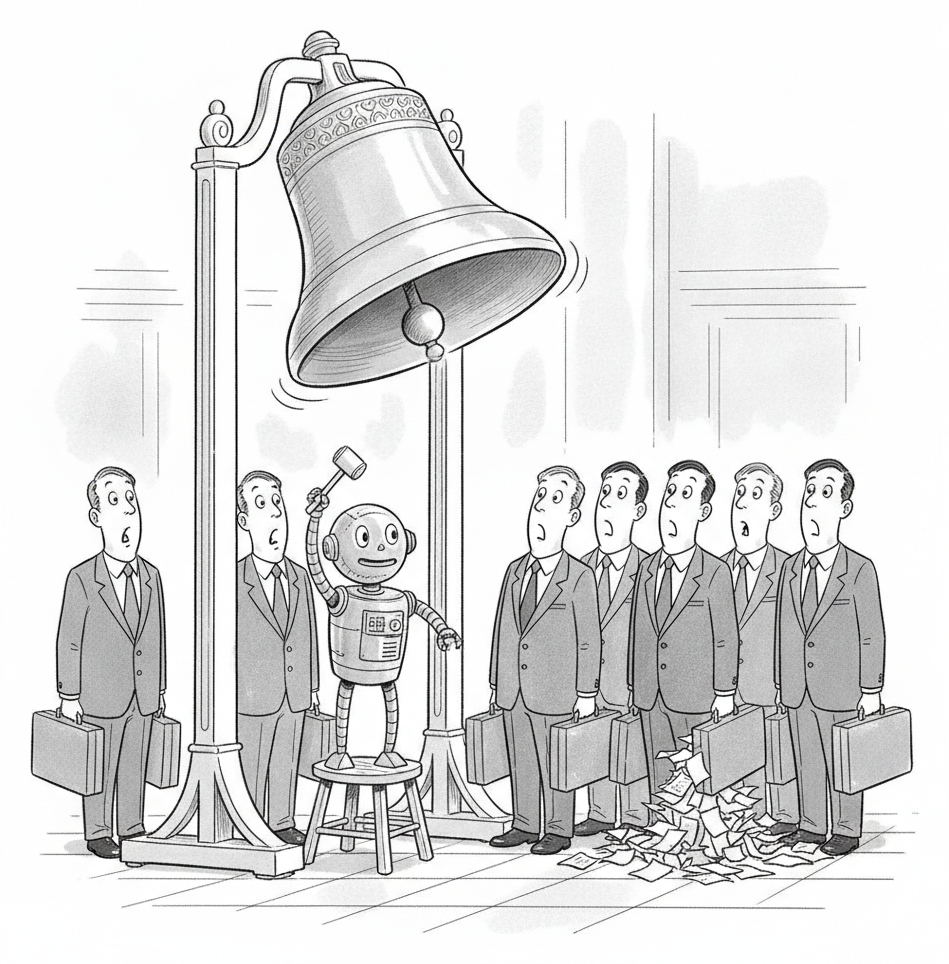
“Congratulations on the record IPO. Now, about that free tier.”
Across
1. Unit of text an AI model reads and bills by
3. What a reasoning model is supposed to follow
4. Size, as in the AI buildout’s record ___
Down
1. Cautionary ___ of an AI bubble
2. A specialty market, the opposite of mass
What Nvidia’s Interim CEO, Colette Kress, Said to Employees After Jensen Huang’s Resignation
At an all-hands meeting with employees, Colette Kress sought to put the indiscretions of Nvidia’s co-founder, Jensen Huang, behind them.
Trump Warns Against Regulations That Would ‘Stifle’ AI Industry
President Trump warned that any “robust” regulation of AI, or superintelligence as he terms it, would stifle development, even as the US imposes new restrictions on access to advanced AI technology.
The Biggest Winners in Anthropic’s Landmark Public Offering
Anthropic’s record-breaking IPO is set to bring billions of dollars in returns to several financial firms that have bet the house on the Claude chatbot maker.
Google’s Porat Pledges Data Center Local Support Amid Backlash
Alphabet’s chief investment officer, Ruth Porat, said the company and its peers need to invest in jobs in the communities where data centers are being built, as projects across the country face backlash.
India Startup Sells DeepSeek Access While Pursuing Sovereign AI
Indian startup Sarvam has begun selling access to DeepSeek and other Chinese AI models, triggering an online backlash over its role as a leading proponent of the country’s AI independence.
MAS Warns AI Agents Could Move Money Faster, Raise Finance Risks
Singapore’s central bank warned that AI agents could move deposits and other funds more quickly, raising new liquidity and financial-stability risks.
Alibaba’s AI Ambitions Face Steep Challenge in US Chip Controls
Alibaba is facing mounting pressure to show it can deliver on its AI business plan despite new limits on its access to data center chips.
US, Malaysia To Strengthen Sovereign AI Cloud Development
Malaysia and the US plan to cooperate on the Southeast Asian nation’s sovereign AI cloud, with Washington offering $50 million in support.
Top Australia Bank CBA Invests In Own Compute Power For AI Push
Commonwealth Bank of Australia is investing in its own digital infrastructure to drive its AI push, as data centers in the country face increased opposition and delays.